
Discover our
latest news
Stay updated with the latest trends, expert insights, and success stories. We take pride in sharing the achievements that define our journey.

Study in Georgia New Rules for International Student Enrollment
The Government of Georgia has adopted important new regulations governing the admission and enrollment of foreign citizens and stateless persons in Georgian higher educational institutions. Established under Government Decrees No. 435 and No. 437, adopted on September 8, 2026, these changes introduce updated requirements and procedures concerning the admission and enrollment of international students. We request the students to carefully review the study in Georgia new rules and familiarize themselves with the new requirements and procedures established therein. These regulations directly concern the recruitment and enrollment process of international students at the University. Please note that the new regulations are fully and strictly taken into consideration when advising and informing prospective students, preparing documentation, and submitting applications. This is critical to prevent the provision of inaccurate information or any deficiencies related to the preparation and submission of applications. Study in Georgia New Rules for Language Proficiency Standards: Decree No. 435 Decree No. 435 firmly establishes the foreign language proficiency levels required to study in Georgia. Agencies must ensure applicants provide one of the internationally recognized certificates explicitly accepted by the government: Language Accepted Certificates English IELTS, TOEFL iBT, Cambridge English Scale, PTE (Pearson Test of English) German Goethe-Zertifikat B1/B2, TestDaF, German Language Diploma (DSD), Telc Deutsch B1 French DELF, TEF Russian TORFL The Common European Framework of Reference for Languages (CEFR) standardizes English proficiency levels across major testing systems. Here is how the B1 (Intermediate) and B2 (Upper-Intermediate) thresholds map to the most widely accepted exams based on official 2026 concordance data. English Proficiency Test Conversion Tables English Proficiency Test B1 (Intermediate) B2 (Upper-Intermediate) IELTS Academic 4.0 – 5.0 5.5 – 6.5 TOEFL iBT (Legacy 0–120) 42 – 71 72 – 94 TOEFL iBT (New 1–6 Scale)* 3 4 PTE Academic 43 – 58 59 – 75 Cambridge English Scale 140 – 159 160 – 179 Study in Georgia New Rules for Admission Windows and Compliance: Decree No. 437 The government has explicitly tied a student’s academic progress to their immigration status. Why the Government Made These Regulations The Georgian Government implemented Decrees No. 435 and No. 437 to standardize academic quality and enforce stringent immigration compliance. By legally standardizing the minimum required language levels (B1 and B2) and specifying exactly which international certificates are acceptable, the government ensures that foreign students possess the academic communication skills necessary to genuinely succeed in rigorous degree programs. Furthermore, the operational rules are designed to prevent the misuse of Georgian student visas. By requiring universities to electronically log student statuses within three days and linking this data directly with the State Services Development Agency, national authorities can actively monitor whether individuals are genuinely pursuing their studies. The regulation authorizing the termination of a student’s status for those who fail to earn academic credits or secure a valid residence permit within 90 days specifically prevents non-students from exploiting university admission solely to maintain residency in the country. Study in Georgia New Rules Official Reference Links You can review the official texts of both September 8, 2026 decrees directly on the Legislative Herald of Georgia (Matsne) website: Decree No. 435 (Language Proficiency Standards) Decree No. 437 (Admission Windows & Compliance) Both links open the original, legally binding Georgian documents. Note that Matsne offers a built-in translation toggle at the top of the page if you need to view the English versions. Looking to Study in Georgia? Read our Study in Georgia Full Guide
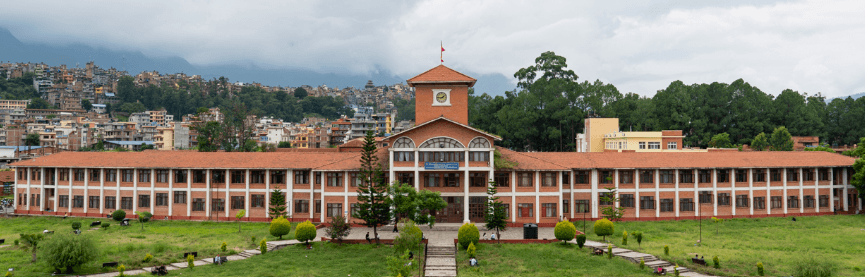
TU BBS 4th Year Result 2082 (Regular & Partial) Published: How to Check Online & SMS
Great news for management students! Tribhuvan University (TU), Office of the Controller of Examinations (OCE), Balkhu, has officially published the 4 Years TU BBS 4th Year Result 2082 (Regular and Partial) examinations. If you are one of the thousands of students who appeared for the Bachelor of Business Studies (BBS) final year exams held in the months of Asar and Shrawan 2083, your wait is finally over. You can now view your outcome and marksheet using TU’s official result portals. Exam & Result Overview Feature Details University Tribhuvan University (TU), OCE Balkhu Program 4 Years Bachelor of Business Studies (BBS) Batch/Year 4th Year – 2082 (Regular and Partial) Exam Date Asar / Shrawan 2083 Result Publication Date 24 September 2026 Result Status Published Official Result Portal https://result.exam.tu.edu.np/ How to Check TU BBS 4th Year Result 2082 Online Tribhuvan University has made it easy to access your grades online along with the subject-wise marksheet. Follow these exact steps to check your results without encountering portal errors: How to Check Your Result via SMS If the university website is down due to heavy server traffic (which is common on result days), you can quickly check your pass/fail status via SMS using Nepal Telecom (NTC) or Ncell. What to Do After Checking Your Result? 1. Marksheet Collection The online result provides a provisional marksheet for your immediate information. The official, printed physical marksheets will be dispatched to your respective colleges. You can collect your original transcript and marksheet from your college administration within 1 to 2 weeks of the result publication. 2. Retotaling Process If you are dissatisfied with the marks you received in any specific subject, Tribhuvan University allows you to apply for retotaling. TU BBS 4th Year Result 2082 Notice Frequently Asked Questions (FAQs) Q: Why is the TU exam website not loading? High traffic immediately following a major result announcement often crashes the TU servers. If result.exam.tu.edu.np is unresponsive, wait a few hours and try again, or use the SMS method to check your status instantly. Q: Does the online portal show my exact subject marks? Yes. If you input your correct symbol number into the central result portal, it will display a digital marksheet showing your subject-wise grades, total marks, and final pass/fail status. Q: I lost my admit card. How can I find my symbol number? If you have lost your admit card, you must immediately contact your college administration. They retain a master record of all exam registrants and can provide your official symbol number so you can check your results. Q: When will the supplementary (chance) exams be held for students who failed one or two subjects? Tribhuvan University usually publishes the notice for partial/supplementary examinations a few weeks after the main results are out. Keep an eye on the official TU notice board or your college’s announcement channels for the exact form fill-up dates. Check more results and notices on our website

Study in UK from Nepal: New Rules & Financial Requirements
For many generations, studying in the United Kingdom has been associated with academic quality, globally recognized universities and international career opportunities. But if you are planning your study in UK from Nepal journey, there is more to consider than university rankings and tuition fees. The UK has introduced several important immigration changes in recent years. Student visa financial requirements have increased, restrictions on dependents have become stricter, Skilled Worker requirements have changed, and the Graduate Route is scheduled to become shorter for most graduates from 2027. Does this mean Nepali students should stop considering the UK?Not at all. The UK remains an option for international students who meet its current requirements and have a realistic academic, financial and career plan. However, students should understand what has changed before making a decision.At BrightPath Nepal, our goal is not to discourage students from studying in the UK. It is to help them understand the current situation so they can choose a destination based on accurate information rather than outdated advice. Before discussing the new policies, however, there is one basic confusion worth clearing up. 1. Clearing the Confusion: UK, Great Britain, or England? You will often hear UK, Britain, Great Britain and England used as if they mean the same thing. They do not. Great Britain Great Britain is the name of the island containing three countries: United Kingdom The official name is the United Kingdom of Great Britain and Northern Ireland. It consists of four countries: England England is one country within the United Kingdom, not another name for the entire UK. Its capital is London, which is also the capital of the United Kingdom. What about the British Isles? The British Isles is a geographical term referring to the group of islands that includes Great Britain, the island of Ireland and other surrounding islands. Because the term can be politically sensitive, it is useful to distinguish it from the political entity called the United Kingdom. What about the British Isles? The British Isles is a geographical term referring to the group of islands that includes Great Britain, the island of Ireland and other surrounding islands. Because the term can be politically sensitive, it is useful to distinguish it from the political entity called the United Kingdom. Why does this matter to students? If you study in London, Manchester, Birmingham or other cities in England, you are studying in the UK. If you study in Glasgow or Edinburgh, you are in Scotland, which is also part of the UK.Similarly, universities in Wales and Northern Ireland are also covered by the UK’s immigration system.For international students, the important point is that UK Student visa and immigration rules are UK-wide immigration rules, although education systems, tuition structures and some local arrangements can differ across England, Scotland, Wales and Northern Ireland. When you submit your application for a Study in UK from Nepal path, your Student Visa is processed by a centralized immigration body: the UK Visas and Immigration (UKVI). Whether you enroll at a university in London, Edinburgh, Cardiff, or Belfast, uniform national immigration laws apply to your application. 2. Post-Brexit Economic Shifts and Student Policies If you have researched the UK, you have probably heard one word repeatedly:Brexit.Brexit is short for “British exit” from the European Union (EU). On 23 June 2016, the UK held a referendum on whether it should remain in or leave the European Union. The result was 52% in favour of leaving and 48% in favour of remaining. The UK formally left the EU on 31 January 2020.However, the transition period continued until 31 December 2020. From 1 January 2021, free movement between the UK and EU ended and the UK introduced its new points-based immigration system for people coming to work or study. What Changed After Brexit? For international students from Nepal, Brexit does not mean that the UK stopped accepting international students. In fact, the UK continues to have a large international student population. What changed most directly was the UK’s relationship with EU citizens.European students lost their domestic fee status, leaving British universities reliant on international students from non-EU nations like Nepal, India, and Nigeria to fund academic operations. At the same time, rapid growth in net migration became a central political topic in Westminster. In response, official directives published via UK Home Office Guidance introduced a series of reforms designed to reduce overall migration numbers. These include raising minimum salary thresholds for work visas, restricting family dependents, and increasing student living cost requirements. Before the end of free movement, EU citizens generally had much greater freedom to live, work and study in the UK. After Brexit, new arrivals from the EU became subject to the UK’s immigration system, just as other non-UK nationals are, subject to specific arrangements and exceptions. For Nepali students, this did not suddenly create a new visa requirement because Nepali nationals were already subject to UK immigration controls. However, Brexit became part of a much broader shift in UK immigration policy. Why did Brexit happen? Immigration and control over borders were major issues in the Brexit debate, particularly the UK’s relationship with EU free movement. However, it would be inaccurate to say immigration was the only reason people voted for Brexit. The referendum involved wider debates about: So, when discussing Brexit today, it is better to avoid reducing it to a single issue. 3. Why Are UK Immigration Rules Becoming Stricter? This is where the situation becomes particularly relevant for students. In the years after the pandemic, the UK saw very high levels of immigration, including significant growth in international student migration. The government subsequently introduced several policy changes intended to reduce overall migration and change how the immigration system operates. The latest official ONS data shows that people arriving on study-related visas reached a peak of around 484,000 in the year ending June 2023, before falling to around 301,000 in the year ending June 2025. Much of the decline was related to a sharp reduction in student dependents ... Continue reading Study in UK from Nepal: New Rules & Financial Requirements

Study in Dubai from Nepal: Documentation & Visa Guide
If you are planning to study in Dubai from Nepal, understanding the admission, visa process, and documentation for Dubai is the single most important key to turning your international dream into reality. Studying in Dubai from Nepal has become one of the most attractive choices for students seeking high-quality international degrees and global career opportunities without the complicated embassy backlogs of Western nations. Whether you want to join a world-class British, Australian, or American branch campus in the UAE, navigating the complete procedure requires clear guidance, precise timelines, and organized preparation. In this comprehensive guide brought to you by BrightPath Nepal, we break down every stage so you can start your academic journey in the UAE smoothly and confidently. How the Dubai Student Visa Process Works for International Students When Nepali students think about studying abroad, they usually picture weeks of waiting for embassy interview dates, complicated financial sponsor proofs, and unpredictable visa officers. Dubai offers a completely different, highly streamlined approach: The Step-by-Step Dubai Student Visa Process The UAE student visa route is one of the smoothest in the world because you do not file the visa yourself; your university processes it for you. Here is exactly how the process unfolds: 1. Apply to a UAE University:Get an unconditional offer. To begin, you must apply to a UAE-licensed university or branch campus. Once your application is reviewed and accepted, you will receive a firm, unconditional admission letter. This document is required to prove you are officially accepted for your chosen program and intake. 2. Pay the Tuition Deposit:Activates your visa file. After securing your unconditional offer, you must pay your initial tuition fee deposit to the university. This payment is critical because it activates your visa file, allowing the university to officially act as your legal visa sponsor and open the entry-permit application on your behalf. 3. Obtain and Verify the Police Clearance Certificate:New mandatory requirement for Nepali students. Under the latest UAE regulations, Nepali students are now required to provide a Police Clearance Certificate (PCC) to prove a clean criminal record. You must apply for this report online via the Nepal Police OPCR portal. Once received, it must be officially attested online by Nepal’s Ministry of Foreign Affairs (MOFA) Department of Consular Services, followed by a digital attestation from the UAE Embassy in Kathmandu. 4. Submit Visa Documents:Provide your full file to the university. With your university admission secured and your police report verified, submit all required paperwork to your university’s admissions or student-visa office. This file includes your clear passport copy, recent photos, attested academic transcripts, basic proof of funds, and your fully verified police report. 5. Receive the Entry Permit (e-Visa):Takes 2 to 4 weeks. Your university will take your submitted documents and apply to the General Directorate of Residency and Foreigners Affairs (GDRFA) in Dubai or the ICP. Once approved, you will receive an electronic entry permit, which legally allows you to board your flight and travel to the UAE. 6. Complete the Medical Fitness Test:Government-approved screening in Dubai. Shortly after arriving in Dubai on your entry permit, you must undergo a mandatory medical fitness screening. You will visit a government-approved health center to take a blood test and a chest X-ray. This proves to the UAE health authorities that you are medically fit to reside in the country. 7. Apply for the Emirates ID:Submit biometrics and photograph. Once your medical test is done, you will visit an official biometric center to submit your fingerprints and a digital photograph. This process is required to secure your Emirates ID, which is a mandatory, government-issued identity card for all residents in the UAE. 8. Get the Residence Visa Stamped:Finalize your student residency. After your medical test results come back clear and your Emirates ID application is fully processed, your actual student residence visa is finalized. Depending on the current immigration protocol, this visa will either be stamped directly into your physical passport or issued to you electronically. 9. Stay Enrolled and Renew Annually:Maintain your legal status. Your UAE student visa is generally valid for one year at a time. To maintain your legal residency status, you must stay enrolled in your program and maintain good academic standing. Your university will assist you in renewing your visa annually until you graduate. Police Clearance Certificate (PCC): Check Your University’s Current Requirement Some universities or immigration processes may request additional supporting documents from international students, including police clearance documentation. Nepali students should therefore confirm directly with their university’s international admissions or visa department whether a PCC is required for their specific program and intake. If a PCC is requested, obtain it through the official Nepal Police process and complete any required Nepal government and UAE attestation procedures before submitting it. [Nepal Police Online Portal] ──► [Nepal MOFA Online Verification & Stamping] ──► [UAE Embassy / VFS Digital Attestation] Detailed Verification Steps Step 1: Obtain PCC from Nepal Police: Apply online via official portal. Apply online through the official Nepal Police Portal or the Nagarik App. Upload your passport bio-data page, citizenship certificate, and a passport-sized photograph. Upon approval (typically within 2 to 3 working days), download the digitally signed PDF certificate containing a verification QR code. Step 2: Submit Document to Nepal MOFA: Online submission via Department of Consular Services. Navigate to the Ministry of Foreign Affairs at MOFA Department of Consular Services Portal. Create an account, upload your digital PCC, pay the NPR 500 attestation fee, and select your appointment slot for physical document verification at the Department of Consular Services office in Tripureshwor, Kathmandu. Step 3: Receive Official MOFA Seal:Physical verification in Kathmandu. Visit the Consular Department on your scheduled appointment date with your printed Police Clearance Certificate, original passport, original citizenship certificate, and payment receipt. Consular officials will verify the document and apply the official MOFA attestation sticker and seal. Step 4: UAE Embassy Attestation (VFS Global / UAE MOFA):Final consular legalization for UAE recognition. After obtaining the Nepal MOFA seal, submit the document for UAE ... Continue reading Study in Dubai from Nepal: Documentation & Visa Guide
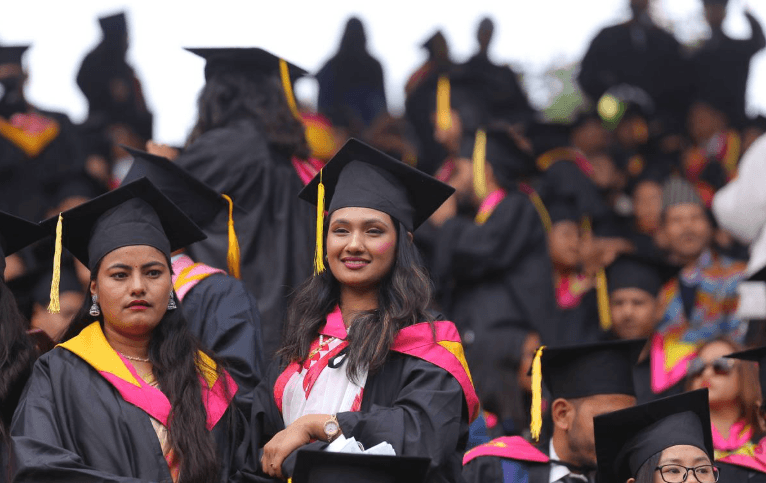
TU 52nd Convocation Program 2083 (2026): Online Application, Eligibility, Fees & Notice
Tribhuvan University (TU), Office of the Controller of Examinations, Balkhu, Kathmandu, has officially published the notice for the 52nd Convocation Program (५२ औं दीक्षान्त समारोह २०८३). Eligible graduates from Bachelor’s, Master’s, M.Phil., and Ph.D. programs can submit their convocation forms online through the official TU examination portal. Below is the complete guide covering eligibility criteria, required documents, fee structure, convocation centers, and step-by-step instructions for submitting your application for TU 52nd Convocation 2083 Key Highlights & Important Dates Detail Information University Tribhuvan University (TU) Event 52nd Convocation Ceremony (२०८३) Application Start Date BS: २०८३ असोज १ गते (17 SEP 2026 AD) Application Deadline BS: २०८३ कार्तिक १२ गते (29 OCT 2026 AD) Application Portal student.exam.tu.edu.np Mode of Application 100% Online Eligibility Criteria To be eligible to participate in the 52nd Convocation Ceremony, students must meet the following criteria: TU 52nd Convocation 2083 Fee Structure & Refund Breakdown The total fee includes the convocation charge, degree certificate fee, gown/scarf refundable deposit, and optional add-ons. Level-Wise Convocation Fees Academic Level Convocation & Certificate Fee Gown/Scarf Deposit (Refundable) Total Required Payment Bachelor’s (स्नातक) NPR 3,000 NPR 2,500 NPR 5,500 Master’s & M.Phil. (स्नातकोत्तर र एम.फिल) NPR 3,500 NPR 2,500 NPR 6,000 Ph.D. (विद्यावारिधि) NPR 4,000 NPR 2,500 NPR 6,500 Additional Fees & Deposit Refund Rules Important Bank Account Requirement: The gown deposit refund is transferred back to the account used during payment. Applicants are advised to pay using their own personal bank account. TU will not be responsible for failed refunds due to third-party bank account issues. Required Documents for Online Upload When filling out the online application form, you must upload scanned copies of the following documents in clean PDF/JPEG formats: Convocation Centres & Regional Allocation Tribhuvan University has set up convocation regional centers across all 7 provinces: Caution: Once you select a Convocation Centre during application submission, it cannot be changed under any circumstances. Choose your preferred location carefully before submitting. Contact us if you are looking to Study Abroad from Nepal How to Apply Online for TU 52nd Convocation (Step-by-Step) Important Instructions for Degree & Gown Collection The TU 52nd Convocation is a critical milestone for Tribhuvan University graduates planning to study abroad for four primary reasons: Are you looking to study abroad from Nepal after graduation? Contact us and our expert abroad education consultants with guide you.
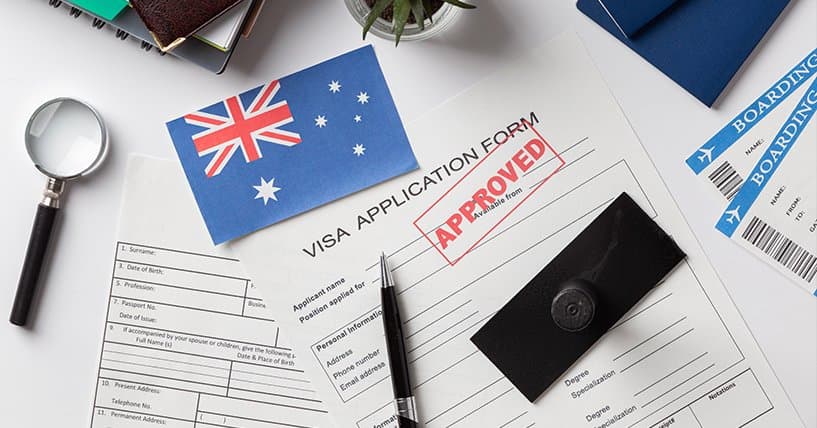
Australia Migration Policy Changes: What It Means for Nepali Student
If you have been scrolling through social media or checking the news lately, you have probably seen some alarming headlines about studying in Australia. You might be asking yourself, “Is Australia closing its doors to international students? Can I still bring my spouse? Is my dream of studying abroad over?” Let us take a deep breath together. First, the short answer is no, Australia has not closed its doors to international students. On September 17, 2026, Australia’s Home Affairs Minister, Tony Burke, delivered a major address at the National Press Club in Canberra. He unveiled significant Australia Migration Policy Changes aimed at reforming how the country handles student visas, family dependents, visitor visa conversions, and skilled migration. Rather than shutting out international scholars, the Australian government is simply tightening its system to focus on genuine students and skilled professionals. They want students who are truly coming to study, learn, and build meaningful careers, rather than those using education as a quick shortcut for immigration. If you are a Nepali student planning your future, you do not need to panic. However, you do need a smarter, clearer, and more honest plan than ever before. In this guide from BrightPath Education, we break down all these policy updates into plain, friendly language so you can move forward with confidence. The Big Picture: How Australia Migration Policy Changes Affects You? To understand what is happening, it helps to look at things from Australia’s perspective. After the COVID-19 pandemic, Australia opened its borders wide, leading to a massive wave of international students and workers. By March 2026, Australia’s Net Overseas Migration reached around 292,000 people. While international students bring incredible culture and energy to Australia, this sudden population jump puts heavy pressure on local cities. Finding a rental apartment became tough, public transport got crowded, and local services felt the strain. The Australian government is not trying to stop migration completely. Their goal is simply to bring numbers back down to a balanced, sustainable level. They want to make sure that housing, jobs, and public services remain stable while still welcoming genuine international students who contribute to the nation’s growth. 1. Major Changes for Student Dependants (Spouses & Families) One of the biggest topics causing concern among Nepali applicants is the update regarding family dependents. Historically, many married students in Nepal have applied for Australian Student Visas with their husband or wife included as a secondary applicant (dependent). The Australian government has announced plans to put strict controls on bringing dependents for standard student categories. Moving forward, taking a spouse along while pursuing a diploma or a general undergraduate degree will not be as easy or straightforward as it used to be. What does this actually mean for you? Before you assume your plans are ruined, keep these crucial details in mind: If your plan involves applying with your spouse, your profile needs to be planned carefully. We recommend sitting down with a trusted counselor to review your options once the exact effective dates are published. 2. Stopping “Visa Hopping” and Tourist Visa Switching Another major focus of Minister Tony Burke’s announcement was ending a practice known as “Visa Hopping.” In the past, some individuals would enter Australia on a temporary Tourist/Visitor Visa and then search for ways to switch onto a Student Visa while staying inside the country just to extend their stay. Australia is putting a firm stop to this pathway. Visitor Visas are meant for genuine holidays and visiting family not for backdoor entry into the education system. The “No Further Stay” Rule To enforce this, immigration authorities are applying the ‘No Further Stay’ condition much more strictly on Visitor Visas. If your visa has this condition, you cannot apply for almost any other visa including a Student Visa while remaining inside Australia. Our clear advice: If your dream is to study in Australia, apply for a proper Student Visa directly from Nepal. Trying to go on a tourist visa with the hidden hope of converting it later is now extremely risky and could lead to visa cancellation. 3. What Does a “Genuine Student” Really Mean Now? Because Australia is cracking down on people who misuse student visas, immigration officers are double-checking every single application. They want to make sure you are going to Australia for education, not just to work full-time or switch courses repeatedly. To build a bulletproof application from Nepal, your profile must stand strong on four main pillars: 4. Skilled Migration: Where Are the Real Opportunities? Australia is not closing its doors to skilled workers. In fact, the country desperately needs qualified professionals in specific industries that suffer from labor shortages. If you choose a course in one of these high-demand sectors, your education becomes far more valuable, and your long-term career prospects in Australia become much stronger: Instead of asking, “Which course gives me an easy visa?” start asking, “Which course builds a real career that Australia actually needs?” Aligning your studies with these workforce demands is the smartest move you can make. 5. Working Holiday Visas and Crackdowns on Illegal Stay The Australian government also mentioned reforms to its Working Holiday Maker program to support regional farms and businesses. However, Working Holiday Visas depend heavily on bilateral agreements between countries. For most Nepali citizens, this visa is not a practical option, so your main focus should remain strictly on the standard student visa pathway. Additionally, the government is increasing penalties for anyone who overstays their visa, works illegally, or submits fake documents. The lesson here is simple: Always keep your documents honest and authentic. Using fake bank statements or misleading documents will get your visa refused immediately and could result in a multi-year ban from entering Australia. What Should Nepali Students Do Right Now? If you are planning to study in Australia, there is no need to panic or give up on your dreams. You just need to plan carefully. Here is your step-by-step action plan: Step What You Should Do 1. Choose the ... Continue reading Australia Migration Policy Changes: What It Means for Nepali Student

Best Country to Study for Nepali Students: Easy & Affordable
Every year, thousands of ambitious youths walk into our education consultancy with one crucial question: What is the best country to study for Nepali students? For more than two decades, the answer seemed obvious. Students would prepare their documents, take an educational loan, and board a flight to the “Big Four” traditional destinations: Australia, Canada, the United Kingdom, or the United States. However, the world of international education has dramatically changed, especially as we navigate the new policies of late 2026. Today, traditional countries are closing their doors with strict migration reforms, massive visa fee hikes, and impossible financial requirements. As a result, the definition of the best country to study and work for Nepali students has completely shifted. Emerging new destinations in Europe and East Asia are now proving to be much safer, far more affordable, and highly rewarding. At BrightPath, our core mission is to provide transparent options for students and guide them toward a better future. We don’t believe in selling you an impossible dream. Instead, we rely on deep research and official data to help you make the right choice. In this comprehensive guide, we will explain exactly why the old destinations are no longer suitable for the average student, why new countries are stepping up, and ultimately, which nations currently stand out as the best countries to study and work for Nepali students. 1. Why Old Countries Are No Longer Suitable for Most Students For a long time, the USA, UK, Canada, and Australia were the ultimate dream. But today, these governments are facing severe internal pressures—from extreme housing shortages to overloaded public infrastructure. To fix this, they are actively trying to reduce the number of immigrants. For a typical middle-class Nepali student who relies on an educational loan and part-time work to pay off that loan while covering living costs, the “Big Four” have become high-risk, high-cost gambles. Here is why they are losing their appeal: Australia: Fee Increases, Visa Hopping Bans, and Dependant Restrictions Australia remains popular, but recent policy updates from the Australian Department of Home Affairs have significantly raised barriers: Canada: Intake Caps and Doubled Financial Proof Once the top destination for permanent residency, Immigration, Refugees and Citizenship Canada (IRCC) has instituted major cutbacks: United Kingdom: High Salary Thresholds After the Graduate Route (PSW) The UK Home Office has enacted policy changes aimed at reducing net migration, directly affecting international graduates: United States: Strict Off-Campus Work Regulations While the US offers top-tier academic facilities, employment regulations enforced by U.S. Citizenship and Immigration Services (USCIS) and ICE SEVP are extremely strict: 2. Who Should Still Apply to the “Big Four”? At BrightPath, we believe in full transparency. While the old destinations have become extremely tough, they are not completely closed. Students can still successfully apply for the Big 4 countries if they have a strong financial condition and can afford the expenses easily, if they have relatives abroad who can help them settle, or if they do not have any problem with the changing strict policies. If your family can comfortably afford NPR 35 to 50 Lakhs per year without relying heavily on high-interest bank loans, and if you have strong academic scores, if you are planning to apply to these countries on a scholarships, destinations like the USA and Australia still offer world-class degrees and global networking. Similarly, if you have an uncle or a sibling in Toronto or Sydney who can provide you with free accommodation and help you find a job, your struggle will be much lower. But if you are a student taking a massive loan with the pressure to earn, pay tuition, and survive entirely on your own, the Big 4 currently pose a tremendous risk. 3. Why New Countries Are Becoming the Most Suitable Choice Because of the extreme financial pressure and high visa rejection rates of the Big 4, smart Nepali students are shifting their focus. Emerging destinations in Europe (the Schengen Area) and East Asia are actively welcoming international students. These new countries are becoming highly suitable because they offer exactly what Nepali students need: By drastically lowering the financial barrier and providing clear post-study work opportunities, these new destinations offer a peaceful, stress-free environment where you can actually focus on your studies and career rather than worrying about your next rent payment. 4. Presenting the Best Country to Study for Nepali Students Based on our extensive research and analysis of post-study work rights, tuition costs, and visa success rates, we confidently present the following nations as the absolute best countries to study and work for Nepali students today. Germany: The European Powerhouse (Best for STEM & Business) If you want world-class education without the price tag, Germany is unmatched. Finland: High Happiness, High Opportunities Finland has one of the best education systems globally and is incredibly welcoming to international talent. France: Government Support and Subsidies France is actively trying to attract more international students and makes living there highly affordable. Malta, Latvia, Lithuania & Greece: The Affordable Schengen Gateways If you are looking for an affordable entry into the European Union with flexible entry requirements, these countries are the perfect fit. South Korea: The Asian Tech Hub If you prefer to stay closer to home in a vibrant, safe, and technologically advanced society, South Korea is an incredible option. 5. Old vs New Destinations: A Quick Cost & Policy Comparison To make your decision easier, look at this factual comparison matrix: Feature Old Destinations (USA, UK, Canada, AUS) New Destinations (Germany, Finland, Malta, Korea) Average Tuition / Year NPR 25 Lakhs – 50+ Lakhs NPR 0 (Germany) to NPR 6 Lakhs – 12 Lakhs Visa Application Fees Very High (e.g., Australia AUD $1,600) Moderate to Low (€80 – €150 for Schengen) English Language Requirement IELTS, PTE or similar tests required Not required or MOI is acceptable Financial Proof Needed Extremely high (NPR 40–70 Lakhs shown balance) Moderate (Standard Blocked Account/Bank Proof) Schengen Travel Access None (Restricted to one country) Full border-free access ... Continue reading Best Country to Study for Nepali Students: Easy & Affordable

Canada Admission & Visa Process: Free Study Visa Checklist
Planning to study in Canada is one of the most exciting decisions you will ever make. From world-class universities and vibrant, multicultural cities to post-graduation work opportunities, Canada remains a top destination for Nepali students. However, staring at the long list of visa requirements on the Immigration, Refugees and Citizenship Canada (IRCC) website can feel overwhelming. Questions like “Do I need a Provincial Attestation Letter?”, “How much GIC do I need?”, or “How do I prove strong ties to Nepal?” are completely normal. To help you navigate this journey with confidence, here is a comprehensive, human-centered Canada study permit checklist and guide tailored specifically for Nepali applicants. Phase 1: Core Institutional & Identity Documents These are the foundational documents that confirm who you are and where you intend to study in Canada. 1. Valid Passport 2. Official Letter of Acceptance (LOA) 3. Provincial Attestation Letter (PAL) or Territorial Attestation Letter (TAL) 4. Language Proficiency Test Results Phase 2: Academic Credentials Your academic history must demonstrate a logical progression toward the course you plan to study in Canada. Phase 3: Financial Proofs (The Backbone of Your Visa) Financial sufficiency is one of the primary reasons visa officers scrutinize applications. You must clearly prove that you can cover your living expenses, tuition fees, and return travel costs without incurring hardship. Financial Package = GIC Deposit + First-Year Tuition Receipt + Local Bank Balances + Income Proofs 1. Guaranteed Investment Certificate (GIC) 2. First-Year Tuition Payment Receipt 3. Proof of Local Family Income & Assets in Nepal To convince the visa officer that your family can sustainably finance your second year and beyond: Phase 4: Personal, Security & Medical Documents 1. Statement of Purpose (SOP) / Letter of Explanation (LOE) Your SOP is your personal voice in the application. Unlike certificates, this letter lets you speak directly to the IRCC officer. It should articulate: 2. Upfront Medical Examination 3. Police Clearance Certificate (NPR) 4. Digital Photographs Phase 5: Step-by-Step Submission Roadmap ➡️ 1. Get Accepted & Receive LOA ➡️ 2. Request PAL & Pay Tuition Deposit ➡️ 3. Open & Fund GIC Account ➡️ 4. Apply via IRCC Portal ➡️ 5. Biometrics at VFS Kathmandu ➡️ 6. Passport Stamping at VFS 1.Secure LOA & Request PAL: Apply to your target Designated Learning Institution in Canada. Once accepted, pay your tuition deposit to receive your official Letter of Acceptance (LOA) and request your Provincial Attestation Letter (PAL). 2.Set Up Your GIC & Financials: Open a student GIC account with CIBC or Scotiabank. Apply for a No Objection Letter (NOC) from the Ministry of Education in Nepal, purchase foreign currency through an A-Class commercial bank, and wire CAD $22,895 to Canada. Collect your GIC certificate. 3.Complete Upfront Medical Exam: Book an appointment with an authorized IRCC panel physician in Kathmandu. Complete your chest X-ray, lab work, and general checkup to get your eMedical sheet. 4.Draft SOP & Compile IRCC Online Portal Package: Write a personalized Statement of Purpose. Merge your identity, academic, financial, and personal documents into clean PDF files and upload them to your IRCC Secure Account. 5.Pay Application Fees & Submit: Pay the study permit fee ($150 CAD) and biometrics fee ($85 CAD) online using an international card. 6.Give Biometrics & Await Decision: After receiving your Biometric Instruction Letter (BIL), book an appointment at the VFS Global Canada Visa Application Centre located at Chhaya Center, Thamel, Kathmandu to provide your fingerprints and digital photograph. At a Glance: Canada Visa Cost & Financial Overview Before gathering your paperwork, it helps to understand the baseline financial figures you will need to demonstrate: Expense Category Amount (CAD) Approx. Equivalent in NPR Description GIC (Living Expense Deposit) CAD $22,895 ~NPR 22.5 to 23.5 Lakhs Mandatory proof of first-year living expenses First-Year Tuition Fee CAD $13,000 – $35,000+ ~NPR 13 Lakhs – 35+ Lakhs Varies by program, college, or university IRCC Study Permit Fee CAD $150 ~NPR 15,000 Online application processing fee Biometrics Fee CAD $85 ~NPR 8,500 Paid during visa submission Medical Examination CAD $150 – $250 ~NPR 18,000 – 25,000 Conducted by IRCC panel physicians in Nepal Pro Tips for a Strong SOP from Nepal Read our Complete Guide on Studying in Canada for Nepali Students

Post StudyWork Permit and Career Opportunities in Latvia for International Graduates
Post-Study Stay-Back Allowance in Latvia Unlike countries with rigid departure timelines immediately after graduation, obtaining a post study work permit in Latvia provides international graduates with career opportunities through a dedicated stay-back period. This window allows non-EU students to remain legally in the country to search for employment or launch a business. 1. Undergraduate (Bachelor’s) Graduates Students completing a full-time Bachelor’s degree from an accredited Latvian university receive an automatic extension of their Temporary Residence Permit (TRP) for up to 4 months following graduation. This period gives graduates time to attend interviews, secure job offers, or apply for Master’s degree programs within Latvia or the broader Schengen Area. 2. Postgraduate (Master’s and PhD) Graduates Graduates of Master’s and Doctoral programs are eligible for an initial 4-month extension, which can be further extended up to a total of 9 months upon request to the Office of Citizenship and Migration Affairs (OCMA). This extended timeframe accounts for the specialized skill sets of postgraduate students and gives them adequate time to land qualified corporate or research positions. During this post-study stay-back period, graduates hold the legal right to reside in Latvia while actively interviewing and evaluating employment contracts. Step-by-Step Transition: From Student TRP to Work Permit To convert a student residence status into a long-term professional status, international graduates must follow a formal administrative path governed by the OCMA. Top Career Sectors and High-Demand Industries Latvia’s economy—centered in the vibrant capital city of Riga—is modern, digitalized, and heavily integrated into the European Union market. International graduates with degrees in STEM, business, and logistics enjoy strong employment prospects. 1. Information Technology and Software Engineering Riga is widely regarded as one of Northern Europe’s fastest-growing startup and tech hubs. Local and multinational tech firms frequently recruit international talent for roles in: Because the tech sector operates primarily in English, non-Latvian speakers often find immediate job placement upon graduation. 2. Logistics, Supply Chain & International Trade Given its geographical position on the Baltic Sea, Latvia serves as a vital transit corridor connecting Europe, Scandinavia, and Eastern trade routes. Major career areas include: 3. Business Administration, Finance & FinTech The rise of digital banking and international shared services centers in Riga has created ongoing demand for graduates in: 4. Healthcare, Engineering & Applied Sciences Graduates from specialized programs—such as biomedical engineering, civil engineering, architecture, and pharmacy—find growing opportunities across both state-funded projects and private corporations. Earning Potential vs. Living Expenses for Graduates in Riga Understanding the financial outlook helps international students plan their post-graduation life realistically. While entry-level salaries in Latvia are lower than in Western European nations like Germany or the UK, the cost of living is significantly lower, allowing for comfortable living standards. Sector / Role Average Monthly Gross Salary (EUR) Average Monthly Net Salary (NPR Equivalent) IT & Software Engineering €1,800 – €3,500 NPR 215,000 – NPR 420,000 Finance & Business Analysis €1,400 – €2,500 NPR 168,000 – NPR 300,000 Logistics & Supply Chain €1,200 – €2,200 NPR 144,000 – NPR 264,000 General Engineering €1,300 – €2,400 NPR 156,000 – NPR 288,000 Marketing & Customer Support €1,000 – €1,600 NPR 120,000 – NPR 192,000 Note: Monthly living expenses for a single professional in Riga (including shared/private apartment rent, utilities, food, public transit, and health insurance) range between €550 and €850 per month (NPR 66,000 – NPR 102,000). Essential Strategies for Nepali Students to Secure Employment To maximize your chances of transitioning smoothly from a student visa to a professional career in Latvia, keep these practical strategies in mind: By selecting high-demand degree fields, maintaining strong academic performance, and actively networking throughout their studies, Nepali students can successfully leverage Latvia’s student-friendly residence policies to build a rewarding European career. Read our Complete Guide on Studying in Latvia for Nepali Students