
Study in Austria
from Nepal: A Complete Guide 2026-27
Study in Austria for world-class degrees and low tuition fees (~€726/semester). Enjoy safe European living, top universities like Vienna and TU Wien, and a 12-month post-study work visa.



Top 5 Reasons Why Nepali Students Choose to Study in Austria
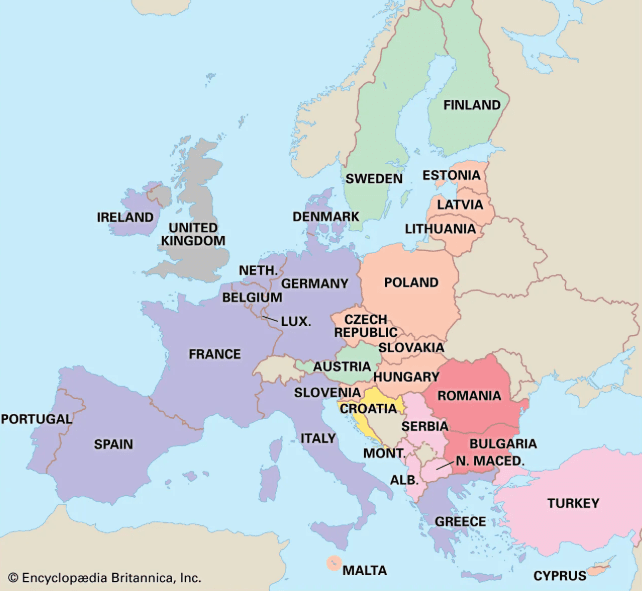
EU ACCESSEU Access (Schengen Advantage)
Austria’s Central European location and Schengen membership provide visa-free travel across 29 European countries, direct exposure to international organizations in Vienna, and access to cross-border academic and professional networks.
AFFORDABLE TUITIONExceptionally Low Public University Tuition Fees
Non-EU public university tuition ranges between €1,200 and €1,500 per year (~€726 per semester). Additionally, because Nepal is recognized as a Least Developed Country (LDC), several Austrian public universities offer tuition waivers or reductions.




SCHOLARSHIPSScholarships Offering Up to 100% Funding
Programs like the OeAD Scholarships, Ernst Mach Grant (providing stipends of ~€1,050/month), university-specific merit grants, and Erasmus+ fully funded options further minimize financial requirements for high-achieving Nepali applicants.
PART TIME WORKFlexible Part-Time Work & Earning Potential
Students can work up to 20 hours per week during the semester and full-time during official breaks. With average wages of €10–€15 per hour, students can earn €800–€1,200 per month, significantly offsetting monthly living expenses.

PR PATHWAYStraightforward Post-Study Work & PR Pathways
Graduates receive a 12-month job-seeking extension to secure qualifying employment. Transitioning to the Red-White-Red Card requires no points assessment or labor market test for Austrian university graduates, leading to EU Long-Term Residency (PR) after 5 years of legal residence.
Proof of English Proficiency in Austria
To study in Austria, you'll need an eligible English language proficiency test score from within the past three years. Accepted tests and score requirements vary by course and institution, so check your course language requirements closely.
The most widely-accepted English language proficiency tests in Austria include:
Popular Courses in Austria
Explore the most sought-after programs that offer excellent career prospects and high-quality training.
Computer Science & Software Engineering
Mechanical, Civil & Electrical Engineering
Business Administration & International Economics
Environmental & Molecular Biotechnology
Music, Arts & Classical Studies
Data Science & Artificial Intelligence
Austria Student Residence Permit (Aufenthaltsbewilligung – Studierender) Requirements for Nepali Students
Mandatory Criteria
DOCUMENTATION & LEGALIZATIONPassport & Academic Records Legalization
- Passport & Academic Records: Valid passport (for the entire duration of stay) and certified academic transcripts (+2, SEE, or Bachelor’s degree certificates).
- Authentication Chain: Documents must be authenticated by the Ministry of Foreign Affairs (MOFA) in Nepal and legalized for Austrian recognition (processed via the Austrian Embassy in New Delhi).
SPECIAL QUALIFICATIONHome University Eligibility (Studienplatznachweis)
- Mandatory Requirement for Public Universities: Non-EU applicants must provide proof that they meet all formal admission criteria for the exact same (or directly equivalent) study program at a recognized university in Nepal for that academic term.
- Accepted Proof: An admission letter from a recognized university in Nepal for the equivalent program, proof of current enrollment, or a completed relevant degree.
OFFICIAL ADMISSIONUnconditional Acceptance (Zulassungsbescheid)
- Unconditional Acceptance: An official letter of admission (Zulassungsbescheid) from an accredited Austrian public university, private university, or University of Applied Sciences (Fachhochschule / UAS).
- Preparatory Course (Vorstudienlehrgang): If admission is conditional on language proficiency or supplementary exams, enrollment confirmation in a university preparatory program is required.
LANGUAGE PROFICIENCYEnglish & German Requirements
- English-Taught Programs: IELTS score of 6.0–6.5 (or PTE Academic 53+, TOEFL iBT 80+).
- German-Taught Programs: B2 or C1 level certificate (ÖSD, Goethe-Zertifikat, or TestDaF). Applicants with lower proficiency may take the Vorstudienlehrgang in Austria prior to main degree coursework.
FINANCIAL MEANS & LIVING EXPENSESMonthly & Annual Financial Rates
- Official Monthly & Annual Rates:
• Under 24 years old: €722.58 / month (~€8,671 / year)
• 24 years old and older: €1,308.39 / month (~€15,701 / year)
- Housing Expense Adjustment: If accommodation rent exceeds €386.43 / month, the excess amount must be added to the total required funds.
- Proof of Funds: Money must be in a personal bank account accessible from Austria, supported by 6 months of bank statements and evidence of legal origin (sponsor income slips, tax documents, or asset sales).
ACCOMMODATION & HEALTH INSURANCEHousing Contract & Medical Coverage
- Confirmed Housing: Confirmed student rental agreement or dormitory contract (e.g., OeAD student residence contract) for at least 3 months to 1 year.
- Health Insurance: Comprehensive travel health insurance covering all risks in Austria (minimum €30,000 coverage) prior to enrolling in Austrian national student insurance (OeGK at ~€65–€74/month).
Major University Intake Periods in Austria
Key Admission Windows
WINTER SEMESTEROctober Main Intake (Application Deadline: July/September)
The Winter Semester commencing in October is the primary intake for all Austrian universities. It offers the full spectrum of Bachelor's, Master's, and PhD courses. Deadlines for non-EU international applicants generally close between July 15 and September 5.
SUMMER SEMESTERMarch Secondary Intake (Application Deadline: January/February)
The Summer Semester commencing in March is an alternative intake window. While select programs accept applications for Summer, it is ideal for students who have completed preparatory courses or specific Master's modules. Deadlines close around January 15 to February 5.
* Note: Because document legalization (MOFA) and visa processing can take 3–4 months, Nepali applicants should start their Austria application 6 months before classes commence.
Austria Student Residence Permit & University Document Checklist for Nepali Students
Essential Admission & Legalized Documents for Austrian Universities
University Application Form
- Submission Portal: Completed online application through the specific Austrian public university portal, Fachhochschule (UAS) platform, or specialized registration portals (e.g., for MedAT medical entrance tests).
- Deadlines: Strict adherence to admission periods (Zulassungsfrist): typically September 5 for the Winter Semester and February 5 for the Summer Semester (extended deadlines often apply for specific programs).
Valid Passport
- Requirements: A color-scanned copy of all relevant pages of a valid international passport.
- Validity: Must remain valid for the entire duration of the intended study period or residence permit application window.
Academic Transcripts & Certificates (+2 / Bachelor) with Full Diplomatic Legalization / Apostille
- Core Documentation: Official mark sheets, grade transcripts, and graduation certificates (+2 / School Leaving Certificate, or Bachelor's degree for Master's applicants).
- Legalization Chain for Nepal: Because Nepal requires full diplomatic certification, documents must bear local educational board attestations, followed by verification from the Ministry of Education of Nepal, the Ministry of Foreign Affairs (MOFA) Nepal, and finally over-legalization by the Austrian Honorary Consulate in Kathmandu (or responsible Austrian representation).
- Certified Translations: Once fully legalised, documents must be translated into German or English by an officially sworn and court-certified translator, with the translation physically/inseparably bound to the legalised original.
Studienplatznachweis (Special University Entrance Qualification Certificate)
- Requirement: A critical prerequisite for non-EU applicants at Austrian public universities.
- Proof Needed: Official certification or admission proof from a recognized university in Nepal confirming that the applicant meets all formal academic criteria to study the exact same (or directly equivalent) degree program for that corresponding academic term.
Language Proficiency Score Report (English or German)
- English-Taught Tracks: Official score report meeting minimum cutoffs—typically IELTS Academic 6.0–6.5, PTE Academic 53+, or TOEFL iBT 80+.
- German-Taught Tracks: Recognized language certificates at B2 or C1 level (e.g., ÖSD, Goethe-Zertifikat, or TestDaF). Programs requiring higher levels accept enrollment in a university preparatory course (Vorstudienlehrgang) if foundational proficiency is already demonstrated.
Statement of Purpose (SOP) & Motivation Letter
- Focus: A targeted 1–2 page essay detailing academic background, career objectives, alignment with the chosen Austrian curriculum, and reasons for selecting Austria and the specific institution.
Curriculum Vitae (CV) in Europass Format
- Structure: A standardized, chronological professional and educational history summary structured in the official Europass CV template, emphasizing academic projects, internships, language competencies, and technical skills.
Letters of Recommendation (LORs)
- Requirement: Minimum of 2 academic or professional recommendation letters (heavily emphasized for Master's, PhD, and competitive postgraduate programs), signed on official institutional letterhead with contact credentials of the referee.
Austrian Student Residence Permit & Financial Compliance Documents
Official Unconditional Admission Letter (Zulassungsbescheid)
- Document Specifications: The official notification of admission issued directly by an accredited Austrian public university, University of Applied Sciences (Fachhochschule / UAS), or private university.
- Preparatory Course Provision (Vorstudienlehrgang): If your admission is conditional on completing supplementary exams or acquiring German language proficiency, you must provide the conditional Zulassungsbescheid alongside proof of registration in an official university preparatory course (Vorstudienlehrgang).
- Verification: The letter must detail your degree program, expected duration of study, language of instruction, and official university registration reference number.
Application Forms: Residence Permit (Aufenthaltsbewilligung – Studierender) & Visa D
- Residence Permit Form (Antrag auf Erteilung eines Aufenthaltstitels): Fully completed and signed application form for the initial residence permit (Erstantrag) submitted to the Austrian Embassy (or processed via VFS Global New Delhi for Nepali applicants).
- Entry Visa D Application Form (Visum D): Fully completed application form for a Schengen National Visa D. Once the residence permit is approved by the immigration authority in Austria (MA 35 in Vienna or local Bezirkshauptmannschaft), the Visa D is stamped into your passport to allow entry into Austria to collect your residence permit card.
Proof of Sufficient Financial Resources & Source of Funds
- Official Annual & Monthly Fund Requirements:
• Students under 24 years old: €722.58 per month (Total: €8,670.96 for 12 months)
• Students aged 24 and older: €1,308.39 per month (Total: €15,700.68 for 12 months)
- Housing Deduction Adjustment (Rent Top-Up): The base monthly calculation includes an assumed base housing expense of €386.43/month. If your actual rental contract/dormitory rent exceeds €386.43/month, the extra difference must be added to your total annual bank balance.
- Account Conditions: Funds must be deposited in a personal savings bank account solely under the student's name that is freely accessible from Austria.
- Source of Funds & Sponsorship: Must include 6 months of bank statements demonstrating consistent balances (not a sudden unexplainable deposit). If sponsored by parents, a formal EU Sponsor Guarantee (Haftungserklärung) or a notarized sponsorship affidavit must be accompanied by audited tax returns, salary slips, and legal asset ownership proofs.
Proof of Accommodation in Austria (Wohnsitznachweis)
- Contractual Requirement: Confirmed housing contract valid for at least 3 to 12 months in Austria.
- Accepted Formats:
• Official booking confirmation from a recognized student housing provider (e.g., OeAD Student Housing, STUWO, Akademikerhilfe).
• A legal tenancy agreement (Mietvertrag) with a private landlord along with proof of property ownership/landlord authorization.
• An official accommodation agreement (Wohnrechtsvereinbarung) if staying with a host, accompanied by the host's rental contract and ID.
Health Insurance Policy (Travel Health Insurance & National Insurance)
- Initial Travel Health Insurance (Entry Phase): A comprehensive Schengen travel health insurance policy providing minimum coverage of €30,000 (covering emergency medical treatment, hospitalization, and repatriation) valid from your departure date until your enrollment in Austria.
- Full-Coverage Student Health Insurance (Allgefahren-Krankenversicherung): For the residence permit to be issued, you must show registration in the Austrian National Health Insurance system (Österreichische Gesundheitskasse – ÖGK) for self-insured students (Selbstversicherung für Studierende), which costs approximately €65–€75 per month.
Police Clearance Certificate (PCC) from Nepal Police HQ
- Validity & Standard: Issued by the Nepal Police Headquarter (Kathmandu), valid for no more than 3 months at the time of visa submission.
- Legalization Chain: Attestation by the Department of Consular Services / Ministry of Foreign Affairs (MOFA) in Nepal, over-legalization by the Austrian Honorary Consulate in Kathmandu or the Austrian Embassy in New Delhi, and certified translation into German by an officially sworn and court-certified translator (Gerichtsdolmetscher).
Birth Certificate (Geburtsurkunde)
- Legalization Chain: Official Birth Registration Certificate issued by the local ward office / Registrar in Nepal, attestation by the Ministry of Foreign Affairs (MOFA) Nepal, official legalization by the Austrian representation (New Delhi / Kathmandu), and legalized translation into German bound with the certified document.
Biometric Passport-Sized Photographs
- Specifications: Exactly 3.5 cm x 4.5 cm, taken within the last 6 months.
- Standards: Full adherence to ICAO biometric guidelines—neutral facial expression, light gray or off-white solid background, sharp focus, no headgear (unless religious), and full exposure of face and ears.
Study in Austria from Nepal: Frequently Asked Questions (FAQs)
Still Have Questions?
Our expert counselors are ready to help you navigate your journey to Austria. Get personalized advice today.