
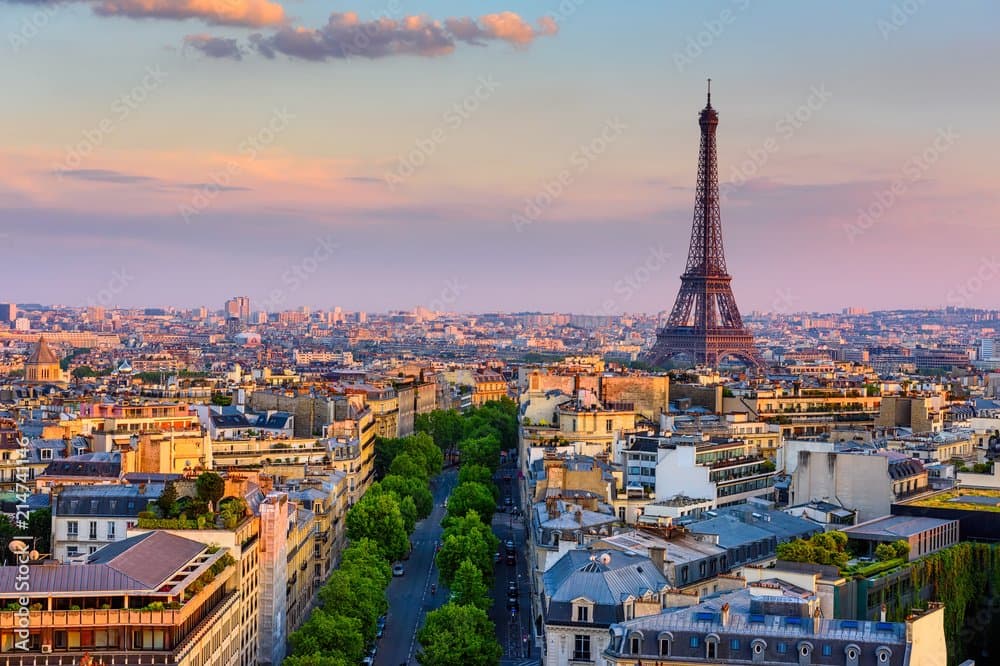

The French education system’s public vs private structure can be confusing for Nepali students planning on studying in Europe. France has a wide range of higher-education options, including public universities, Grandes Écoles, engineering schools, business schools and private institutions.
So, which one is better? What is the difference between public and private institutions? Are English-taught programmes available? How much does studying in France cost?
The answer depends on your academic background, chosen course, budget and career goals.
France has more than 3,500 public and private higher-education institutions, giving international students a wide range of choices. This guide explains the French education system in simple terms and helps Nepali students understand the main differences between public and private institutions before applying to study in France.
Understanding the French Education System
French higher education follows the European LMD structure:
Licence → Master → Doctorat
In simple terms:
- Licence = Bachelor’s level
- Master = Master’s level
- Doctorat = PhD level
The LMD system uses ECTS (European Credit Transfer and Accumulation System), which provides a common framework for measuring academic study and makes qualifications easier to compare across European higher education.
Licence – Bachelor’s Level
A standard Licence normally takes three years and corresponds to 180 ECTS credits.
Nepali students who have completed +2 or an equivalent qualification may be eligible to apply for Bachelor’s-level study, depending on the admission requirements of the chosen programme.
Popular fields include:
- Business and Management
- Computer Science and IT
- Engineering
- Economics
- Social Sciences
- Humanities
- Arts and Design
- Hospitality and Tourism
Not every Bachelor’s programme is structured or named exactly the same way, so students should always check the specific qualification awarded by the institution.
Master – Postgraduate Level
A standard Master’s degree generally takes two years after a Bachelor’s degree and adds another 120 ECTS credits.
For Nepali graduates, France offers Master’s programmes in areas such as:
- Business and Management
- Finance
- Engineering
- Data Science
- Computer Science
- International Relations
- Hospitality
- Luxury Management
- Environmental Studies
Admission depends on the programme. Universities and schools may consider your previous qualification, academic performance, relevant subjects, language ability and other programme-specific requirements.
Doctorat – PhD
The Doctorat is the research-focused level of French higher education. It normally follows Master’s-level study and involves advanced research and a doctoral thesis.
For most Nepali students planning their first study experience in France, however, Bachelor’s and Master’s programmes are the more common options.
What Are ECTS Credits?
ECTS stands for European Credit Transfer and Accumulation System.
It is used to measure academic workload and progress within European higher education. A standard Licence corresponds to 180 ECTS, while a standard Master’s adds 120 ECTS.
ECTS can make it easier to understand and compare academic qualifications between European countries.
However, it does not mean that every university will automatically transfer every credit. If you later apply to another institution or country, the receiving institution may assess your qualification and previous coursework according to its own rules.
Public Universities in France
Public universities are an important part of the French higher-education system. They are publicly funded and offer programmes across a wide range of academic fields. French universities award national degrees such as Bachelor’s, Master’s and Doctorate qualifications.
Students can study subjects including:
- Science
- Medicine
- Law
- Economics
- Business
- Languages
- Humanities
- Social Sciences
- Technology
- Arts
What Is the Learning Environment Like?
Public universities can have a strong academic and research focus.
Depending on the programme, students may experience:
- Lectures
- Seminars
- Independent study
- Research projects
- Written assignments
- Examinations
The exact experience varies from one university and programme to another.
Are Public Universities Cheap?
Public higher education in France benefits from substantial government funding, which helps keep tuition comparatively affordable. However, Nepali students should not assume that every public university will have the same tuition fee.
For non-EU students, differentiated registration fees can apply in certain public institutions, while exemptions may also be available depending on the student’s situation and institution. Current French government information confirms that differentiated fees remain part of the system for eligible non-EU students in 2026–27.
Therefore, always check the current tuition fee for your specific programme and intake before making a financial decision.
Private Institutions in France
Private higher-education institutions are another important part of the French education system.
They include schools and institutions specialising in areas such as:
- Business and Management
- Marketing
- Fashion
- Hospitality
- Design
- Communication
- Engineering
- Technology
Many professionally oriented private institutions place emphasis on practical learning, projects, internships and links with industry.
However, private education is not one single category. Tuition fees, admission requirements, accreditation and the qualification awarded can vary considerably between institutions.
This is why students should never choose a private institution simply because it has a popular name or attractive marketing.
Before applying, check:
- Who awards the qualification?
- What is the qualification level?
- Is it officially recognised?
- Is the programme accredited?
- What are the tuition fees?
- What are the admission requirements?
What Are Grandes Écoles?
Grandes Écoles are a distinctive part of the French higher-education system.
They are known for specialised education and, in many cases, selective admission. They are particularly associated with areas such as:
- Engineering
- Business
- Management
- Science
- Public administration
An important point for international students is that Grandes Écoles should not simply be considered private universities. They form a separate and diverse group of institutions, and their legal and funding structures can differ.
Therefore, when researching a French institution, first identify what type of institution it is and what qualification it awards.
Public vs Private Universities in France
Here is a simple comparison for Nepali students planning on studying in France:
| Feature | Public Institutions | Private Institutions |
|---|---|---|
| Funding | Significant public funding | Mainly tuition and other institutional funding |
| Course range | Generally broad | Often specialised |
| Academic focus | Strong academic and research options | Often professionally oriented |
| Tuition | Varies; generally subsidised | Usually varies by institution and programme |
| Class size | Varies | Often smaller, but not always |
| Admission | Depends on programme | Depends on programme |
| English-taught courses | Available | Widely available in some fields |
| Industry exposure | Depends on programme | Often emphasised in professional programmes |
| Research | Strong at many universities | Varies considerably |
This is a general comparison, not a fixed rule.
For example, a public institution can offer highly practical programmes, while a private institution can have strong research opportunities.
The individual programme matters more than the label “public” or “private.”
Which Is Better: Public or Private?
There is no single answer.
The better option depends on your profile and study goals.
Public may be a good option if you:
- Prefer a broad academic environment.
- Are interested in research or traditional academic disciplines.
- Want to explore programmes offered by public universities.
- Meet the programme’s academic requirements.
- Have a suitable budget for the selected programme.
Private may be a good option if you:
- Want a specialised professional programme.
- Are interested in business, management, fashion, hospitality or similar fields.
- Prefer a more career-oriented learning environment.
- Find a suitable English-taught programme.
- Can comfortably manage the tuition and other costs.
Instead of asking:
“Is public better than private?”
Ask:
“Which programme and institution are right for my academic and career goals?”
That is a much better way to make your decision.
Can Nepali Students Study in France in English?
Yes.
You do not necessarily need to study in French to pursue higher education in France.
The official programme catalogue currently lists more than 1,600 programmes that are wholly or partly taught in English.
English-taught options are available in areas including:
- Business and Management
- Engineering and Technology
- Science
- Environment
- Health Sciences
- Law and Economics
- Fashion and Design
- Other specialised fields
The availability is particularly strong at Master’s level. Official programme information also allows students to check the programme’s language, admission requirements, tuition and location.
Do You Need French?
If your selected programme is taught in English, you may not need advanced French for admission.
However, learning French can still be extremely useful for:
- Daily communication
- Shopping and transportation
- Making local connections
- Internships
- Part-time work
- Professional networking
So, studying in English does not mean learning French is unnecessary.
Popular English-Taught Programs
The exact courses available depend on the institution and intake, but Nepali students can find English-taught programmes in areas such as:
Business and Management
- International Business
- Business Management
- Marketing
- Finance
- Entrepreneurship
IT and Technology
- Computer Science
- Data Science
- Artificial Intelligence
- Cybersecurity
- Digital Technology
Engineering
- Engineering
- Aerospace
- Renewable Energy
- Sustainable Engineering
- Technology Management
Fashion and Luxury
- Fashion Management
- Luxury Brand Management
- Fashion Marketing
Hospitality and Tourism
- International Hospitality Management
- Tourism Management
- Culinary Management
The official programme catalogue should always be checked for the latest course availability, language, tuition and admission requirements.
How Does Admission Work?
There is no single admission process for every French institution.
The process can depend on your:
- Nationality
- Country of residence
- Previous qualification
- Level of study
- Chosen programme
- Institution
For international students, the application procedure can therefore vary depending on the programme and level of study. French government guidance specifically notes that admission procedures differ according to nationality, country of residence, previous qualification and intended studies.
Generally, students may need:
- Academic certificates and transcripts
- Passport and identification documents
- English or French language evidence, where required
- CV
- Motivation letter or SOP, where required
- Programme-specific documents
- Application form
- Interview, where applicable
The important point is to follow the requirements of your specific programme rather than assuming that every university follows the same process.
When Does the Academic Year Start?
The French academic year generally begins in September or October, depending on the institution and programme. Some institutions and programmes may have additional start dates, including January or February.
However, a January intake is not available for every course. If you are planning on studying in France from Nepal, always check the intake for your chosen programme before preparing your application.
How to Check Whether a French Qualification Is Recognised
This is one of the most important steps when selecting an institution.
A course title alone does not tell you everything about the qualification.
Before paying a tuition deposit, check:
- What qualification will I receive?
- Who awards the qualification?
- Is it a national diploma?
- What is the qualification level?
- Is the programme officially recognised or accredited?
- Is it registered in the RNCP where applicable?
- What are the progression opportunities after graduation?
This is particularly important when comparing private institutions because the type and status of qualifications can vary.
Do not choose a programme only because the institution has an attractive website or a popular course title.
Look at the qualification behind the course.
What Should Nepali Students Consider?
Before choosing a French university or school, compare these key factors:
1. Academic Background
Does the programme match your previous education?
2. Course
Does the subject support your career goal?
3. Recognition
What qualification will you actually receive?
4. Language
Is the programme taught in English, French or both?
5. Tuition
Can you comfortably manage the programme’s tuition?
6. Living Costs
Can you afford accommodation, food, transport and other expenses in the selected city?
7. Admission Requirements
Do you meet the academic and language requirements?
8. Career Goals
Will the course help you move toward your intended career?
These factors are much more important than simply choosing a university because it is public or private.
Studying in France with BrightPath Nepal
Choosing an institution is only one part of studying abroad. Students also need to understand the course, admission requirements, documentation, application process and visa requirements.
At BrightPath Nepal, we help students plan their France study journey based on their academic background and future goals.
Our support can include:
- Profile Evaluation
- Course and University Selection
- Public vs Private Institution Guidance
- Application Support
- SOP and CV Guidance
- Interview Preparation
- Documentation Guidance
- Visa Guidance
- Pre-Departure Support
Our goal is not simply to help you find a university. It is to help you understand why a particular course and institution could be suitable for you.
Frequently Asked Questions
Is France good for Nepali students?
France can be an attractive destination for Nepali students because it offers a diverse higher-education system, internationally oriented programmes and many English-taught study options. France currently has more than 3,500 higher-education institutions.
Is public or private better in France?
Neither is automatically better. Your choice should depend on your course, academic profile, budget, qualification, language and career goals.
Are public universities in France free?
No. Public higher education is heavily supported by the French State, but tuition and registration fees still apply. Non-EU students may also be subject to differentiated fees in certain circumstances.
Can I study in France in English?
Yes. More than 1,600 programmes are currently listed as wholly or partly taught in English.
Do I need French to study in France?
Not necessarily. If your programme is taught in English, advanced French may not be required for admission. However, learning French can be very helpful for everyday and professional life.
Is a Bachelor’s degree in France three years?
A standard Licence is generally three years and corresponds to 180 ECTS. Other Bachelor’s-level qualifications and programme structures also exist, so students should check the exact programme.
What is a Grande École?
A Grande École is a distinctive type of French higher-education institution, often specialised and selective. It should not simply be treated as another name for a private university.
How should I choose between public and private institutions?
Start with your academic background and career goal. Then compare the course, qualification, recognition, tuition, language, location and admission requirements.
Final Thoughts
The French education system offers much more than a simple public versus private choice.
There are public universities, Grandes Écoles, engineering schools, business schools and specialised institutions, each with different programmes and qualifications. For Nepali students, the most important thing is to look beyond the institution’s name.
Before applying, ask yourself:
- Does this course match my previous education?
- Is the qualification recognised?
- Can I afford the tuition and living costs?
- Is the programme taught in English or French?
- Does it support my career goal?
Once you answer these questions, deciding between public and private becomes much easier.
If you are planning on studying in France from Nepal, BrightPath can help you understand your options, select suitable programmes and prepare your application step by step. The right choice is not simply the cheapest or most famous institution. It is the one that fits your profile, budget and future goals.