
Study in France
from Nepal: A Complete Guide 2026-27
France is the fourth most popular destination for international students globally. Home to some of the world's oldest and most prestigious universities, France offers world-class education at remarkably low tuition costs in public institutions. With its rich culture, central Schengen location, and thriving job market, France is an excellent choice for ambitious students.



5 Reasons Nepali Students Choose to Study in France

ACADEMICSWorld-Class Education and Global Rankings
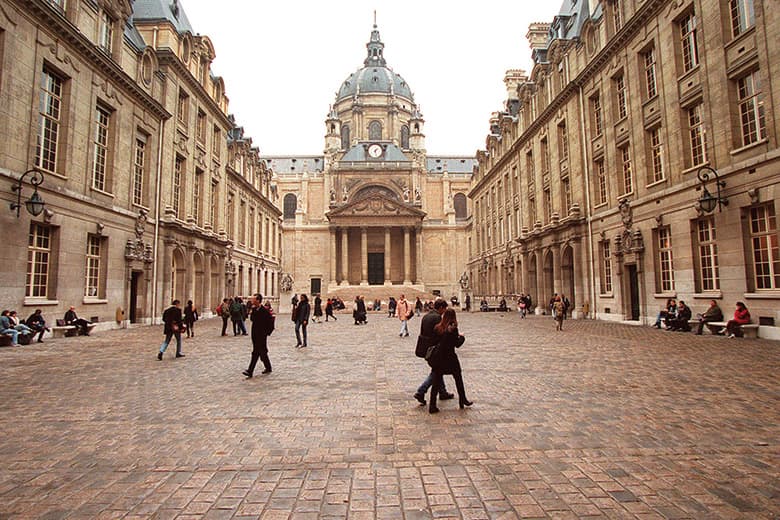
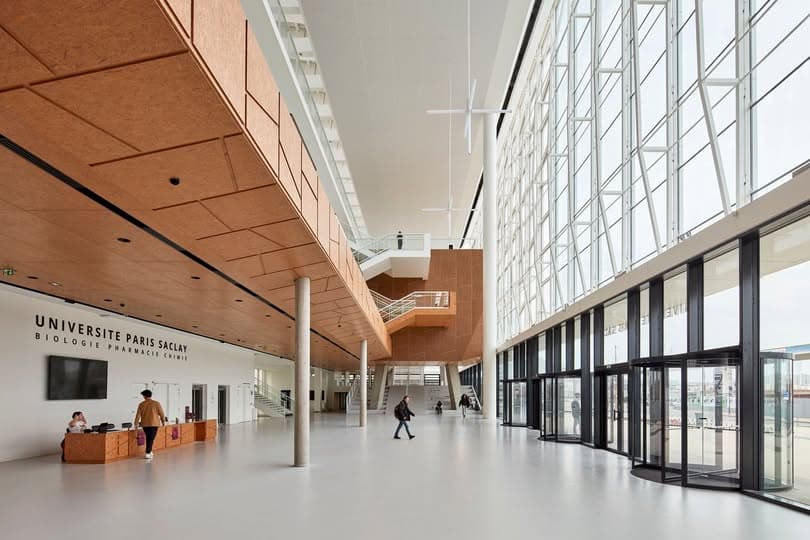
France is home to top-tier institutions. According to the Shanghai Ranking 2026, France ranks 10th worldwide with 27 ranked institutions. Universities like PSL University, Institut Polytechnique de Paris, Sorbonne University, and Université Paris-Saclay consistently rank in the global Top 100.
AFFORDABILITYAffordable Public Universities & Scholarships
The French government heavily subsidizes public higher education. Depending on exemptions, tuition fees can be extremely affordable, and students have access to prestigious grants like the Eiffel Excellence Scholarship, IdEx Scholarships, and funding found via Campus Bourses.

STUDENT BENEFITSComprehensive Student Benefits
The French government provides massive support to students. This includes the CROUS €1 meal (featuring a main course and two side dishes made with organic/local ingredients) and affordable CROUS housing ranging from €200 to €500 per month, which can be further reduced by CAF/APL housing subsidies.
Work While Studying
48 Hrs every 2 weeks
Work After Study
1 to 3 Years
HEALTH CAREExtensive Healthcare Coverage (Social Security)
International students in France benefit from robust health insurance. The system covers 70% of standard GP and specialist visits, 80% of hospitalizations, up to 100% of prescription drugs, and offers 100% free access to university health centers for routine and preventive care.


ACCESSIBLE TRANSPORTATIONAccessible Travel at the Heart of Europe
Studying in France provides seamless access to the Schengen Area. With discounted transportation like the SNCF Carte Avantage Jeune (€49/year) and Paris Imagine R Pass, students can easily explore 27 European countries and benefit from numerous Erasmus exchange programs.
Proof of English Proficiency in France
While France is a Francophone country, it offers well over 1,000 programs taught entirely in English. To enroll in an English-taught program, Nepali students must prove their English language proficiency.
The most widely-accepted English language proficiency tests in France include:
With 284 million French speakers globally, conversational French unlocks a vast professional network across Europe and Africa.
Is French Language Mandatory to Study in France?
If you enroll in an English-taught program, French is not legally mandatory for university admission. However, it is highly practical and heavily recommended for your career and survival.
It is recommended to complete a minimum of 2 months of French language training before departure.
Internships (Stage):
Most Master's degrees in France mandate an internship. While multinational firms use English, the vast majority of local companies, start-ups, and mid-sized enterprises mandate functional French.
Daily Life:
Medical appointments, visiting the pharmacy, setting up utility bills, and contacting customer service are significantly smoother with conversational French.
Furthermore, with 284 million French speakers globally, it opens up a powerful network across Europe and Africa.
Popular Courses in France
Explore the most sought-after programs that offer excellent career prospects and high-quality training.
Business & International Management
Fashion Design & Luxury Brand Management
Engineering & Technology
Culinary Arts & Hospitality
Political Science & International Relations
Art, Architecture & Design
Why Study these Courses in France
France is the undisputed global capital of luxury, fashion, gastronomy, and hospitality, making it the premier destination for students entering these fields. The country is home to triple-crowned business schools that hold immense weight in the corporate world.
For technology enthusiasts, France is aggressively investing in STEM and AI, with 4 institutions ranked globally in the top 50 for the number of leading STEM programs. Studying these courses in France guarantees strong industry linkage, meaning students are frequently placed in high-value internships before they even graduate.
1. Business & Management
Why Study It in France
Access to elite “Grandes Écoles” and triple-crowned business schools (EQUIS, AMBA, AACSB) with vast global corporate networks and top-tier career placements.
Popular Programs
- Master in Management (MiM) & Global MBA
- International Business & Strategic Marketing
- Corporate Finance, Auditing & FinTech
Key Advantage in France: Access to elite “Grandes Écoles” and triple-crowned business schools (EQUIS, AMBA, AACSB) with vast global corporate networks.
2. Engineering, STEM & AI
Why Study It in France
Ranked 10th globally with major government and EU investments in AI research, aerospace engineering, robotics, and world-class public technical institutes.
Popular Programs
- MSc in Artificial Intelligence & Data Analytics
- Aerospace, Aeronautical & Mechanical Engineering
- Software Engineering, Cyber Security & Robotics
Key Advantage in France: Ranked 10th globally; major government investment in AI research and world-class public technical institutes.
3. Fashion & Luxury
Why Study It in France
As the birthplace of haute couture and world fashion capital, Paris offers unmatched creative inspiration and prestigious networking opportunities.
Popular Programs
- MBA / MSc in Luxury Brand Management
- Fashion Design, Haute Couture & Styling
- Luxury Retail & Fashion Merchandising
Key Advantage in France: The birthplace of haute couture, offering unparalleled internship opportunities at top global fashion and luxury houses.
4. Culinary & Hospitality
Why Study It in France
France is celebrated globally for culinary mastery and luxury hospitality standards, giving graduates immediate international credibility and mobility.
Popular Programs
- International Hospitality & Hotel Management
- French Gastronomy & Culinary Arts
- Pastry, Bakery & Wine Management
Key Advantage in France: The world capital of gastronomy and tourism; provides hands-on Michelin-star training opportunities and global mobility.
5. Art & Architecture
Why Study It in France
Immersive learning in cities rich with centuries of artistic heritage, world-class museums, iconic architectural landmarks, and avant-garde design studios.
Popular Programs
- Diplôme d'État d'Architecte (DEA) / Architecture
- Fine Arts, Contemporary Art & Scenography
- Interior Architecture, Spatial Design & Urban Planning
Key Advantage in France: Immersive learning in cities rich with centuries of artistic heritage, museums, and avant-garde design.
France Popular Courses & Advantage
Entry Requirements: Public vs. Private Universities
Admission & Evaluation Criteria
1. ACADEMIC REQUIREMENTS & DEGREE EQUIVALENCYThe French Education System & Previous Studies Mapping
The French education system evaluates Nepalese qualifications strictly, with distinct differences in how public and private institutions map your previous studies.
For Bachelor's Degrees (Licence):
- Public Universities: Require a completed +2 transcript (NEB, CBSE, or A-Levels) with strong academic standing, typically a minimum of 65% to 75% (GPA 2.8+), heavily weighted toward the core subjects relevant to your major.
- Private Institutions: Accept +2 graduates (often from 60% and above). They place equal emphasis on the admission interview, extracurricular activities, and your overarching career goals.
For Master's Degrees (Master 1 / Master 2 / MSc / MiM):
- Public Universities: Generally require a 4-year Nepalese Bachelor's degree (e.g., B.E., 4-year BBA/BSc from TU, KU, PU) to meet the European Credit Transfer and Accumulation System (ECTS) 180-credit requirement for direct entry into a Master 1. A 3-year degree (like BBS or BA) may require you to enroll in the final year of a French Bachelor's program (Licence 3) before progressing to a Master's.
- Private Institutions & Grandes Écoles: Highly flexible. They readily accept 3-year Nepalese Bachelor's degrees for direct entry into specialized Master of Science (MSc) or Master in Management (MiM) programs. Some elite business schools may additionally require a GMAT, GRE, or TAGE MAGE score.
2. LANGUAGE PROFICIENCY PROOFStandardized Tests & Flexibility
English-Taught Programs (Common in Private Schools and Public Master's): IELTS Academic (6.0–6.5 overall, no band below 5.5), TOEFL iBT (80–90+), or PTE Academic (55–65+). Private institutions are generally more flexible and may conduct their own internal English assessments or accept the Duolingo English Test (DET), whereas public universities strictly require traditional standardized tests.
French-Taught Programs (Standard for Public Universities): If applying for a program delivered in French, you must present a DELF B2 or DALF C1 certificate. TCF-TP with written expression is also widely accepted.
3. APPLICATION & DOCUMENTATIONCentralized vs. Decentralized Pathways
The application routing differs fundamentally between the two systems. Public university applications are centralized, while private applications are decentralized.
- Public Universities: Applications are processed through a single, centralized national application. Under this state-administered system, you can apply to a maximum of 3 choices for a Bachelor's degree or up to 7 choices for a Master's degree per intake.
- Private Institutions: Applications are decentralized and submitted directly through each college or university individual admission department. Once you secure an official Acceptance Letter (Attestation d'Inscription), you register with the central education authority solely to complete the mandatory pre-consular screening before booking your visa appointment.
- Motivation Letter (SOP): Public universities expect a highly academic, structured, and formal motivation letter detailing your research interests and academic trajectory. Private institutions prefer a dynamic narrative focusing on your professional ambitions, leadership skills, and industry alignment.
- Curriculum Vitae (CV): Public universities favor the standardized Europass CV format. Private business or design schools prefer a modern, impact-driven resume highlighting internships, projects, and skills.
- Additional Portfolio Requirements: Private institutes specializing in Fashion, Art, Architecture, or Culinary Arts mandate a digital portfolio, audition tape, or specific design assignments as part of the initial screening.
4. FINANCIAL PREPARATION & TUITION DEPOSITSLiving Costs & Tuition Structures
French immigration requires all students to prove they have a minimum of €615 per month (approximately NPR 90,000) for living expenses. However, the university fee structures alter the upfront financial burden:
- Public Universities: You are only required to prove your living expenses (via 6 months of sponsor bank statements or an education loan) and pay the CVEC (Student and Campus Life Contribution) of approx. €103. Tuition fees (€2,770 - €3,770/year) are often paid upon arrival in France.
- Private Institutions: Tuition fees range significantly from €8,000 to €18,000+ per year. To issue your final unconditional admission letter required for the visa, private schools mandate an upfront non-refundable tuition deposit (usually between €2,000 and €5,000). You must prove you can cover the remaining tuition balance in addition to the €615/month living expenses.
5. AUTHENTICITY AND VERIFICATIONZero Tolerance for Fraud & Rigorous Verification
The French Embassy and Campus France actively combat document fraud. Submitting altered documents will result in an immediate visa ban for the entire Schengen area.
- Notarization: All Nepali academic transcripts, character certificates, and citizenship documents must be translated into English (or French) and notarized.
- Direct Verification: Campus France Nepal cross-references NEB certificates and University transcripts directly with the issuing examination boards in Nepal.
- MoFA Attestation: While not strictly required for the initial application, having your highest academic degree attested by the Ministry of Foreign Affairs (MoFA) Nepal strengthens your file and is often requested during the final visa processing stages.
Major Intake Periods for French Universities
Key Admission Windows & Deadlines
For Public Universities (e.g., the 2027 Intake), the application timeline is strict:
October 1st, 2026
Applications OpenApplications for public universities open.
December 15th, 2026
Final DeadlineThe absolute final deadline for students to submit completed applications and complete their interview.
March to April 31st, 2027
Interviews & DecisionsStudents are invited to university interviews and receive their admission decisions.
Early June, 2027
Visa & VFS PrepStudents prepare financial proofs, secure accommodation, complete visa applications, and schedule a VFS appointment.
Note: Private institutions and business schools may offer multiple intakes (September and January/February).
France Student Visa & University Application Document Checklist for Nepali Students
Essential Admission Documents for French Universities
1. Admission Documents & University Application
Centralized vs. Direct Application Routing
For international students applying to study in France, higher education applications follow structured pathways depending on the type of institution:
- Public Universities (Universités): Applications are submitted through the official centralized national application portal. Under this standard state-administered system (covering procedures like DAP and non-DAP), students can select up to 3 choices for a Bachelor’s degree (Licence 1) or up to 7 choices for Master’s degrees (Master 1 / Master 2) per academic intake.
- Private Institutions & Business Schools: Most private institutions (Grandes Écoles, business, fashion, and culinary schools) accept applications online. Once an official Acceptance Letter (Attestation d'Inscription) is issued, the applicant registers with the central pre-consular educational system purely to complete the compulsory pre-consular academic verification before proceeding to the visa phase.
Essential Admission Document Checklist
1. Valid Passport
A high-resolution color scan of the passport bio-data page and address/signature page.
Must be valid for at least 15 months beyond the intended program start date and contain a minimum of two blank pages.
2. Academic Transcripts & Qualification Certificates
Complete, chronological academic records starting from secondary education:
- Secondary Level: SEE / SLC Marksheet, Character Certificate, and Board Certificate.
- Higher Secondary Level: +2 / Intermediate (NEB, CBSE, or A-Levels) Transcript, Migration Certificate, Character Certificate, and Passing Certificate.
- Higher Education (for Master's applicants): Bachelor’s semester-wise/year-wise Transcripts, Provisional Graduation Certificate, Degree Certificate, and an official Grading Scale document from the issuing university (e.g., TU, KU, PU) if the grading criteria is not stated on the transcript.
Notarization & Translation: Any original documents issued in the local language must be accompanied by an official English or French translation certified by a registered Notary Public.
3. Language Proficiency Proof
English-Taught Programs: Official score reports from recognized standardized tests:
- IELTS Academic: Minimum overall score of 6.0–6.5 (no individual band below 5.5).
- TOEFL iBT: Minimum score of 80–90.
- PTE Academic: Minimum score of 56–65.
Note: Select private institutions may accept a Medium of Instruction (MOI) letter from the prior university or conduct an internal assessment, but an official standardized report is strongly recommended for consular evaluation.
French-Taught Programs:
- DELF / DALF: Minimum B2 level certificate for Bachelor’s and most Master’s programs; C1 level for competitive humanities, law, or literature majors.
- TCF (Test de Connaissance du Français): TCF-TP report with compulsory written expression components.
4. Statement of Purpose (Motivation Letter) & Standardized CV
Statement of Purpose (SOP): A well-structured 1- to 2-page essay detailing:
- Academic background and key projects/achievements.
- Motivation for choosing France over other international destinations.
- Rationale behind selecting the specific university and curriculum.
- Precise short-term and long-term career objectives post-graduation.
Curriculum Vitae (CV):
- Public Universities: Prefer the standardized Europass CV format.
- Private Institutions: Accept modern professional resumes highlighting education, practical experience, technical skills, and extracurricular activities.
5. Letters of Recommendation (LORs)
- Typically two academic recommendations from former professors, department heads, or academic supervisors.
- For Master's applicants with professional experience, one academic LOR and one professional LOR from a recent employer are recommended.
- Must be printed on official institutional/company letterhead, signed, stamped, and include the referee’s official work email address and contact number.
6. Portfolio & Program-Specific Requirements (If Applicable)
- Creative Majors: Design, Fine Arts, Architecture, and Fashion programs require a digital portfolio showcasing recent personal projects or artistic works.
- Management / MBA Programs: Private business schools may require 1–3 years of documented work experience certificates, salary slips, and GMAT/GRE scores for executive/specialized programs.
Central Processing Fee & Academic Interview
Pre-Consular Clearance
Fee Amount: NRs. 14,500.00 (Fourteen Thousand Five Hundred Nepalese Rupees). This administrative fee is non-refundable and covers official pre-consular file verification and assessment.
Payment & Scheduling: Paid via bank deposit or transfer to the designated official account once the online application dossier is verified.
Pedagogical Academic Interview: After payment confirmation, the applicant attends a mandatory pre-consular academic interview (conducted in person or online). During this session, the student presents their academic background, explains their study plan, and demonstrates language readiness to obtain official Pre-Consular Clearance.
Mandatory Visa Document Checklist
2. Visa Documents & Immigration Compliance
Long-Stay Student Visa (VLS-TS) Overview
After securing university admission and completing the mandatory pre-consular academic screening, the applicant applies for a Long-Stay Visa serving as a Residence Permit (VLS-TS / Visa de Long Séjour valant Titre de Séjour). The application is logged online through the official France-Visas portal, and biometrics/document submission are completed at the VFS Global France Visa Application Centre.
1. Proof of Acceptance & Pre-Consular Clearance
- Official University Admission Letter (LOA): Final, unconditional acceptance letter (Attestation d'Inscription) issued on official institutional letterhead. Must state the program level, field of study, duration, start/end dates, tuition fee structure, tuition deposit paid, and language of instruction.
- Pre-Consular Approval Certificate: The official pre-consular clearance document (Attestation de Fin de Procédure) confirming that academic screening and document verification have been completed.
2. Proof of Financial Resources
Applicants must demonstrate financial self-sufficiency of at least €615 per month (approx. NPR 90,000/month), amounting to a minimum of €7,380 for 12 months (approx. NPR 1,000,000 to 1,200,000 per academic year).
For private institutions with remaining unpaid tuition fees, the financial dossier must demonstrate liquid funds covering the remaining tuition balance + €7,380 in living expenses.
Financial capacity can be demonstrated through one or a combination of the following sources:
- Self-Funded / Family Sponsor Bank Account: Original bank balance certificate from a recognized commercial bank (Class 'A'), accompanied by updated bank statements covering the last 6 consecutive months showing regular, legitimate transactions and a stable maintaining balance.
- Educational Loan: An official Education Loan Sanction Letter issued by an 'A' Class commercial bank covering tuition and living expenses.
- Financial Sponsor Documentation (If sponsored by parents or relatives):
• Sponsorship Affidavit: A notarized declaration from the sponsor promising full financial support for the entire duration of studies.
• Relationship Proof: Relationship Verification Certificate issued by the local Ward Office confirming the connection between the applicant and the sponsor.
• Sponsor's Income Evidence: Tax Clearance Certificate, latest 3 years’ Income Tax Returns (ITR), salary certificates + 3 months' pay slips, or business registration documents with audited financial statements.
- Scholarship Award Letter: Official award certificate detailing the monthly stipend, tuition coverage, and grant duration.
3. Proof of Accommodation in France
Guaranteed housing arrangements in France covering at least the first month of stay (a 3-month arrangement is strongly recommended):
- CROUS Housing: Official allotment letter (Attestation de Réservation).
- Private Student Residence or Lease: Formal lease agreement (Bail de location) signed by both parties or a formal housing booking attestation.
- Private Host Accommodations (Attestation d'hébergement): A signed declaration of free accommodation from the host residing in France, accompanied by a copy of the host’s French National ID card or valid Residence Permit (Titre de Séjour), copy of property ownership deed (Titre de Propriété) or active rental lease, and a recent utility bill (EDF electricity or gas bill) dated within the last 3 months.
- Temporary Hotel/Airbnb Stay: A confirmed hotel or Airbnb booking for at least the first 30 days, accompanied by a detailed written plan outlining how permanent housing will be secured upon arrival.
4. Travel & Medical Insurance
- Coverage Threshold: A Schengen-standard Travel Medical Insurance policy with a minimum coverage of €30,000 for emergency medical treatment, urgent hospitalization, and repatriation costs.
- Validity: Must be valid across all 29 Schengen member states and cover at least the initial 3 months of stay in France (until registration for the French National Health Insurance system, Sécurité Sociale).
5. Cover Letter & Personal Statement
A comprehensive, signed cover letter addressed to the Consul General, Embassy of France in New Delhi (submitted via VFS Global), detailing:
- Applicant background and purpose of study in France.
- An itemized overview of the academic pathway and program choice.
- A transparent breakdown of the financial structure (sponsors, liquid bank deposits, loans).
- Details of the accommodation arrangement upon arrival.
- A formal statement of intent regarding compliance with visa duration and return plans upon course completion.
6. Civil & Police Verification Documents
- Police Clearance Certificate (PCC): Issued online by the Nepal Police Headquarters, issued within 3 months of the visa appointment date.
- Citizenship Certificate: Original Citizenship card along with a certified English/French translation.
- Relationship Verification Certificates: Required if family members are acting as financial sponsors.
7. Passport, Photos & Submission Forms
- Official Visa Application Form: Printed copy of the completed and signed VLS-TS form generated through the official France-Visas portal.
- France-Visas Registration Receipt: Printout of the submission receipt generated upon locking the online form.
- Passport Photographs: Two recent (taken within 6 months) passport-size photographs strictly complying with ICAO standards (35x45mm, plain light/white background, 70–80% face coverage, no headwear/glasses unless worn for religious grounds).
- Passports: Original passport along with clear photocopies of all previous passports, current visa pages, and entry/exit stamps.
- VFS Application Fees: Visa processing fee (€99, payable in equivalent NPR cash at the counter) plus VFS service charges.
Study in France from Nepal: Frequently Asked Questions (FAQs)
Still Have Questions?
Our expert counselors are ready to help you navigate your journey to France. Get personalized advice today.