
Study in Japan
from Nepal: A Complete Guide 2026-27
Japan offers Nepalese students a safe, disciplined environment with high visa success rates and world-class technological education. Learn the language and open doors to global academic success with expert guidance from BrightPath.
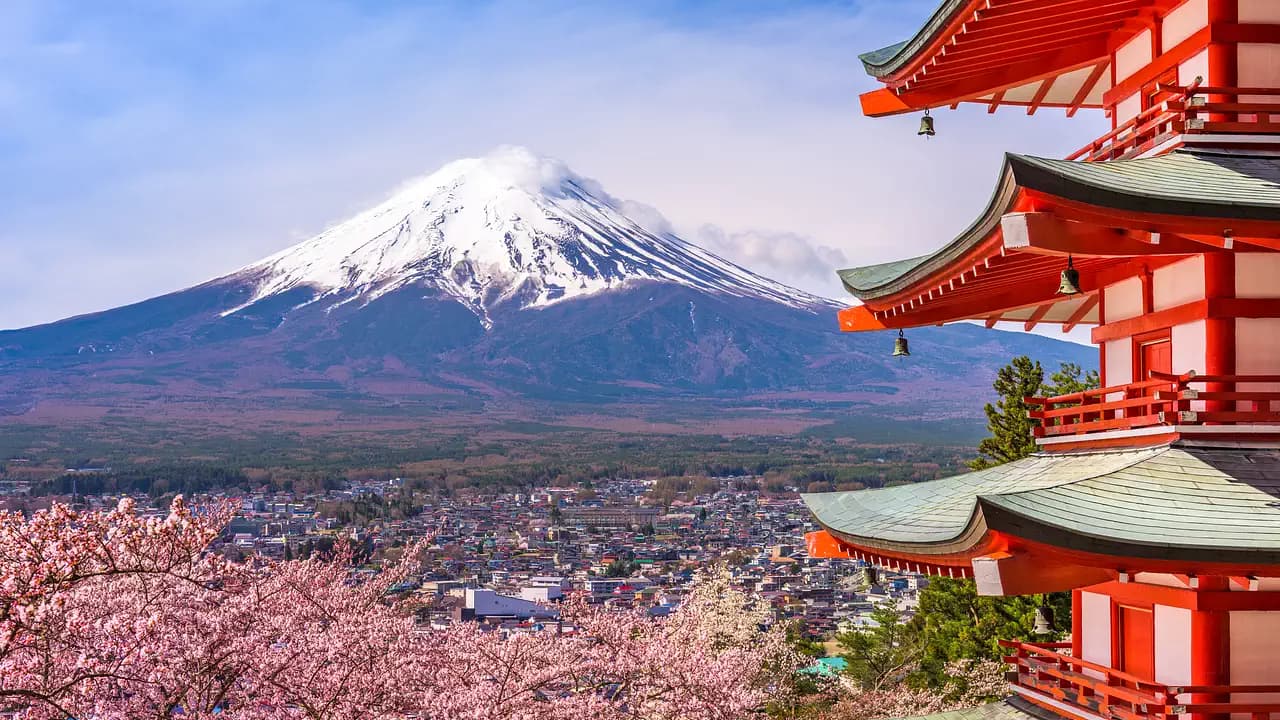


Top 5 Reasons Why Nepali Students Choose to Study in Japan

EDUCATION SYSTEMWorld-Class Education System
Japan boasts some of the highest educational standards in the world, with numerous universities consistently ranking in the QS Global Top 100. The country is a global leader in technology, engineering, and business innovation.
AFFORDABILITYAffordable Tuition & High Visa Success Rates
Compared to the US, UK, or Australia, Japanese language schools and universities offer highly competitive tuition fees. Furthermore, the visa success rate for genuine Nepali students with proper financial backing and language preparation is exceptionally high.


PART TIME WORKHigh Part-Time Work Allowance
International students in Japan are legally allowed to work up to 28 hours per week during regular school days, and up to 40 hours per week during long school holidays (like spring or summer breaks). This helps Nepali students easily cover their monthly living and accommodation expenses.
Work While Studying
28 Hrs per week (semester)
Designated Activities Visa
Job-Hunting / Work Visa
SAFETYExceptional Safety and Cleanliness
Japan frequently ranks as one of the top 10 safest countries globally. With an incredibly low crime rate, world-class public transportation, and a highly respectful society, it offers peace of mind for international students and their families.

POST STUDY WORKPost-Study Work & Settlement Opportunities
Due to its aging population, Japan is actively seeking skilled international graduates. Options like the Specified Skilled Worker (SSW) visa and the standard working visa (Engineer/Specialist in Humanities/International Services) make transitioning from a student to a full-time employee highly achievable.
English Language Requirement to Study in Japan
Under the "Global 30" (SGU) initiative, many top Japanese universities offer Bachelor’s and Master’s programs taught entirely in English. If you choose this route, Japanese is not mandatory for admission.
Accepted English language proficiency tests and typical score requirements include:
Japanese Language Requirement to Study in Japan
If you are enrolling in a Japanese Language School, a vocational college (Senmon Gakko), or a Japanese-taught university program, you must prove your Japanese language capability:
For Language Schools
Minimum 150-hour Japanese Study Certificate plus an N5 level pass (JLPT, NAT-TEST, JLCT, or J-CERT).
For Universities/Vocational Colleges
Direct entry usually requires a high intermediate to advanced level, equivalent to JLPT N2 or N1.
Popular Courses in Japan
Nepali students tend to excel and find the highest employment rates in the following disciplines:
Japanese Language Foundation Courses (1 to 2-year programs)
Information Technology & Software Engineering
Automobile Engineering & Robotics
Business Administration & International Management
Nursing & Care Management (Kaigo)
Animation, Manga, and Digital Arts
Why Study these Courses in Japan
Japan combines world-leading technical precision, rapid workforce demand due to its demographic landscape, and globally acclaimed creative industries. Enrolling in these high-demand disciplines allows Nepali students to gain practical expertise, secure high-paying part-time arubaito, and transition smoothly into long-term professional careers:
1. Japanese Language Foundation Courses (1 to 2-year programs)
Why Study It in Japan
The most trusted entry pathway for Nepali students. Total immersion in Japanese daily life and structured classroom training accelerates fluency from beginner (N5) to business level (N2/N1) while building professional etiquette and cultural fluency.
Popular Programs
- 1-Year & 2-Year Intensive Preparatory Japanese
- JLPT N2/N1 Preparation & EJU Exam Modules
- Business Japanese & Job Placement Training
Career Advantage: Unlocks direct progression to Japanese vocational colleges (Senmon Gakko), national universities, and qualifies students for standard work visas or Specified Skilled Worker (SSW) employment.
2. Information Technology & Software Engineering
Why Study It in Japan
Japan is undergoing massive national digital transformation with a projected shortfall of over 700,000 IT specialists. Tech enterprises actively recruit international software engineers, cloud specialists, and full-stack developers.
Popular Programs
- BSc / MSc in Computer Science & Software Engineering
- Artificial Intelligence & Data Science
- Cloud Architecture & Cybersecurity
Career Advantage: Fast-track eligibility for Japan's Highly Skilled Professional (HSP) visa, enabling permanent residency fast-tracking in as little as 1 to 3 years.
3. Automobile Engineering & Robotics
Why Study It in Japan
As the home of Toyota, Honda, Nissan, Fanuc, and Yaskawa, Japan provides world-class hands-on mechatronics laboratories, electric vehicle (EV) tech workshops, and direct manufacturing internships.
Popular Programs
- Automobile Maintenance & EV Technology (Senmon Gakko)
- Mechatronics & Industrial Robotics Engineering
- Precision Mechanical Design & Automation
Career Advantage: Exceptional employment demand across Japan's manufacturing hubs (Nagoya, Kanto, Kansai) with direct transition to full-time Engineer visas.
4. Business Administration & International Management
Why Study It in Japan
Japan is the world's 4th largest economy with thousands of global trading firms (Sogo Shosha). Courses blend international management with Japanese corporate culture (Kaizen, Omotenashi, and long-term strategy).
Popular Programs
- BBA / MBA in Global Business Management
- International Trade, Logistics & Supply Chain
- Digital Marketing & Cross-Border E-Commerce
Career Advantage: Strong recruitment pipelines into multinational corporations, banking institutions, and bilateral trade organizations across the Asia-Pacific.
5. Nursing & Care Management (Kaigo)
Why Study It in Japan
Japan has the world's most advanced elderly care and medical welfare infrastructure. The Japanese government and healthcare foundations offer full scholarships, tuition support, and guaranteed job placement for international care workers.
Popular Programs
- Certified Care Worker (Kaigo Fukushishi) Diploma
- Elderly Healthcare & Welfare Management
- Medical Support & Clinical Assistance
Career Advantage: Guaranteed job placement, generous scholarship funding, and a direct transition to the Care Work (Kaigo) residence status leading to permanent residency.
6. Animation, Manga, and Digital Arts
Why Study It in Japan
Japan is the global capital of anime and manga culture. Specialized vocational colleges in Tokyo and Osaka train students with industry-standard 2D/3D illustration, character design, and digital storyboarding tools used by top studios.
Popular Programs
- 2D / 3D Animation Production
- Manga Drawing, Illustration & Concept Art
- Game Design & Interactive Digital Media
Career Advantage: Direct recruitment pathways into Japan's multi-billion-dollar anime, gaming, and digital media production studios.
Japan Popular Courses & Career Advantage
Entry Requirements to Study in Japan
Baseline Admission Criteria
1. ACADEMIC QUALIFICATIONSFormal Education & GPA Requirements
Academic: A minimum of 12 years of formal education (SEE and +2 completed). A minimum GPA of 2.6+ (or 60%) is generally preferred, though language schools can be flexible.
2. STUDY GAPAcceptable Timeframes & Justification
Study Gap: A study gap of up to 3 to 5 years is generally acceptable if it can be justified with valid work experience or a strong Statement of Purpose (Reason for Study).
3. FINANCIAL CAPABILITYSponsorship, Bank Balance & Income Verification
Financial Capability: Your financial sponsor (usually parents) must demonstrate the ability to support your education. This involves showing a bank balance of approximately NPR 15 Lakhs to 20 Lakhs, supported by transparent annual income documents (business, salary, agriculture, or rent).
4. AGE LIMITApplicant Eligibility Window
Age Limit: Typically between 18 and 30 years old, though exceptions exist for Master's or PhD candidates.
Major Intake Periods in Japan
Key Admission Windows
April Intake
⭐ Primary & Most PopularThe primary and most popular intake. Offers a 2-year language program. (Application deadline: September to November of the previous year).
July Intake
Summer IntakeOffers a 1-year and 9-month program. (Application deadline: January to March).
October Intake
⭐ Second Largest IntakeThe second largest intake, offering a 1-year and 6-month program. (Application deadline: March to May).
January Intake
Winter IntakeThe shortest language program, lasting 1 year and 3 months. (Application deadline: July to September).
Recommendation: Japanese immigration and Certificate of Eligibility (COE) processing have fixed institutional deadlines. We recommend initiating your application process 5 to 6 months in advance.
Japan Student Visa & University Document Checklist for Nepali Students
Essential Admission & Japanese Language Requirements
The Japanese student visa process involves three key stages: school application, COE issuance, and final embassy visa processing. All submitted documents must feature identical spellings of your name and birth date, and any documents issued in Nepali must include certified English or Japanese translations.
1Academic & Personal Documents
Academic Records
Complete academic transcripts, character certificates, and provisional/migration certificates starting from SEE (or SLC), 10+2, up to your Bachelor's degree (if applicable).
Curriculum Vitae (Bio-data)
A detailed timeline of your education and any work experience.
Reason for Study (SOP / Motivation Essay)
A highly detailed, handwritten or typed essay explaining why you want to study in Japan, why you chose the specific school, and your future career plans.
Passport
Scan of the bio-data page of your valid passport.
Photographs
Typically 8 to 10 copies of recent passport-sized photos (usually 3cm × 4cm or 45mm × 45mm, with a plain white background, taken within the last 6 months).
2Japanese Language Requirements
Language Institute Certificate
A certificate from a recognized language institute in Nepal (like BrightPath Nepal) proving you have completed a minimum of 150 hours of Japanese language study.
Standardized Test Score
An original passing certificate for a beginner-level Japanese test, such as JLPT (N5 level), NAT-TEST (Level 5), J-CERT, or JLCT.
3Financial & Sponsor Documents (From the Local Ward & Bank)
Relationship Verification Certificate
A Ward-issued document officially linking you to your sponsor(s).
Birth Verification Certificate
Issued by the Ward Office.
Occupation / Business Verification
Official proof of your sponsor's income source (e.g., Company/Business Registration, PAN Card, Agriculture/Krishi income verification, or employment salary letters).
Annual Income Verification & Tax Clearance
Ward-issued income valuations and tax clearance certificates covering the last 1 to 3 years to prove steady financial health.
Bank Balance Certificate
A bank-issued certificate showing a minimum balance of approximately NPR 15 Lakhs to 20 Lakhs (roughly JPY 1,500,000 – 2,000,000).
Bank Statement
A continuous bank statement covering the last 1 to 3 years (depending on the program). Japanese Immigration looks for a realistic, steady account history, not a single massive deposit made right before the application.
4Final Visa Application Documents (VFS Global Kathmandu)
Original COE
The original Certificate of Eligibility plus photocopies.
Valid Passport
Must have at least one blank page.
Visa Application Form
The official MOFA form, filled out completely and printed double-sided.
No Objection Certificate (NOC)
Issued by the Ministry of Education, Science and Technology (MoEST) in Nepal.
Admission Certificate
Your official enrollment letter from the Japanese institution.
Certificate of Eligibility (COE) & Embassy Visa Compliance Documents
Certificate of Eligibility (COE)
The Certificate of Eligibility (COE) is the most crucial document in the Japanese visa process. It is a document issued by the Regional Immigration Bureau in Japan. As an applicant, you do not submit the COE application yourself. Instead, your chosen school or their designated guarantor applies for the COE on your behalf at the immigration office in Japan.
The evaluation process at the Immigration Bureau typically takes several weeks to a few months, depending on the region and application volume. Once approved and issued, the COE is valid for exactly three months, and it almost guarantees your student visa. Note that as of recent updates, COEs can also be issued as electronic PDF copies, meaning you may not always need to wait for a physical document to be mailed to Nepal.
Embassy Visa Application (via VFS Global Kathmandu)
The Embassy of Japan in Kathmandu does not accept direct walk-in applications for student visas. Once BrightPath Nepal receives your original (or electronic) COE from Japan, we will guide you in submitting your final visa application exclusively through the VFS Global Japan Visa Application Centre in Kathmandu. Standard visa processing at the Embassy takes about 5 to 6 working days after VFS submission, though it can take longer during peak intake seasons (March-April and September-November).
Strict Document Formatting Rules for Nepali Applicants:
- A4 Size Only: All original documents and photocopies must be strictly in A4 size.
- No Fasteners: Do not use pins, staples, cello tape, or paper clips on any of your documents.
- Translations: Any documents originally issued in Nepali (such as Citizenship Certificates or Ward documents) must have certified English or Japanese translations done by a registered translator or notary.
Mandatory Visa Documents:
Valid Original Passport
Your passport must have at least one blank page for the visa stamp. You must also include an A4-sized clear photocopy of the biographical data page.
Visa Application Form
You must use the official MOFA form. It must be filled out completely, signed, and printed double-sided on white paper. The contact number listed must belong directly to the applicant.
Recent Passport-Sized Photograph
The photo must exactly measure 45mm x 35mm with a plain white background. It must be a full-face shot (looking straight forward), clear, identifiable, and taken within the last 6 months. It should be attached to the application form (bringing an extra copy is highly recommended).
Original Certificate of Eligibility (COE)
Bring the original document along with 1 standard photocopy or 2 color photocopies showing both sides of the COE. If you received a digital COE, bring clear printed copies.
No Objection Certificate (NOC) [Nepal Specific]
An NOC issued by the Ministry of Education, Science and Technology (MoEST) in Nepal. This is a mandatory requirement by the Nepal Government for students traveling abroad for education.
Certificate of Admission / Enrollment
The original acceptance or enrollment letter issued by your Japanese university or language institution.
Japanese Language Proficiency Certificates
You must submit the original proficiency certificate from recognized testing boards (such as JLPT, NAT-TEST, J-CERT, JLCT, TOP-J, etc.). Additionally, you must provide the original training certificate issued by your Japanese Language School in Nepal.
Frequently Asked Questions: Studying in Japan from Nepal
Still Have Questions?
Our expert counselors are ready to help you navigate your journey to Japan. Get personalized advice today.