
Discover our
latest news & study guides
Get live visa updates, university guides, and scholarship tips for Nepali students. Read clear advice to launch your international education journey.
Latest Articles and Guides
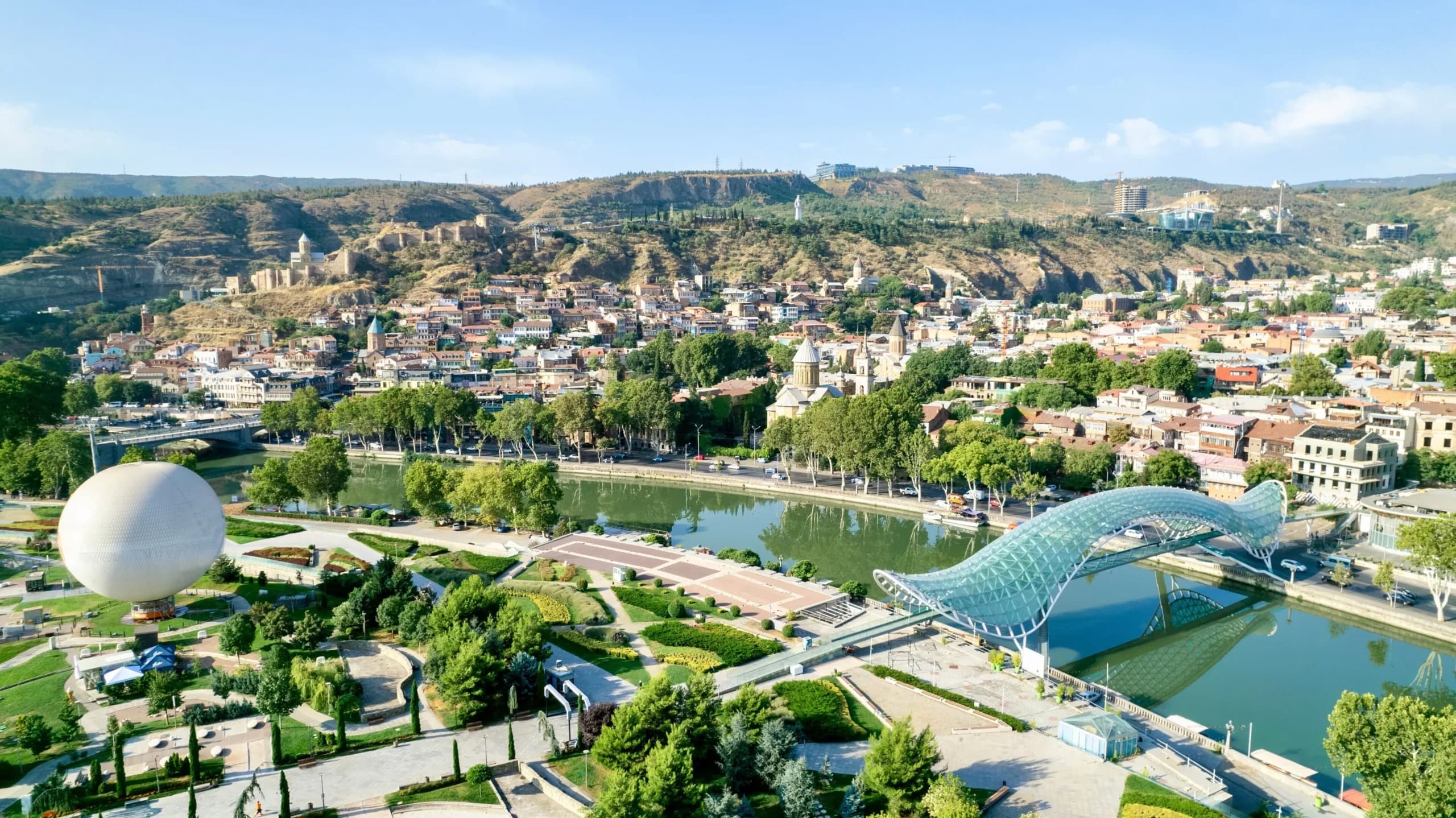
Study in Georgia New Rules for International Student Enrollment
The Government of Georgia has adopted important new regulations governing the admission and enrollment of foreign citizens and stateless persons in Georgian higher educational institutions. Established under Government Decrees No. 435 and No. 437, adopted on September 8, 2026, these changes introduce updated requirements and procedures concerning the admission and enrollment of international students. We request the students to carefully review the study in Georgia new rules and familiarize themselves with the new requirements and procedures established therein. These regulations directly concern the recruitment and enrollment process of international students at the University. Please note that the new regulations are fully and strictly taken into consideration when advising and informing prospective students, preparing documentation, and submitting applications. This is critical to prevent the provision of inaccurate information or any deficiencies related to the preparation and submission of applications. Study in Georgia New Rules for Language Proficiency Standards: Decree No. 435 Decree No. 435 firmly establishes the foreign language proficiency levels required to study in Georgia. Agencies must ensure applicants provide one of the internationally recognized certificates explicitly accepted by the government: Language Accepted Certificates English IELTS, TOEFL iBT, Cambridge English Scale, PTE (Pearson Test of English) German Goethe-Zertifikat B1/B2, TestDaF, German Language Diploma (DSD), Telc Deutsch B1 French DELF, TEF Russian TORFL The Common European Framework of Reference for Languages (CEFR) standardizes English proficiency levels across major testing systems. Here is how the B1 (Intermediate) and B2 (Upper-Intermediate) thresholds map to the most widely accepted exams based on official 2026 concordance data. English Proficiency Test Conversion Tables English Proficiency Test B1 (Intermediate) B2 (Upper-Intermediate) IELTS Academic 4.0 – 5.0 5.5 – 6.5 TOEFL iBT (Legacy 0–120) 42 – 71 72 – 94 TOEFL iBT (New 1–6 Scale)* 3 4 PTE Academic 43 – 58 59 – 75 Cambridge English Scale 140 – 159 160 – 179 Study in Georgia New Rules for Admission Windows and Compliance: Decree No. 437 The government has explicitly tied a student’s academic progress to their immigration status. Why the Government Made These Regulations The Georgian Government implemented Decrees No. 435 and No. 437 to standardize academic quality and enforce stringent immigration compliance. By legally standardizing the minimum required language levels (B1 and B2) and specifying exactly which international certificates are acceptable, the government ensures that foreign students possess the academic communication skills necessary to genuinely succeed in rigorous degree programs. Furthermore, the operational rules are designed to prevent the misuse of Georgian student visas. By requiring universities to electronically log student statuses within three days and linking this data directly with the State Services Development Agency, national authorities can actively monitor whether individuals are genuinely pursuing their studies. The regulation authorizing the termination of a student’s status for those who fail to earn academic credits or secure a valid residence permit within 90 days specifically prevents non-students from exploiting university admission solely to maintain residency in the country. Study in Georgia New Rules Official Reference Links You can review the official texts of both September 8, 2026 decrees directly on the Legislative Herald of Georgia (Matsne) website: Decree No. 435 (Language Proficiency Standards) Decree No. 437 (Admission Windows & Compliance) Both links open the original, legally binding Georgian documents. Note that Matsne offers a built-in translation toggle at the top of the page if you need to view the English versions. Looking to Study in Georgia? Read our Study in Georgia Full Guide

Part time Work Rules in Georgia for Nepali Students
Are you a Nepali student planning your higher education in the Caucasus? Discover everything you need to know about working while studying in Georgia, including legal requirements, mandatory work permits, job markets, and realistic earnings. Stepping onto an airplane at Tribhuvan International Airport in Kathmandu with a one-way ticket to Tbilisi marks a major milestone. For Nepali students pursuing medical, engineering, or IT degrees, Georgia has become a popular study destination. With globally recognized universities and affordable tuition structures, thousands of South Asian scholars choose the Caucasus region every year. However, once you arrive, managing monthly rent, utility bills, and daily grocery expenses requires careful financial planning. If you want to earn extra income while managing your academic load, understanding local labor laws, job opportunities, and expected earnings is essential. This comprehensive guide covers everything you need to know about part time work rules in Georgia for Nepali students. Yes, You Can Work While Studying in Georgia Many Nepali students assume that simply holding a student visa grants them immediate freedom to take up any job. While Georgia does permit international students to work, the process involves a specific legal structure that you must understand from day one. Unlike destinations where student status automatically covers employment, Georgia treats studying and working as distinct legal entitlements. As long as you navigate the proper administrative channels, securing your legal entry via a D3 Student Visa, obtaining your Temporary Residence Certificate (TRC) upon arrival in Tbilisi, and filing for proper work authorization, you can legally take up employment to ease your financial load. 1 Legal Foundation – Visas and Arrival Requirements To legally live, study, and work in Georgia, you must navigate the country’s immigration framework correctly from day one: 2 Working Hours & Academic Balance Balancing a job with a demanding degree, especially in rigorous fields like medicine or engineering, requires strict discipline. 3 Policy Update – The Mandatory “Right to Labour Activity” Under Georgia’s updated labor migration framework, holding a student residence permit does not automatically grant you the right to work locally. 4 What Kind of Jobs Are Available? Because Tbilisi is a growing international business, tourism, and education hub, English-proficient students have access to several practical job markets: High-Income Alternative Options for Skilled Students Job Role Description Core Skills Required Freelance Content Writer Drafting blog articles, web copy, and newsletters for global digital agencies. Excellent command of English grammar and creative flow. Virtual Assistant Managing remote schedules, client emails, and social media coordination. Strong organizational aptitude and clear communication. Online Tutor Teaching math, science, or English to younger students over digital platforms. Deep subject mastery and patience. Frontend Web Developer Building and tweaking responsive web page layouts for small businesses. Proficiency in HTML, CSS, and basic JavaScript. AI Data Evaluator Assessing and annotating machine learning datasets for tech companies. Strong analytical logic and digital literacy. Step 5 Financial Realities: How Much Can You Earn While Studying in Georgia? When planning your budget, it is vital to know exactly what kind of financial return you can expect from part-time work: Job Sector / Role Estimated Hourly Rate (GEL) Estimated Monthly Earnings (Part-Time / ~20 hrs/wk) Hospitality & Retail (Cafe Staff, Cashiers, Waitstaff) 5.00 – 8.00 GEL 300 – 550 GEL English Tutoring (Private / Language Center Support) 15.00 – 30.00 GEL 400 – 800 GEL Digital Freelancing & Remote Gigs (Writing, VA, Dev) Varies by project / skill 500 – 1,200+ GEL The Smart Job-Hunting Playbook: How to Find Work Without Stress Finding a job in a new country isn’t about dropping off a hundred paper resumes; it’s about strategy, networking, and digital literacy. Essential Success Suggestions: Navigating Life and Work Like a Pro Settling into a foreign country involves more than just signing a contract; it requires street smarts, cultural adaptation, and careful personal management. Keep these practical, ground-level insights close to heart: Conclusion: Your Global Future Awaits Studying in Georgia gives Nepali students a combination of an internationally recognized education, an affordable lifestyle, and structured avenues to build professional independence. By understanding your visa and residence requirements, staying fully compliant with Georgian labor and tax laws, leveraging your digital and language skills, and maintaining strict discipline with your studies, your time in Georgia will be rewarding. Part-time work is your first stepping stone toward a confident, independent global career!

Cost of Studying in Georgia for Nepali Students: Pre-Departure & Monthly Expenses
Georgia has rapidly transformed into a dream European-Caucasian destination for Nepali students. Whether you are drawn to its globally recognized medical universities (MBBS/MD), affordable English-medium degree programs, or the stunning cultural heritage and safety of Tbilisi and Batumi, studying in Georgia offers an unparalleled international European experience. However, beneath the excitement of acceptance letters and visa approvals lies the most critical factor every student and parent evaluates: the overall study in Georgia cost. Studying abroad is a massive financial commitment that requires careful planning. Between paying for documentation in Kathmandu, demonstrating sufficient bank balances, and managing daily transport commutes in Georgia, budgeting is essential. To help you plan your academic journey, this comprehensive guide breaks down every single expense you will encounter. We have completely updated these figures to provide you with the most realistic, up-to-date look at pre-departure costs from Nepal and the monthly living expenses once you arrive in Georgia. 1. Understanding Your Study Pathway: Medical (MBBS/MD) vs. General Degree Programs Before calculating your specific tuition, it is vital to understand how you will enter Georgia, as your costs vary based on your program level: 2. Estimated Cost Before Reaching Georgia (Pre-Departure) Your spending starts long before you board a flight at Tribhuvan International Airport. Georgian universities and consular authorities require strict documentation. Below is the detailed breakdown of the exact estimated costs you will incur in Nepal before flying to Georgia. Expense Headings Medical / MBBS Program Undergraduate / Postgraduate Program NPR (Reference Range) Documents Verification Academic transcript verification & notary (NEB, MOFA) Academic transcript verification & notary (NEB, MOFA) 3,500 – 5,000 English Prep & Testing IELTS / TOEFL / MOI preparation IELTS / TOEFL / MOI preparation 10,000 – 25,000 Tuition Fees (Upfront) 1 Year upfront (Medical Program) 1 Semester / 1 Year upfront 500,000 – 1,200,000 Accommodation Proof Initial housing reservation / hostel booking Initial housing reservation / apartment booking 80,000 – 150,000 NOC (No Objection Certificate) Ministry of Education approval Ministry of Education approval 2,000 Courier & Document Delivery Sending documents to Georgian universities Sending documents to Georgian universities 4,500 – 5,000 Visa & Consular Fee Georgian visa & TRC processing Georgian visa & TRC processing 15,000 – 25,000 Medical / Health Insurance Mandatory health & travel insurance Mandatory health & travel insurance 20,000 – 40,000 Application & Invitation Fee University invitation & application processing University invitation & application processing 15,000 – 30,000 Police Clearance Certificate Criminal record check & MOFA attestation Criminal record check & MOFA attestation 2,500 – 5,000 Pocket Money (Settlement) Emergency fund upon arrival Emergency fund upon arrival 150,000 – 300,000 Air Ticket One-way flight from Kathmandu to Tbilisi One-way flight from Kathmandu to Tbilisi 90,000 – 140,000 Total Estimated Expenses NPR 1,200,000 – 1,800,000+ NPR 1,000,000 – 1,500,000+ NPR 1,000,000 – 1,800,000+ A Closer Look at Pre-Departure Expenses A. Tuition Fees: How Much is the Actual Education? Georgian tuition fees are extremely budget-friendly compared to traditional Western countries while maintaining European Credit Transfer and Accumulation System (ECTS) standards. Pro Tip for Nepali Students: Medical students must ensure their chosen university is officially recognized by the Nepal Medical Commission (NMC) so that they are eligible to sit for the licensing examination in Nepal upon graduation. B. Accommodation Proof Before Departure Georgian universities or immigration authorities require proof of initial housing (university hostel or rented apartment booking) for your visa and Temporary Residence Card (TRC) interview. Securing this in advance typically costs between NPR 80,000 and NPR 150,000 (€500–€1,000 equivalent). C. Language Proficiency & Documentation Taking IELTS or TOEFL preparation classes costs NPR 10,000 to NPR 25,000. Notarization, attestation, and verification of academic documents from the National Examination Board (NEB), Ministry of Education, and Ministry of Foreign Affairs (MOFA) cost around NPR 10,000 to NPR 15,000. D. Visa, Invitation, and Insurance Fees University invitation letters and consular processing fees for Georgia cost around $100 to $200 (approx. NPR 15,000 to NPR 25,000). Mandatory medical and travel insurance for the initial period runs around NPR 20,000 to NPR 40,000. E. Flight Ticket & Miscellaneous A one-way flight from Kathmandu (KTM) to Tbilisi International Airport (TBS) typically costs between $700 and $1,000 (approx. NPR 90,000 to NPR 140,000) depending on the airline and booking season. 3. The “Proof of Funds” (Bank Balance Requirement) Demonstrating financial stability is a vital step for securing your Georgian student visa and Temporary Residence Card (TRC). 4. Monthly Living Expenses in Georgia Once you arrive in Georgia, living costs are remarkably affordable compared to Western Europe, making it one of the most budget-friendly study destinations for international students. Expense Item Estimated Monthly (GEL) Equivalent Monthly (NPR) Accommodation (Hostel / Shared Flat) GEL 400 – GEL 800 NPR 20,000 – NPR 40,000 Food & Groceries GEL 300 – GEL 500 NPR 15,000 – NPR 25,000 Public Transportation GEL 40 – GEL 70 NPR 2,000 – NPR 3,500 Utilities & Internet/Mobile GEL 40 – GEL 80 NPR 2,000 – NPR 4,000 Personal & Miscellaneous Expenses GEL 100 – GEL 200 NPR 5,000 – NPR 10,000 TOTAL ESTIMATED MONTHLY GEL 880 – GEL 1,650 NPR 44,000 – NPR 82,500 5. Managing Your Finances: Scholarships and Part-Time Work Securing Scholarships Georgian universities offer merit-based tuition discounts and academic scholarships for international students who maintain high grades throughout their semesters. Part-Time Work Visa / Student Type Eligibility Requirement Allowed Hours (Term Time) Medical / MBBS Students Permitted upon obtaining TRC / resident status Up to 20 hours/week Undergraduate & Postgraduate Permitted upon obtaining TRC / resident status Up to 20 hours/week Practical Money-Saving Tips for Nepali Students Study in Georgia Cost for Nepali Students Studying in Georgia offers an exceptional, globally recognized European education at a fraction of the cost found in traditional study destinations. By planning for pre-departure investments ranging from NPR 10 Lakh to NPR 18 Lakh and managing monthly living expenses between NPR 44,000 and NPR 82,500, Nepali students can build a secure, brilliant academic future. Category Total Cost Range (NPR) Pre-Departure, Tuition & Travel Costs (Nepal Side) ... Continue reading Cost of Studying in Georgia for Nepali Students: Pre-Departure & Monthly Expenses

Study in Georgia From Nepal: Total Costs and Living Expenses (2026–2027 Budget Guide)
Preparing your journey to study in Georgia from Nepal involves far more than just tuition fees—it requires knowing your exact expenses from day one in Nepal until you settle into your student apartment in Georgia. While Georgia provides high-quality, European-standard education at a fraction of Western costs, hidden or unexpected fees can easily throw off your budget without proper planning. This guide breaks down every single expense into clear, plain English. We have divided your complete financial plan into two main parts: Pre-Departure Costs (payable in Nepal) and Post-Arrival Living Expenses (payable in Georgia). 1. Full Pre-Departure & Application Budget: Study in Georgia From Nepal Before you board your flight from Kathmandu to Tbilisi, you will need to pay official university fees, government document charges, visa processing fees, and set aside your initial living money. Here is the full itemized budget from start to finish: Detailed Breakdown of Pre-Departure Expense Items 1. Ministry of Education (MoEST) No Objection Certificate (NOC) 2. University Application & EQE Registration Fee 3. Official Document Translation and Notarization 4. Ward Office Documentation & Relationship Certificates 5. International Health & Travel Insurance 6. Visa Application & VFS Global Service Fees 7. Consultancy Service Charge (BrightPath Education) 8. Initial Mandatory Living Expense Reserve (First 4 Months) 9. University Tuition Fee (First Installment) Pay Per Semester: Georgian universities do not force you to pay the entire year’s tuition at once. You pay semester by semester. If your annual fee is $3,900 USD, your initial pre-departure payment will only be $1,950 USD (approx. NPR 260,000). 2. On-Arrival Costs and Living Expenses in Georgia Once you land in Georgia, daily life is affordable compared to the rest of Europe. The local currency is the Georgian Lari (GEL) ($1 USD ≈ 2.70 GEL). Monthly Living Expenses Table for Nepalese Students Detailed Breakdown of Living Expenses 1. Accommodation & Security Deposit 2. Food & Groceries 3. Public Transportation 4. Temporary Residence Card (TRC) Registration 5. Local Health Insurance Renewal Complete Year-1 Financial Summary for Nepalese Students Here is a clear overview of the total money required for your entire first academic year (including all paperwork, tuition, flight, housing, and 12 months of living expenses): Expense Phase Estimated Range (USD) Estimated Range (NPR) Pre-Departure Process & Flight Ticket $1,065 – $1,540 USD NPR 143,000 – 207,000 Year 1 Tuition Fee (Bachelor’s Standard Level) $3,900 USD NPR 520,000 12 Months Living Costs (at $330/month) $3,960 USD NPR 530,000 Residence Permit (TRC) Fee $100 USD NPR 13,500 TOTAL FIRST YEAR INVESTMENT $9,025 – $9,500 USD NPR 1,206,500 – 1,270,500 In summary, a Nepalese student can cover their entire first year in Georgia—tuition, food, accommodation, documentation, and flight included—for around 12 to 13 Lakhs NPR. Visa Financial Proof Requirements for Georgia To qualify for a Georgian study visa, you must show that your family has enough money in the bank to support your education. Frequently Asked Questions (FAQ) 1. How much money should I carry in cash vs. card when traveling to Georgia? Do not rely exclusively on cash or exclusively on a card. We recommend carrying $1,500 to $2,000 USD on a Travel Dollar Card issued by your bank, plus $500 to $800 USD in fresh, clean cash notes. Having both ensures you are protected if a card gets blocked or if cash is lost. 2. What happens if I choose to stay in a university hostel instead of a private apartment? Staying in a university hostel is cheaper ($100 – $150 USD/month), but you must strictly follow the hostel rules. Most university hostels enforce daily entry and exit curfews (typically 7:00 AM to 8:00 PM). If you choose to rent a private off-campus apartment with flatmates, you have full freedom regarding timings, guest visits, and personal schedules. 3. Can I pay my tuition fee in two payments? Yes. Almost every university in Georgia lets international students pay tuition semester by semester. You do not need to pay the full annual fee upfront before leaving Nepal. 4. Can I work part-time as a Nepali student in Georgia? Yes. Foreign students holding a Temporary Residence Card (TRC) have legal work rights in Georgia. Common options include working in international call centers, IT/digital marketing, or remote English tutoring. However, part-time earnings should be used for extra pocket money rather than relying on them to pay your tuition fees. 5. Are medical degrees (MBBS/MD) in Georgia more expensive? Yes. Standard Bachelor’s degrees (Business, IT, Engineering) cost around $3,000 to $4,500 USD per year. Medical degrees (6-Year MD/MBBS) range from $4,800 to $8,000 USD per year due to clinical hospital training and international lab accreditation costs. This article is part of our comprehensive destination series. Return to our main guide: Study in Georgia: Complete Guide 2026-2027 for university rankings, admission eligibility criteria, SOP writing advice, and step-by-step visa processing instructions!
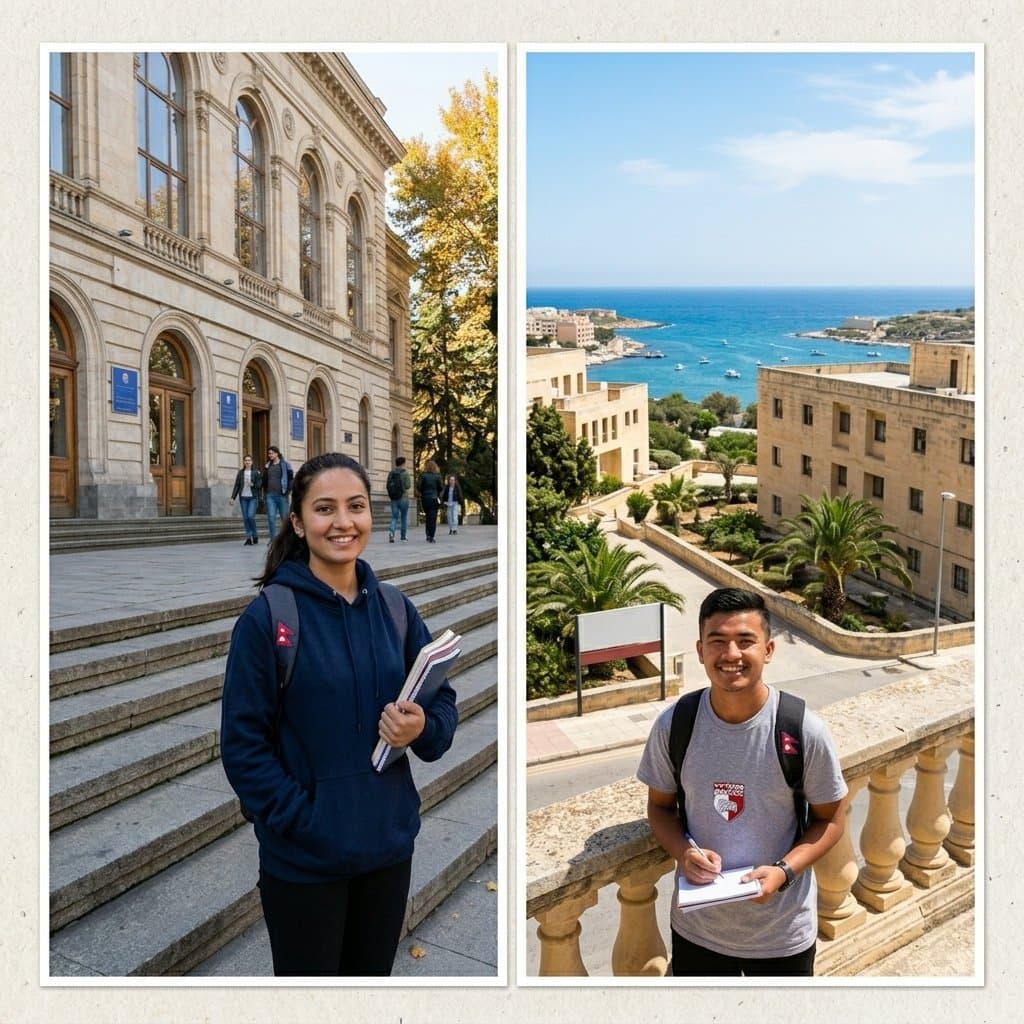
Malta vs Georgia Comparison 2026: A Student‑Centered Guide
Understanding Tuition Fees in Malta In any comprehensive Malta vs Georgia Comparison 2026, Malta stands out as one of the most budget‑friendly places in Europe for international students, especially for those coming from outside the EU. Most public universities and colleges keep tuition relatively low, usually between about 1,000 and 6,000 euros per year for international students, depending on the course and level of study. For example, the University of Malta and institutions like Malta College of Arts, Science, and Technology, or MCAST, typically fall in this range, with more technical or science‑heavy programs leaning toward the higher end. What makes Malta especially attractive is that even when you do have to pay tuition, the amounts are still modest compared to many Western European countries. Many universities ask for only a small deposit, often a few hundred euros, before classes start, so you do not need to arrange a huge upfront payment. When you add in living costs of roughly 800 to 1,200 euros per month for accommodation, food, utilities, and insurance, Malta offers a genuinely affordable European‑style education experience. The Schengen Advantage in Malta One of Malta’s biggest draws for students thinking about a global career is its position inside the Schengen Area. As an EU member state, Malta issues Schengen‑area student visas, which let you travel relatively easily across 26 European countries without needing separate national visas for short stays. For a student, this means you can visit Italy, Spain, nearby islands, and other EU destinations on weekends, and build an international network that is hard to match from countries outside the Schengen zone. Beyond travel, the Schengen advantage also affects career mobility. Malta’s integration into the EU economy means that internships, part‑time work, and post‑study job opportunities can become stepping stones into broader European markets. Many international students use a degree or diploma from Malta to move into the EU job pool later, benefiting from both EU‑style qualifications and the freedom of movement that Schengen‑area residency can support. Understanding Tuition Fees in Georgia Georgia, on the other hand, has become a low‑cost higher‑education hub for students from Asia, Africa, and the Middle East, especially in medicine, IT, and business. For many private universities, tuition for international students in English‑taught programs usually ranges from around 2,500 to 6,000 US dollars per year, depending on the course and institution. Popular fields such as medicine, dentistry, information technology, and business administration often fall in the 3,000 to 6,000 US dollars per‑year range, which is still competitive by global standards. A big part of the appeal is that Georgia’s overall cost of living is significantly lower than in Malta. You can often find comfortable housing, food, and transport for a fraction of what you would pay in an EU island state. This combination of low tuition and cheap living makes Georgia ideal for students who need to minimize total education‑related expenses, especially when educational loans are not an option or when family budgets are tight. The Schengen Factor vs Non‑Schengen Mobility While Malta offers Schengen‑linked freedom, Georgia’s geopolitical position brings different advantages. Georgia is not part of the EU or Schengen, so student visas are typically national visas with more limited regional travel rights. This means you cannot easily hop between EU countries on weekends or for short‑term work, which can feel restrictive compared with Malta. However, Georgia does have relatively liberal visa‑free or visa‑on‑arrival arrangements with many neighboring countries in the Caucasus, the Middle East, and parts of Central Asia, which can be useful if your career or family ties lie in those regions. For students aiming to build a career in Europe over the long term, Malta’s Schengen access and EU‑aligned institutions can be a strategic advantage. In contrast, Georgia may be more attractive if you want to study in Europe‑style institutions at a lower cost, but without the immediate gateway to EU‑wide work and travel. Comparing Malta and Georgia: Cost of Living and Lifestyle Georgia is roughly 40 to 45 percent cheaper than Malta across categories like restaurants, groceries, transportation, and housing. In practical terms, a student in Tbilisi can often afford better‑sized accommodation, more frequent eating out, and lower transport costs than someone in Valletta or Sliema, while still paying similar or even lower tuition fees. Lifestyle‑wise, Malta offers a compact, Mediterranean island experience with a strong English‑speaking environment, a warm climate, and a tourism‑driven economy. Georgia, by contrast, is a much larger, culturally rich country with mountains, historic cities, and a more diverse climate. For students who value affordability and cultural immersion over EU‑style urban convenience, Georgia can feel more grounded and less commodified than Malta. Academic Environment and Quality of Education Malta’s higher‑education system is tightly integrated into the EU framework, with degrees recognized across the European Higher Education Area under the Bologna Process. Universities such as the University of Malta and MCAST emphasize English‑medium teaching, strong regulation, and international accreditation, which can help when you later apply for jobs or further studies in Europe or North America. The island also invests a relatively high share of its GDP in education and healthcare, which supports a stable, well‑resourced academic environment. Georgia, while not in the EU, has several universities that have aligned their programs with European standards and offer English‑taught degrees in fields like medicine, IT, and business. However, the quality can vary more between institutions, and job‑market recognition outside the region is not always as seamless as with EU‑accredited degrees. For students in highly regulated professions such as medicine or law, it is especially important to verify licensing recognition in your target country before choosing Georgia. Safety, Healthcare, and Long‑Term Residency Both Malta and Georgia score reasonably well on safety by regional standards, but Malta has the edge in healthcare outcomes and social‑security infrastructure. Malta spends a larger share of its GDP on healthcare and has lower maternal and infant mortality rates than Georgia, which reflects a more developed public‑health system. As an EU member, Malta also offers stronger social‑protection networks and easier ... Continue reading Malta vs Georgia Comparison 2026: A Student‑Centered Guide
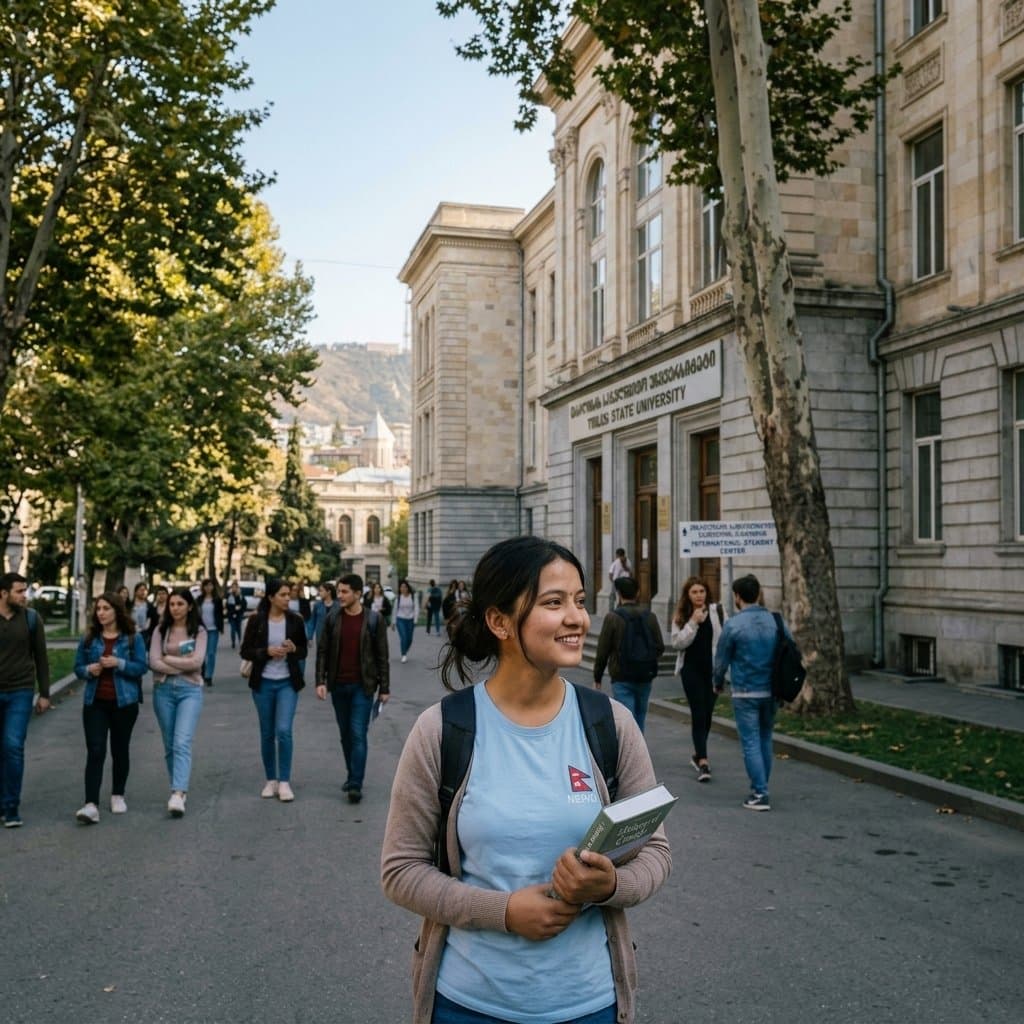
Georgia Tightens Student Work Laws in 2026: Essential Guide for Nepali Students
As Georgia tightens student work laws starting March 1, 2026, the country has introduced a mandatory “right to work” authorization policy that directly affects international students. This policy requires all students, including those on study visas, to obtain formal work authorization before engaging in any kind of employment. Previously, many students worked part-time under loosely enforced systems or informal arrangements, but that flexibility is now gone. The new rule aims to bring more structure, compliance, and transparency to student employment. For Nepali students, who often rely on part-time jobs to support their living expenses, this change is especially important. Understanding the policy early can help avoid legal trouble and financial disruption. This article breaks down what the policy means and how Nepali students can adapt. It also highlights practical challenges students may face during the transition period. Being informed early can make a significant difference in how smoothly students adjust to the new system. What “Right to Work” Authorization Actually Means The “right to work” authorization is an official approval issued by Georgian authorities that confirms a student is legally allowed to work. It is no longer enough to simply hold a valid student visa; students must now apply separately for work permission. This authorisation typically involves submitting documents like proof of enrollment, residency status, and possibly a job offer. Without this approval, any employment is considered illegal under the new law. Employers are also required to verify this authorization before hiring, which means fewer chances of informal or under-the-table jobs. For Nepali students, this adds an extra administrative step but also provides legal protection once approved. In simple terms, no authorization means no job—regardless of your visa status. This also creates a clearer boundary between legal and illegal employment practices. Over time, this clarity may help reduce confusion among both students and employers. Why Georgia Introduced This Policy The Georgian government introduced this policy to regulate its growing international student population and labor market. Over the past few years, there has been a surge in students from countries like Nepal, India, and Bangladesh. Many of these students worked in informal sectors, which created issues like tax evasion and labor exploitation. By enforcing a structured authorization system, the government aims to protect both workers and employers. It also ensures that local job markets are not unfairly impacted by unregulated foreign labor. Additionally, the policy aligns Georgia with broader European labor standards. For Nepali students, this means a more formal system but also potentially safer and more transparent working conditions. The government also aims to improve its international reputation as a study destination. This move signals a shift toward stricter but more organized immigration and labor policies. Immediate Impact on Nepali Students The immediate effect of this policy is that many Nepali students currently working without formal authorization may have to stop working temporarily. This can create financial stress, especially for those who depend on part-time income for rent and daily expenses. Students will need to quickly apply for authorization to continue working legally. Some may face delays due to processing times, which can further complicate their situation. Additionally, employers may hesitate to hire students until they have proper documentation. This could reduce job availability in the short term. However, once the system stabilizes, opportunities may become more structured and reliable. Students may also need to rely on savings or support from family during this adjustment period. Emotional stress and uncertainty may increase as students navigate these sudden changes. Application Process and Requirements To obtain the right to work authorization, students must go through a formal application process set by Georgian immigration or labor authorities. This typically includes submitting a valid passport, student visa, university enrollment letter, and proof of residence. In some cases, a job offer or employer sponsorship may also be required. The process may involve fees and waiting periods, so early application is highly recommended. Nepali students should coordinate with their universities, as many institutions offer guidance or support services for this process. Keeping documents organized and updated will make the application smoother. Missing paperwork or errors can lead to rejection or delays. It is also important to regularly check official government updates for any changes in requirements. Being proactive can significantly reduce the chances of facing unexpected issues. Changes in Job Opportunities and Work Hours With the new policy in place, job opportunities may shift from informal sectors to more regulated environments. Students might see fewer cash-based jobs in restaurants or small businesses that previously hired without strict checks. Instead, larger companies or registered employers may dominate student hiring. Work hour restrictions may also become more strictly enforced, depending on visa conditions. For Nepali students, this means adapting to a more professional and documented work environment. While this may reduce flexibility, it can also improve job security and payment reliability. Over time, this could lead to better working conditions overall. Students may also gain access to more formal contracts and employee rights. This shift could help build more credible work experience for future careers. Risks of Non-Compliance Working without proper authorization under the new policy carries serious risks. Students caught violating the rule may face fines, visa cancellation, or even deportation. This can also impact future visa applications for countries like the US, UK, or Canada. Employers hiring unauthorized workers may also face penalties, making them less willing to take risks. For Nepali students, who often invest significant money to study abroad, these consequences can be devastating. It is not worth risking long-term opportunities for short-term income. Staying compliant with the law is now more critical than ever. Even a single violation could have lasting consequences on immigration records. Strict enforcement means students must be extra cautious about where and how they work. Practical Tips for Nepali Students Nepali students should take proactive steps to adapt to this new policy. First, apply for work authorization as early as possible, even before actively job hunting. Second, rely on official university resources or student support groups for guidance. ... Continue reading Georgia Tightens Student Work Laws in 2026: Essential Guide for Nepali Students

Georgia vs. Australia Postgrad: Why Studying a Master’s in Georgia Is Worth the Investment
Australia has long been the dream destination for Nepali students pursuing a Master’s degree. But skyrocketing tuition fees, tighter visa rules, and a highly competitive job market are making many students stop and reconsider. When evaluating Georgia vs. Australia Postgrad options, Georgia, a rapidly modernising European country, is emerging as a compelling, affordable, and career-forward alternative. This article breaks down exactly why choosing Georgia over Australia for your Master’s could be the smartest academic and financial decision you ever make. Australia’s Appeal and Its Growing Drawbacks For years, Australia topped the list of dream study destinations for Nepali students. World-class universities, a multicultural society, and post-study work rights made it incredibly attractive. However, the reality in 2026 looks quite different. Australian student visa rejections for Nepali applicants have increased, tuition fees have risen to AUD 30,000 to 45,000 per year, and the Australian government has tightened its immigration pathways significantly. The cost of living in cities like Sydney and Melbourne now rivals London, making the total investment for a two-year Master’s easily NPR 80 to 100 lakhs or more. For many Nepali families, the dream has simply become too expensive to pursue. Why Georgia Is Now on Every Nepali Student’s Radar Georgia is a small but rapidly modernising country sitting at the crossroads of Europe and Asia, and it has quietly become one of the most popular study destinations for South Asian students. Its universities are internationally accredited, many programmes are taught entirely in English, and the cost of living is a fraction of what you would pay in Australia. Cities like Tbilisi offer a safe, vibrant, and student-friendly environment with a growing expat and international student community. For Nepali students looking for a genuine European education without the financial pressure of Australia, Georgia checks nearly every box. The Cost Comparison: Georgia vs. Australia The numbers speak for themselves. A Master’s in Australia costs between AUD 30,000 to 45,000 per year in tuition alone, and you would need another AUD 20,000 to 25,000 annually just for living expenses. That brings the total two-year investment to roughly NPR 80 to 120 lakhs. In Georgia, Master’s tuition averages around €3,000 to €5,000 per year, and monthly living costs in Tbilisi sit at just €400 to €600. The full two-year cost comes out to around NPR 15 to 22 lakhs. That is a saving of NPR 60 to 100 lakhs for a degree that is internationally recognised and taught in English. For middle-class Nepali families, that difference is genuinely life-changing. International Recognition That Opens Real DoorsAustralia’s student visa rejection rate for Nepali applicants has climbed in recent years because of tightened immigration policies and increased scrutiny of financial documents. Georgia, by contrast, has one of the most straightforward and student-friendly visa processes in the world. Approval rates are high, the process involves minimal bureaucracy, and processing times are fast. You do not need a sky-high bank balance or years of financial documentation to secure a Georgian student visa. For Nepali students who have already faced the heartbreak of an Australian visa refusal, Georgia offers a reliable and stress-free alternative pathway into quality international education. No IELTS, No Problem One of the biggest advantages Georgia holds over Australia is that many of its universities do not require IELTS scores for admission. Australian universities almost universally require an IELTS score of 6.5 or above, which means months of preparation and significant exam fees before you even apply. Many Georgian universities offering Master’s programmes in English instead conduct their own internal proficiency assessments or informal interviews. Programmes in Business Administration, IT, Public Health, International Relations, and Engineering are widely available in English. Nepali students who are already fluent in English can skip the IELTS hurdle entirely and focus their energy on actually starting their degree. Quality of Education and Faculty Australia’s top universities are globally ranked and undeniably prestigious. But the reality is that most Nepali students end up at lower-ranked Australian institutions that still charge the same premium fees. Georgia, on the other hand, has invested heavily in its higher education sector over the past two decades. Universities have partnered with European institutions and brought in faculty with PhDs from American and European universities. The Bologna Process alignment ensures that academic rigour, credit systems, and quality benchmarks all meet European Union standards. For students in fields like medicine, technology, business, and public health, Georgian universities offer a level of education that genuinely competes with mid-tier Australian institutions at a fraction of the price. Career Prospects and Georgia’s European Edge Australia’s post-study work rights are attractive. A two-year Temporary Graduate Visa allows graduates to work after completing their degree. However, recent policy changes and increased competition mean fewer Nepali graduates are successfully transitioning to permanent residency in Australia. Georgia offers its own post-study work permits and sits right at the gateway to Europe, giving ambitious graduates a realistic foothold on the continent. A Master’s from Georgia also opens doors in the country’s growing iGaming, tech, finance, and tourism sectors, as well as international roles with NGOs and development organisations working across the Caucasus and Europe. Making the Decision: Which Is Really Worth It? Australia remains a prestigious destination and there is no taking that away. But prestige comes with a price that many Nepali students and families cannot sustain without taking on serious debt or financial stress. Georgia offers a rare combination of affordability, academic quality, English-medium instruction, easy visa access, and European career pathways that make it one of the best-value Master’s destinations in the world right now. The goal of a Master’s degree is to accelerate your career, expand your worldview, and get the best return on your investment. On all three counts, Georgia makes a genuinely strong case. The smartest students are not always the ones who chase the most famous destination. They are the ones who choose strategically. Read more about Georgia Read more about Australia
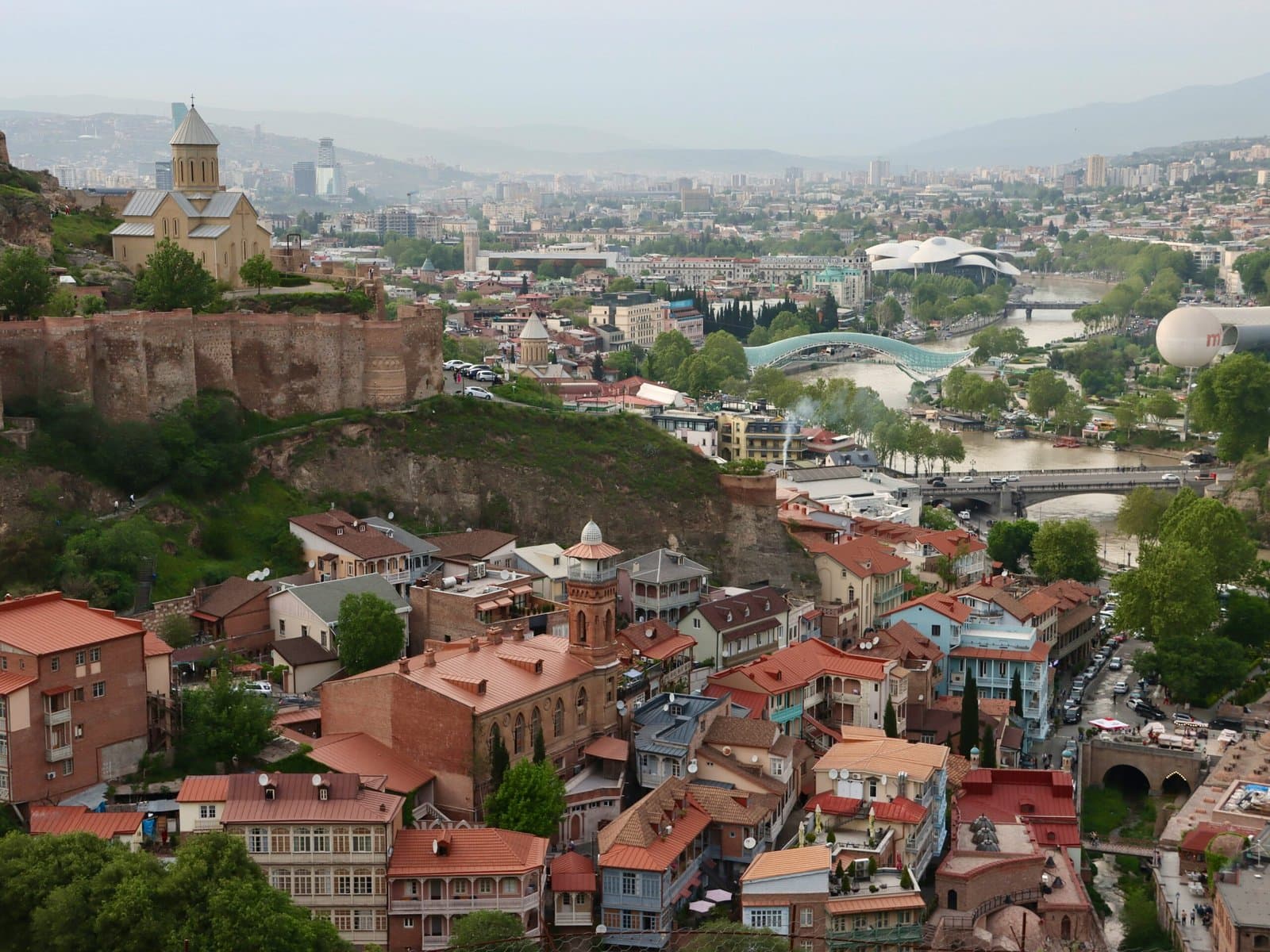
Student Life in Georgia: The Firsthand Student Experience
Student life in Georgia can vary depending on your city, making it important to choose a location that fits your personal and academic goals. The most popular cities for international students are Tbilisi and Batumi. Tbilisi, the capital city, offers world-class universities and high-quality education, complemented by a welcoming atmosphere, safe environment, and lively café culture. Batumi, on the other hand, is a coastal city along the Black Sea known for its beaches, modern buildings, and relaxed vibe. Other cities like Kutaisi and Akhaltsikhe also host reputable universities, attracting students who prefer a quieter, more affordable lifestyle. Campus and City Vibe Each Georgian city gives its own flavor to student life. Tbilisi feels like a mix of old Europe and modern city life, with winding streets, historic churches, and new cafes. Many universities are located in or near the city center, so students can easily walk to class, supermarkets, and cafes. The campuses themselves are usually small to medium in size, with a mix of international students and local Georgian students. Batumi has a more relaxed, vacation‑like feel. The ocean and promenade are just a short walk from many student areas, so it’s common to see students hanging out by the sea, cycling, or grabbing coffee near the water. The city also has a growing number of international students, especially in medical and business programs. In general, Georgian cities are calm compared to big capitals like London or New York. Class buildings are usually close together, and you don’t need to travel long distances to reach your lectures. This makes it easier to attend classes, meet friends, and explore the city between lectures. Daily Routine and Schedule Most universities in Georgia follow a structured weekly schedule. Students usually have lectures in the morning or early afternoon, with some gaps in between. Classes can be either on weekdays only or spread across the week, depending on the program. Many students find the pace of study to be moderate compared to their home country, especially in private universities that focus on English‑taught programs. Between classes, students often spend time in libraries, cafes near campus, or shared study spaces. Some students prefer to study alone, while others form small groups to revise notes or prepare for exams. Lab sessions, practicals, and project work are common in medicine, engineering, and IT programs, so those students usually spend more hours on campus. Outside of academics, many students try to balance their time between studying, social life, and part‑time work. Some students choose to relax in the evenings, while others attend events, join clubs, or explore the city. Overall, the daily routine tends to feel organized but not overly stressful if students manage their time well. Cost of Living and Budgeting One of the reasons students choose Georgia is that the cost of living is relatively low. Rent depends on the city and location. In Tbilisi, living in the city center or near the university is more expensive, while suburbs or quieter neighborhoods is cheaper. Students often share apartments or rooms to reduce costs. In Batumi, summer prices can rise a bit because of tourism, but many students still find affordable options if they search carefully. Food is another area where students can save money. Eating at local cafes, bakeries, and markets is usually cheaper than at international restaurants. Many students cook at home or buy groceries from local shops instead of importing everything. Public transport is also affordable, and walking is common in city centers. To stretch their budget, students often use student discounts, buy second‑hand furniture, cook in groups, and avoid expensive nightlife if they are on a tight budget. By planning and choosing a cheaper neighborhood, most international students can live comfortably without spending too much. Social life and Friendships Student life in Georgia is not just about studying; it’s also about meeting people and creating memories. International students often find it easy to make friends because many universities organize orientation events, welcome parties, and group activities. There are also student clubs, language exchange meetups, and sports activities that help people connect. In Tbilisi, students often hang out in cafes, bars, or parks near the university. There are always events, small concerts, or movie nights that students can join. In Batumi, many students enjoy hanging out by the sea, going to beach cafes, or joining weekend trips to nearby towns. Friendships can form both with local Georgian students and with other international students. Some students prefer to stay in cross‑cultural groups, while others feel more comfortable in groups from their own country. The important thing is to keep an open mind and try to interact with different people, as this makes the experience much richer. Safety, Comfort, and Culture Shock Georgia is generally considered a safe country for students. Most students feel comfortable walking around in the daytime and even in the evenings, especially in busy areas. Public transport is reliable, and people are usually friendly and helpful. However, like any city, students still need to follow basic safety rules, such as keeping an eye on their belongings and avoiding isolated areas late at night. Culture shock can happen, especially for students coming from very different countries. Food, language, and social habits are different. Georgian food is rich in cheese, bread, and grilled meat, and many students enjoy it, but some may miss home‑style meals. The pace of life can feel slower, and bureaucracy can sometimes be confusing, but many students eventually get used to it. Homesickness is common, especially in the first few months. Students often cope by staying in touch with family through video calls, joining student groups, or finding small Nepali, Indian, or South Asian communities. Many universities also have support services or student leaders who help new arrivals adjust. Part‑time Jobs and Side Income Many international students in Georgia look for part‑time work to support their living costs. Some students find on‑campus jobs, such as working in libraries, administrative offices, or language centers. Others search for external jobs, ... Continue reading Student Life in Georgia: The Firsthand Student Experience

Study in Georgia- The Ultimate Guide: My Journey from Nepal to Georgia (And How You Can Do It Too)
Preparing for your dream vacation can be exciting and scary at the same time. Here are a few things to keep in mind when for your visa to visa application experience.