
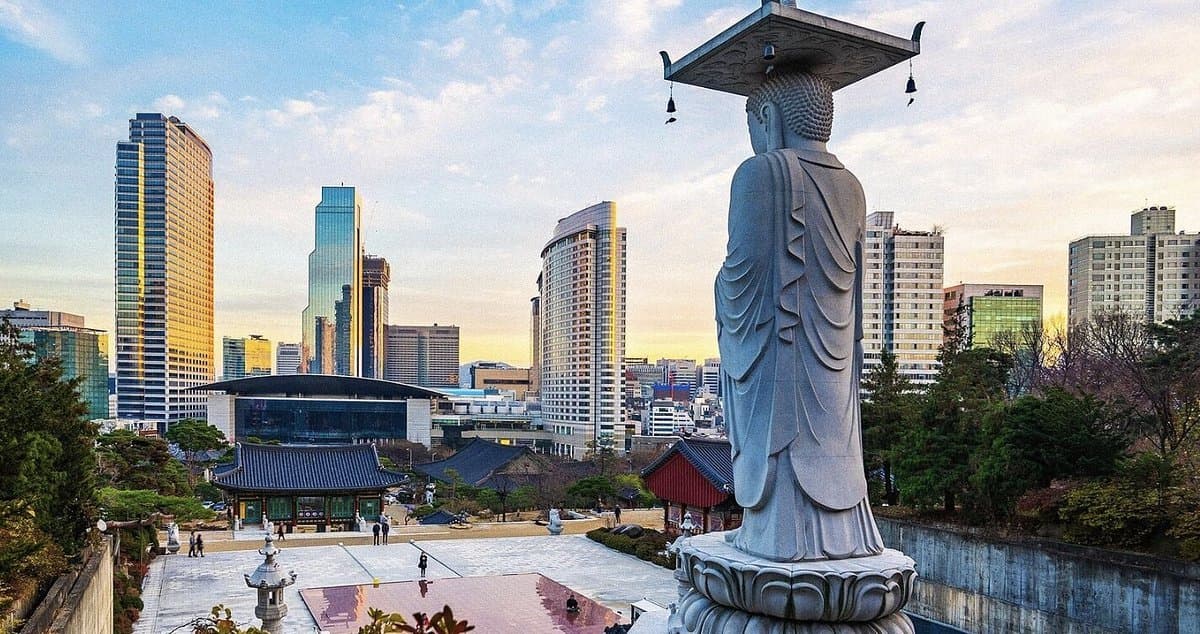
South Korea has rapidly emerged as one of the most attractive study-abroad destinations for Nepali students. Combining world-class academic institutions, cutting-edge technological infrastructure, safe living environments, and vibrant cultural appeal, Korean universities offer an exceptional alternative to traditional Western destinations. Unlike countries with unpredictable visa shifts and escalating tuition costs, South Korea maintains a structured, transparent, and welcoming environment for international scholars.
Navigating the application journey from Kathmandu to Seoul, Busan, or Daegu requires a clear understanding of university entry requirements, financial expectations, document attestation procedures, and visa rules. This comprehensive guide outlines the crucial steps to successfully study in South Korea from Nepal.

1. Key Visa Categories for International Students
Before applying to universities, you must determine which student visa category aligns with your academic goals. The Korean government primarily issues two types of student visas to international applicants: the D-4 Visa for language training and the D-2 Visa for degree-seeking programs.
| Visa Type | Program Subcategory | Target Audience | Primary Focus |
| D-4-1 | Korean Language Trainee | Students enrolling in intensive Korean language courses (3–12 months) | Achieving language proficiency prior to degree entry |
| D-2-1 | Associate Degree | Students entering 2-year technical or vocational college programs | Practical skill training and technical qualifications |
| D-2-2 | Bachelor’s Degree | Students pursuing 4-year undergraduate programs | Academic degree education across diverse fields |
| D-2-3 | Master’s Degree | Graduates enrolling in 2-year postgraduate degrees | Advanced research and specialized professional study |
| D-2-4 | Doctoral Degree (PhD) | Research scholars entering PhD or doctoral-level studies | Specialized research and academic publication |
The D-4 to D-2 Transition Pathway
Many Nepali students begin their journey on a D-4-1 Language Visa. Studying Korean at a university language center in South Korea for 6 to 12 months allows students to build cultural context, adapt to local life, and achieve the required Test of Proficiency in Korean (TOPIK) level. Once a student attains TOPIK Level 3 or 4, they can convert their visa status directly to a D-2 Degree Visa without returning to Nepal.
2. Academic and Language Requirements to Study in South Korea from Nepal
Admission criteria vary between public state universities, specialized tech institutes (such as KAIST or POSTECH), and private institutions. However, standard benchmarks apply across most programs.
Academic Prerequisites
- Undergraduate Entry (Bachelor’s / Associate): Completion of Grade 12 (NEB) with a minimum Cumulative Grade Point Average (CGPA) of 2.8 to 3.0+ on a 4.0 scale.
- Postgraduate Entry (Master’s / PhD): A recognized 3- or 4-year Bachelor’s degree from an accredited institution with a solid academic record (typically 65%+ or GPA 3.0+ equivalent).
Language Proficiency Requirements
South Korea offers courses taught both in Korean and 100% in English. The language requirement depends on your track:
- Korean-Taught Programs: Require a minimum of TOPIK Level 3 for undergraduate admission and TOPIK Level 4 for postgraduate programs. Students entering humanities or medical programs often need TOPIK Level 5 or 6.
- English-Taught Programs: Require standardized English proficiency test scores such as IELTS (minimum 5.5 to 6.5 overall) or PTE Academic (minimum 50 to 58). Programs offered under the prestigious Global Korea Scholarship (GKS) or specialized international faculties heavily prioritize high English scores.
3. Essential Document Attestation for Nepali Applicants
Immigration authorities and Korean universities mandate strict document legalization. Applications submitted with incomplete or unverified paperwork face immediate delays or outright rejection.
The Standard Verification Workflow in Nepal
- Ministry of Education (MOE): Academic documents (transcripts, character certificates, Grade 11/12 or degree marksheets) must be verified and stamped by the Ministry of Education in Sanothimi, Bhaktapur.
- Ministry of Foreign Affairs (MOFA): Certified documents must be attested by the Department of Consular Services, MOFA, in Tripureshwor, Kathmandu.
- Consular Legalization at the Korean Embassy: Final document verification must be completed at the Embassy of the Republic of Korea in Ravibhawan, Kathmandu.
Key Documents Checklist
- Original and attested academic marksheets and certificates.
- Relationship Certificate (Nata Praman Patra) issued by the local ward office, translated into English and verified.
- Official Citizenship Documents of the applicant and parents.
- Bank Balance Certificate and Statement from a recognized commercial bank in Nepal.
- Police Clearance Report issued by the Nepal Police (attested by MOFA).
- Medical Examination Report, specifically including Tuberculosis (TB) screening from designated medical centers in Nepal approved by the Korean Embassy.
4. Comprehensive Financial Blueprint and Costs
Understanding the full financial scope prevents budgeting errors during your studies. Expenses fall into three core categories: tuition fees, daily living costs, and show-money proof.
Total Estimated Yearly Expense = Tuition Fees ($3,000–$8,000) + Living Costs ($6,000–$9,000)
Estimated Tuition Fees (Per Academic Year)
| Program Level | Public Universities (USD) | Private Universities (USD) | Equivalent in NPR (Approx.) |
| Language Course (D-4) | $4,000 – $5,200 | $4,800 – $6,500 | NPR 5.5 Lakhs – 8.8 Lakhs |
| Undergraduate (D-2-2) | $3,000 – $5,000 | $5,000 – $8,500 | NPR 4.0 Lakhs – 11.5 Lakhs |
| Postgraduate (D-2-3) | $3,500 – $6,000 | $6,000 – $10,000 | NPR 4.8 Lakhs – 13.5 Lakhs |
Estimated Living Expenses
Living costs depend heavily on location. Living in the Seoul Metropolitan Area is noticeably more expensive than residing in regional cities like Daegu, Gwangju, or Busan.
- Accommodation: Dormitories cost approximately $250 to $400 per month. Private studio apartments (One-room) or student rooms (Goshiwon) range from $300 to $600 per month, usually requiring a security deposit (Bojeonggum).
- Meals and Groceries: Monthly food costs average $250 to $400, depending on whether you utilize university cafeterias or cook independently.
- Health Insurance: International students must enroll in the mandatory National Health Insurance Service (NHIS), costing roughly $50 to $60 per month.
- Transportation & Utilities: Public transport (Subway/Bus) and phone/internet utilities average $80 to $120 per month.
Total Estimated Monthly Budget: $650 to $1,000 (approx. NPR 85,000 to 135,000 per month).
Bank Balance Requirements (Show Money)
Immigration authorities demand clear proof that the applicant or their parents can fund their tuition and living costs.
- Seoul Metropolitan Region: Requires proof of USD 20,000 (approx. NPR 26 to 28 Lakhs) maintained in an approved commercial bank account in Nepal for a minimum seasoning period (typically 1 to 3 months).
- Non-Seoul / Regional Universities: Requires proof ranging between USD 10,000 and USD 18,000 depending on the regional classification and university guidelines.
Funding must be backed by verifiable sponsor documents, including family tax clearance certificates, property valuation certificates, and stable monthly income sources.
5. Work Rights and Part-Time Employment
To balance living costs, international students holding a D-2 or D-4 visa are permitted to work part-time, provided they obtain official permission from the local immigration office (Permission for Activities Outside Status of Stay).
Work Authorization Rules
- D-4 Visa Holders: Eligible to apply for part-time work rights only after completing 6 months of residency in South Korea.
- D-2 Undergraduate Students: Allowed to work 20 to 25 hours per week during academic terms. During scheduled summer and winter vacations, students can work full-time (unlimited hours) without violating visa conditions.
- Language Score Condition: Students with higher TOPIK scores (Level 3 or above) enjoy expanded weekly hour limits compared to those without official language credentials.
Earning Potential
South Korea sets a competitive national hourly minimum wage (regularly updated above 9,800+ KRW/hour, approximately USD 7.50+ / NPR 1,000+ per hour). Common student jobs include campus assistantships, university cafeteria work, convenience store operation, restaurant service, and language tutoring.
6. Step-by-Step Application Timeline
A typical application cycle takes 6 to 9 months from initial research to arrival in South Korea.
Month 1–2: Research & Language Tests (TOPIK/IELTS)
    │
Month 3–4: Document Legalization (MOE, MOFA, Embassy)
    │
Month 5: University Application & Offer of Admission
    │
Month 6: Tuition Payment & Certificate of Admission (CoA)
    │
Month 7: Visa Application at Korean Embassy in Kathmandu
    │
Month 8–9: Flight Booking, Accommodation, & Arrival
- Months 1–2 (Preparation): Research target universities, select academic majors, and prepare for language examinations (TOPIK or IELTS/PTE).
- Months 3–4 (Documentation): Collect academic transcripts, obtain relationship/income certificates, and complete attestation via MOE and MOFA in Kathmandu.
- Month 5 (Admissions Submission): Submit official application packages directly to chosen Korean universities along with the required processing fees.
- Month 6 (Tuition & Certificate of Admission): Upon receiving a conditional offer letter, pay the tuition fee to receive the official Standard Admission Letter (also known as the Certificate of Admission or CoA).
- Month 7 (Visa Processing): Prepare financial balance certificates, undergo mandatory TB health checks, and lodge your visa file at the Embassy of the Republic of Korea in Kathmandu.
- Months 8–9 (Pre-Departure): Secure university dormitory space or off-campus housing, book air tickets from Kathmandu, and prepare for arrival in South Korea.
By selecting accredited institutions, ensuring meticulous document verification with MOFA and the Korean Embassy, and maintaining a structured financial plan, Nepali students can build a smooth pathway toward earning a respected degree in South Korea.