
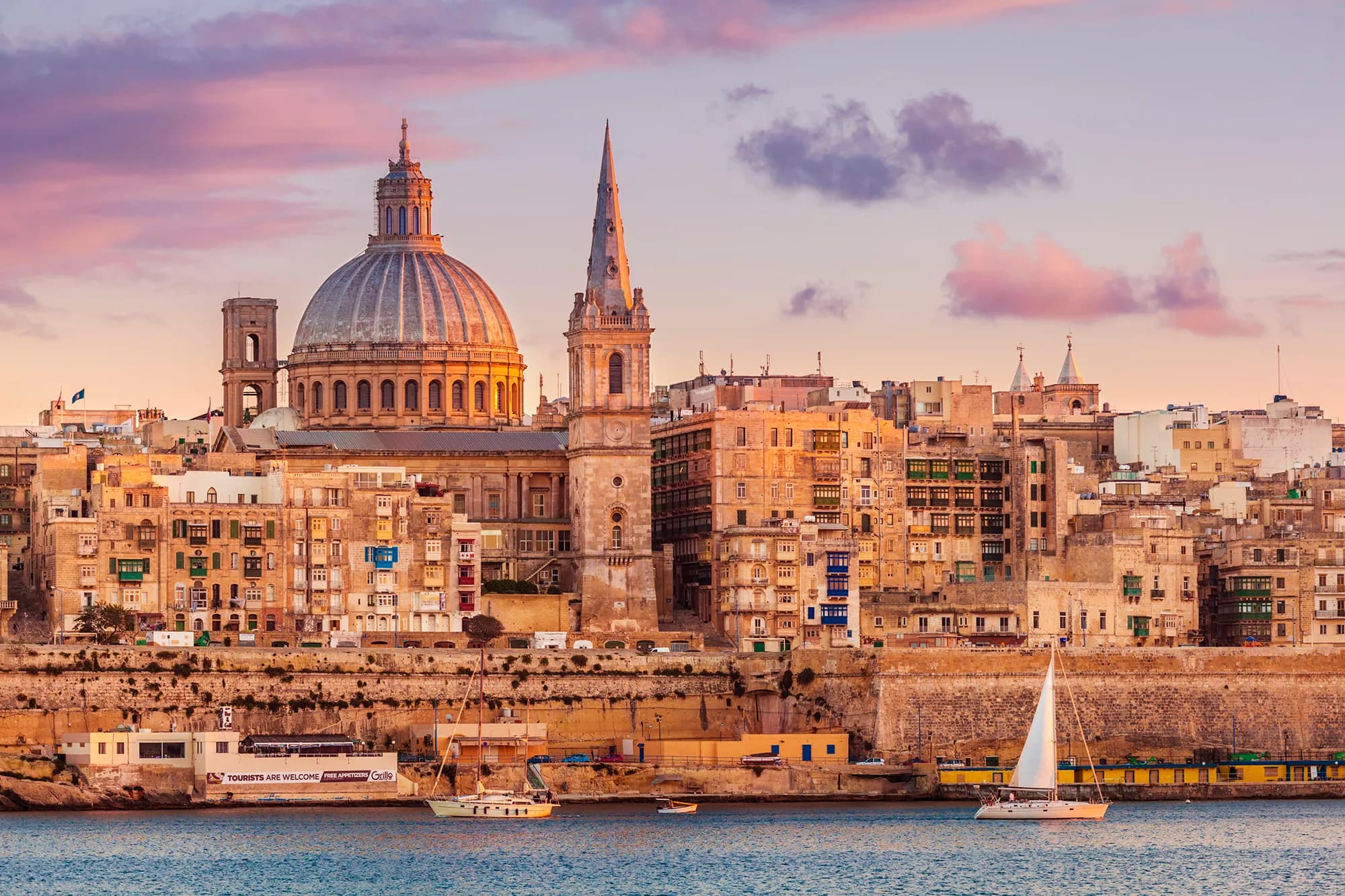

Planning to Study in Malta from Nepal is becoming a topic worth watching after the country recorded a massive 27% increase in foreign tertiary students in the 2023/24 academic year.
According to Malta’s National Statistics Office (NSO), 8,252 foreign students were enrolled in tertiary education during that academic year. They represented 37% of all tertiary students in Malta, while non-EU nationals alone accounted for 21.9% of the total tertiary student population.
The figures were recently highlighted by major international education outlets, including The PIE News. The reports point to booming international interest in Malta, particularly from countries outside the European Union. Indian enrolments, for example, skyrocketed by more than 130% in just one year.
But what does this actually mean for those choosing to Study in Malta from Nepal and mapping out their future?
Malta Saw a 27% Rise in Foreign Tertiary Students
The central figure comes directly from Malta’s official statistics. In the 2023/24 academic year, Malta had 22,276 tertiary students, of whom 8,252 were foreign students. Compared with the previous academic year, the foreign-student population surged by 27%.
Foreign students therefore made up more than one-third of all tertiary enrolments in the country. This is particularly notable for a relatively small Mediterranean country. International students are not just a small part of the higher education system; they represent a substantial, vibrant share of the overall student population.
The NSO defines tertiary education as education at ISCED levels 5 to 8, covering short-cycle tertiary education, bachelor’s or equivalent programmes, master’s or equivalent programmes, and doctoral or equivalent study. So, when the reports talk about the 27% increase in international higher education students, they are referring to a broad range of tertiary-level students rather than one particular type of programme.
Why Is the 27% Increase Important for a Study in Malta from Nepal?
A percentage can sound impressive, but the more interesting part is what is happening underneath it. Malta did not simply attract a few thousand additional students from one neighbouring European country. Its international student population became vastly more diverse, with particularly strong growth among several non-EU nationalities.
According to The PIE News, the number of Indian tertiary students increased from 1,033 in 2022/23 to 2,378 in 2023/24, representing a 130.2% increase. Nigerian enrolments increased by 97.3%, French enrolments by 48.9%, and Libyan enrolments by 27.1%.
This tells us that Malta’s international education market is becoming increasingly visible far beyond Europe. For those planning to Study in Malta from Nepal, that matters because Nepal is part of the wider South Asian student market. As Malta becomes a booming destination across South Asia and other international markets, Nepali students may encounter a destination that is becoming more established, respected, and sought-after among students from the region.
What Is Driving Malta’s Growing Appeal?
There is no single reason behind the 27% increase. Industry reports identify a combination of incredible factors driving this surge.
Experts highlight Malta’s affordability, transparency, English-language education, EU-recognised qualifications, and exceptional career outcomes as primary factors contributing to the country’s booming appeal. It is an English-speaking EU country offering comparatively affordable tuition and living costs compared with traditional study destinations like the UK or Australia, while also offering solid post-study opportunities.
For an international student evaluating a Study in Malta from Nepal, this combination can be easier to understand than any single statistic:
Study in English + European location + comparatively competitive costs + international student environment + career considerations.
These are the crucial factors being discussed around Malta’s recent international student growth. They should be understood as reported explanations for the trend, however, rather than proof that one particular factor caused the entire 27% increase.
How the 27% Growth Impacts Those Who Want to Study in Malta from Nepal
This is where the news becomes highly actionable for students in Nepal. The increase does not automatically change admission or visa rules for Nepali applicants. It does, however, provide several strong signals that prospective students preparing to Study in Malta from Nepal must pay attention to.
1. Malta Could Become More Visible Among Nepali Students

When a destination attracts more international students, it naturally gets more attention from universities, colleges, education providers, and recruitment networks. The strong growth from India is particularly relevant for Nepal because both countries share the broader South Asian education market.
That does not mean a Study in Malta from Nepal will automatically see the exact same 130% growth rate as Indian students. What it does suggest is that Malta is becoming more relevant within the same broader regional market where Nepali students are exploring overseas education. For you, that can mean more information, more programme choices, and greater visibility of Malta as an incredible option.
2. Students May Face More Competition for Popular Programmes in Malta
A booming international market can also mean more students are looking at the same institutions and popular programmes.
However, it would be inaccurate to say that every Maltese university or college is now highly competitive. The 27% figure is a country-level statistic, not a programme-level admission statistic.
Still, students planning their Study in Malta from Nepal should avoid leaving everything until the last moment. Checking admission requirements early, preparing academic documents properly, and researching institutions before an intake can become increasingly important when a destination is attracting more international interest.
The key lesson is simple: A booming destination deserves earlier and more careful planning.
3. The International Student Environment May Become More Diverse
With foreign students accounting for 37% of tertiary enrolments, international students are already a major part of Malta’s higher education environment.
The growth of students from India, Nigeria, France, and Libya adds even more diversity. Malta’s post-secondary sector also saw Chinese, Filipino, and Indian students among the leading groups.
For anyone who decides to Study in Malta from Nepal, this can mean studying alongside classmates from different countries and being part of a genuinely international student community. That can be useful academically and socially, but students should still research the specific institution they plan to attend because the international student mix can vary from one provider to another.
4. “Affordable” Still Needs to Be Calculated Carefully
One of the strongest themes in international reports is affordability. When considering a Study in Malta from Nepal, that should not simply be interpreted as “Malta is cheap.”
The actual cost depends heavily on the institution, programme, accommodation, lifestyle, and other expenses. For budgeting purposes, annual tuition is estimated at approximately €5,000 for diploma/vocational study, €6,000–€12,000 for bachelor’s programmes, and €8,000–€15,000 for master’s programmes. General living expenses run around €630 per month, although actual costs can vary.
These figures are crucial for budgeting, but students should always check the current fee schedule of their chosen institution before making a financial decision. (For a deeper breakdown, visit our Study in Malta Cost from Nepal guide).
5. More International Interest Does Not Mean Automatic Visa Approval
This is a critical point anyone planning a Study in Malta from Nepal must understand clearly. A growing international student population does not mean that students from Nepal automatically have an easier visa process.
Current Identità Malta guidance states that third-country nationals applying for Malta’s study residence permit must generally be accepted into a full-time higher education course, with the course at MQF Level 5 or higher, offered by an institution licensed by the Malta Further and Higher Education Authority (MFHEA), with the qualification recognised by MQRIC.
So even though Malta’s international enrolments are booming, a successful Study in Malta from Nepal application still depends entirely on their own academic, financial, documentation, and immigration requirements.
What About Jobs After Graduation?
Career outcomes are another massive reason for the surge. Some institutions report exceptional employment rates—for example, one specific college reported that 98% of its 2025 graduates secured local employment. While this is an incredible figure for that specific institution, it should not be treated as Malta’s overall guaranteed graduate employment rate.
For those pursuing a Study in Malta from Nepal, the practical lesson is to look at career opportunities as part of the specific programme and institution, rather than assuming that a national employment statistic applies to every graduate.
Students should also rely on the latest official immigration rules when researching post-study options because these rules can change over time. Current government guidance refers to a post-study residence permit of up to nine months for eligible graduates seeking employment or establishing a qualifying business.
What Does the Malta Student Growth Say About Popular Areas of Study?
The official NSO data also provides a useful picture of what students are studying. In 2023/24, Business, administration and law was the largest tertiary field, with 6,807 students, representing 30.6% of all tertiary students. The second-largest field was Health and welfare, with 5,050 students, or 22.7% of tertiary enrolments.
At the qualification level, bachelor’s or equivalent programmes accounted for 50.2% of tertiary enrolments, followed by master’s or equivalent programmes at 32.5%.
For students embarking on a Study in Malta from Nepal, this is highly useful when comparing programme options. It shows that Malta’s tertiary education market is diverse and not focused on just one qualification level or one academic area.
The Biggest Takeaway for Nepali Students
The most important thing about Malta’s 27% increase is not that every single student should now choose Malta. The important point is that international demand for Malta’s tertiary education increased substantially, and much of that booming growth came from international markets outside the EU.
India’s 130.2% increase is particularly notable, while Nigeria, France, and Libya also recorded significant surges.
For students aiming to Study in Malta from Nepal, the effect is clear:
- Malta will receive greater attention and respect in South Asia.
- More students will actively compare Maltese institutions with other major European destinations.
- The international classroom environment will become even more vibrant and diverse.
- Popular programmes and leading institutions may attract much more attention and competition.
- You will need to be more careful about verifying costs, admission requirements, and current immigration rules instead of relying on outdated social media information.
Most importantly, the 27% overall figure should not be confused with a 27% increase in Nepali students specifically.
Final Thoughts
Malta’s 27% rise in foreign tertiary students is a booming development in its international education market.
The country had 8,252 foreign tertiary students in 2023/24, accounting for 37% of all tertiary enrolments. Strong increases from India and several other international markets show that Malta’s student population is becoming increasingly global and respected. For anyone planning to Study in Malta from Nepal, the trend is absolutely worth watching because it establishes Malta as a highly visible, crucial option within the South Asian study-abroad market.
But the smartest way to respond to the news is not to focus only on the 27% surge. Look deeply at the programme. Verify the institution. Calculate the full, realistic cost. Check the current immigration requirements.
And then decide whether Malta fits your own crucial academic and financial plans. The numbers show that Malta is attracting more international students than ever. The next question for a Nepali student is simply whether a Study in Malta from Nepal is the perfect fit for you.