
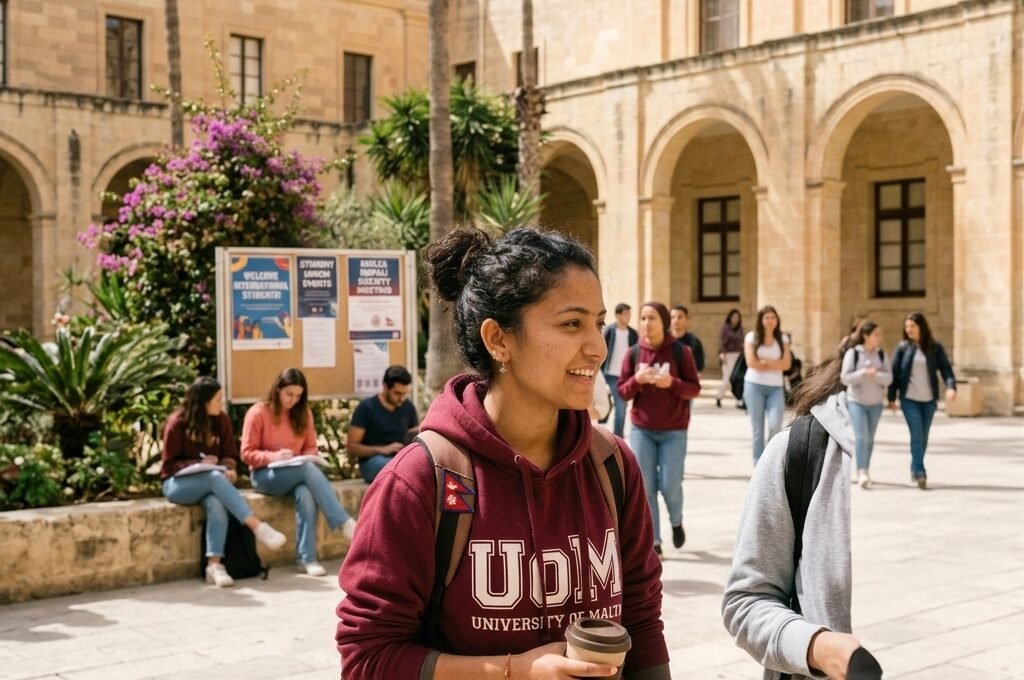
When Nepali students think about studying abroad, the usual names are Australia, the UK, Canada, and the US. Malta is still new in that list, but it is starting to attract more students because it offers European-standard education, a calmer lifestyle, and a total cost that feels slightly more realistic for middle-class families.
For many families, Malta becomes interesting when they compare options side by side. They see that traditional destinations are getting more expensive, more crowded, and stricter on visas, while Malta sits in a middle ground where what you invest can realistically return value in education, experience, and exposure.
European education at a more manageable cost
Malta offers degrees that follow the European higher-education system, which means bachelor’s and master’s programs are designed in a way that is recognised across many European countries. That matters later when you apply for further study or jobs, because your qualification fits into the wider EU framework rather than being seen as something completely separate.
Tuition fees in Malta are generally lower than in big destinations like the UK, US, or Australia for similar fields such as business, hospitality, IT, or health-related courses. For many Nepali families, this is the difference between “we simply cannot do this” and “it is tough but possible if we plan.” You still get the value and social recognition of an “EU degree,” but with less financial pressure on parents and less need for extreme work hours just to survive.
English-speaking, easier to adapt
Language is a big worry when students move abroad. In Malta, that stress is reduced because English is an official language and is widely used in universities, government offices, banks, shops, and everyday life. For Nepali students who studied in English-medium colleges and prepared for IELTS or PTE, the transition into Maltese classrooms feels more natural.
Lectures, assignments, group projects, and exams are conducted in English, so you are not fighting two battles at the same time: learning your subject and learning a brand-new language. Outside class, English also makes daily life easier – talking to landlords, dealing with employers, and making international friends – which speeds up your overall adjustment.
Visa environment and a doorway to Europe
The visa situation is often the deciding factor for Nepali families. Some traditional countries are getting stricter with higher financial requirements and unpredictable policy changes, so students sometimes risk refusals after spending a lot of money. Malta is seen as a newer but comparatively more approachable route, as long as students are genuine and can show their academic and financial readiness.
Because Malta is part of the Schengen Area, a student residence permit there usually allows short trips to many other European countries for tourism or events. That means you might study in Malta but spend holidays visiting places like Italy or Spain. For a student coming from Nepal, this access to wider Europe is a huge psychological and cultural advantage.
Work opportunities during and after study
For most Nepali students, the plan only works if they can work part time. Malta allows international students to work a limited number of hours during their studies, which can cover a good portion of rent, food, and transport if you manage your budget well. The work is not always glamorous, but it gives you income and, equally important, real-world experience.
Common student jobs include restaurants, cafes, hotels, housekeeping, retail, and basic office or customer service roles. Balancing work and study can be tiring, but many students say that earning their own money in euros and paying their own rent changes their confidence completely. After graduation, a short window to search for full-time work can add valuable EU experience to your CV, even if you later move to another country or return to Nepal.
Safe, small, and student-friendly
Safety is a top concern for Nepali parents, especially when sending a child abroad for the first time. Malta is generally seen as safer than many large global cities, with lower levels of violent crime and compact student areas that are busy and well-served by public transport. That does not mean you can ignore basic precautions, but it reduces the constant fear that some students feel elsewhere.
The small size of the country is actually a benefit for many students. After a few months, places start to feel familiar: you recognise faces at bus stops, local shops, and your workplace. This sense of community makes Malta feel more like a “second home” than a huge, anonymous city, and parents in Nepal also feel better knowing that “everything is nearby” instead of imagining long, risky commutes.
Lifestyle: sea, sun, and a slower pace
Malta’s lifestyle is very different from most Nepali cities. The sea is close, the climate is mild for most of the year, and the streets reflect a mix of Mediterranean and European history. For students used to traffic, dust, and noise, simply walking by the sea after a long day of classes or work can be a big relief.
A typical routine might include classes, a part-time shift, then a relaxed walk, coffee with friends, or exploring a new coastal spot. This slower pace can be very good for mental health. It gives space to breathe, think, and plan your future, instead of constantly feeling rushed and overwhelmed.
Growing Nepali and South Asian community
A few years ago, Nepali students in Malta were rare and had to figure out almost everything alone. Now, the number is slowly growing, and that changes the experience. New students can connect with seniors through online groups, ask real questions, and get practical advice on housing, jobs, local rules, and day-to-day survival.
This social support is more important than people realise. Knowing there are other Nepalis and South Asians around means festivals like Dashain and Tihar can still be celebrated in some way, and you always have someone who understands your language, culture, and family pressures. That emotional backup makes it easier to handle homesickness and stressful days.
Real stories: what Nepali students actually experience
Life in Malta for Nepali students is a mix of struggle and growth. Many work long shifts standing in restaurants or hotels, then study late into the night. They miss home food, family, and the comfort of speaking Nepali all the time. Some face issues with accommodation, contracts, or employers, especially in the beginning when they do not know their rights well.
But the same students often say that these challenges changed them for the better. They learn to manage money, handle official documents, communicate in a new environment, and solve problems on their own. They start to see themselves not just as “students from Nepal,” but as young adults who can survive and grow in a completely different country, which is a huge mindset shift.
Who is Malta a good fit for?
Malta is not perfect for everyone. It is not the best choice if you want a massive, fast-paced city or if you expect salaries to match big economies like Germany or Canada right away.
But Malta can be an excellent fit if:
- Your family wants an EU country but has a limited budget
- You are okay starting with service or hospitality jobs while you study
- You prefer a smaller, safer environment rather than a huge, overwhelming city
- You want the possibility to explore Europe while building your education and experience
For many Nepali students from middle-class backgrounds, this combination of affordability, safety, and opportunity is exactly why Malta is emerging as a serious study destination.
