
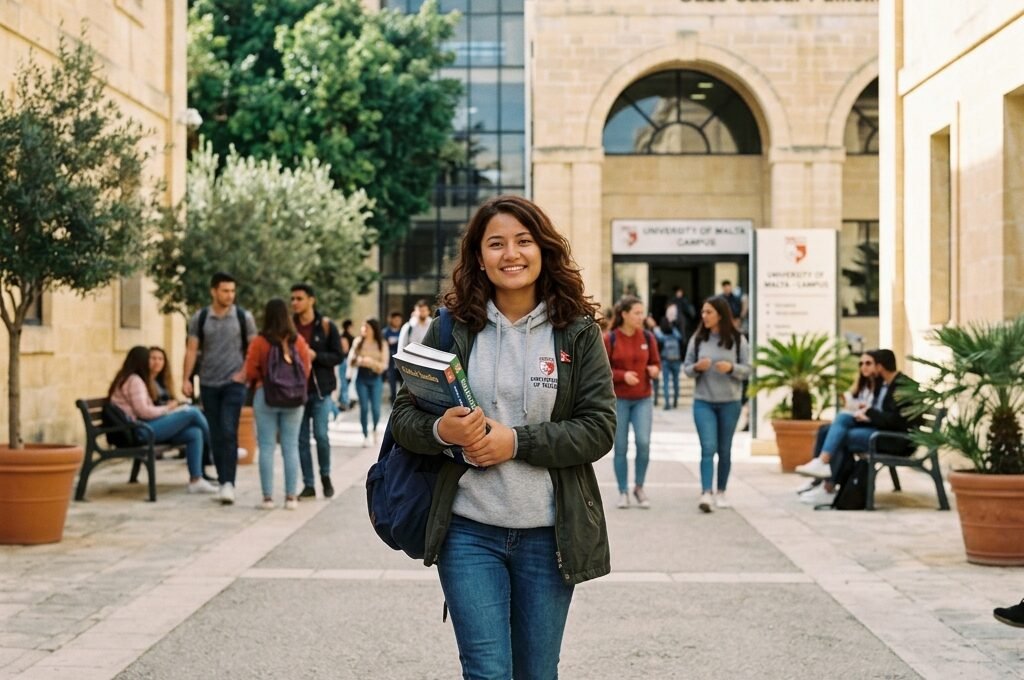
So you’ve done your research. You know Malta is sunny, English-speaking, affordable compared to Western Europe, and has a growing university scene. Great. But there’s a whole layer of reality that doesn’t show up in the brochures. The stuff you only learn after you’ve landed, unpacked, and started actually living there.
Here’s the honest guide nobody gave you.
The Island is Tiny (And That’s a Double-Edged Sword)
Malta is 27 km long. You can drive across the entire country in under an hour. At first, this feels liberating. Everything is close, nothing is overwhelming. But after a few months, some students start to feel the walls closing in.
There’s no “next big city” to escape to for a weekend reset. If you’re coming from a large metropolitan area, the pace and scale will feel very different. That said, the ferry to Gozo (Malta’s quieter sister island) and budget flights to mainland Europe become your best friends fast.
The fix? Plan mini Euro trips early. Malta’s central location means Rome, Barcelona, and Athens are all under 2 to 3 hours by plane, often for under €60.
The Bus System is Free, But Patience is Required
Malta offers free public transport for residents, including students. That sounds amazing, and it is. But the bus network is notorious for being unreliable. Late arrivals, overcrowded routes, and infrequent evening services are common complaints among students.
If you’re near a popular student hub like Msida or Valletta, you’ll manage just fine. If you’re further out, budget for the occasional Bolt ride or consider whether renting a scooter makes sense for your lifestyle.
Accommodation is Competitive and Pricey
This is the biggest shock for most incoming students. Malta’s rental market is tight. The island is small, demand is high, and landlords know it. Expect to pay anywhere from €400 to €700 per month for a room in a shared apartment close to the University of Malta in Msida.
A few hard truths worth knowing upfront:
- Good listings go fast, so start searching at least three months before your move date
- Facebook groups like “Accommodation in Malta for Students” are more useful than formal listing sites
- Always visit or video call before signing anything
- Utilities are often not included, so factor that into your budget
It’s Hot. Like, Really Hot.
If you’re from South Asia, parts of Africa, or the Middle East, you might think you know heat. Malta will still catch you off guard. Not because of the temperature alone, but because of the combination of heat, humidity, and the fact that not all buildings have good air conditioning.
Older apartments, some university buildings, and public spaces can get brutally stuffy in July and August. A portable fan or a window AC unit should be on your shopping list if you’re arriving over summer. Winters are mild, sitting around 10 to 15°C, but Maltese homes are not built for insulation, so it can feel colder indoors than the thermometer suggests.
English is Official, But Maltese is Everywhere
Classes are in English, professors speak English, and you’ll navigate daily life without any language barrier. But Maltese is a fascinatingly unique Semitic language with Arabic roots and Italian and English loanwords, and it’s the language locals actually speak with each other.
You won’t be lost, but you may feel like an outsider in some local interactions, especially outside tourist-heavy areas. Learning even five to ten basic Maltese phrases earns you instant goodwill and respect. Try Grazzi (thank you) and Bonġu (good morning) to start. People genuinely light up when a foreign student makes the effort.
The Social Scene is Great, If You Put in the Effort
Malta has a surprisingly vibrant student social scene. Paceville in St. Julian’s is the nightlife hub, Sliema has great café culture, and Valletta is genuinely one of Europe’s most beautiful cities for an evening stroll.
But Malta isn’t a campus bubble like some UK or US universities. The university doesn’t hand you a social life. You have to seek out student clubs, international student WhatsApp groups, and society events yourself. What actually works is joining the KSU (Kunsill Studenti Universitarji), which is Malta’s student council, as early as possible. The Erasmus Student Network Malta also runs regular events that are great for meeting people. Facebook and Instagram groups for international students are active and genuinely helpful too.
Your Money Goes Further Than You Think, In Some Areas
Malta is cheaper than the UK, Ireland, or Scandinavia, but it’s not budget Europe like parts of Eastern Europe. Here’s a rough monthly breakdown for a student:
- Rent (shared apartment): €400 to €650
- Groceries: €150 to €200
- Transport: €0 to €30, since the bus is free and you’ll only occasionally need Bolt
- Eating out occasionally: €100 to €150
- Social and entertainment: €80 to €150
- Total estimate: roughly €750 to €1,200 per month
Cooking at home, riding the free bus, and skipping the tourist trap restaurants near Valletta’s main gate will stretch your budget significantly.
Healthcare Requires Some Navigation
EU students with a European Health Insurance Card get solid coverage. Non-EU students need to arrange private health insurance, which is typically required for your visa anyway, so sort this before you travel.
The public hospital, Mater Dei, handles emergencies well. For routine issues, private GPs are widely available and reasonably priced at around €20 to €40 per visit. Many students don’t think about this until they’re actually sick. Don’t be that person.
The People Are Warmer Than They First Appear
Maltese people have a reputation for being reserved with newcomers, and honestly, the first interaction can feel a little cold. But push past that surface level and you’ll find people who are fiercely loyal, generous, and deeply proud of their island.
Make friends with locals, not just other international students. You’ll get insider tips on the best hidden beaches, the family-run restaurants with genuinely great food, and the real Malta that tourists never get to see.
Bottom Line
Malta is a genuinely underrated study destination, but it rewards students who go in with realistic expectations. It’s not a massive cosmopolitan city, it’s not dirt cheap, and it won’t hand you anything on a plate. But if you’re adaptable, curious, and willing to embrace a small-island pace of life, you’ll leave with a degree, a Mediterranean tan, and stories most of your peers back home will never have.
Come prepared. Stay curious. You’ll love it.
