
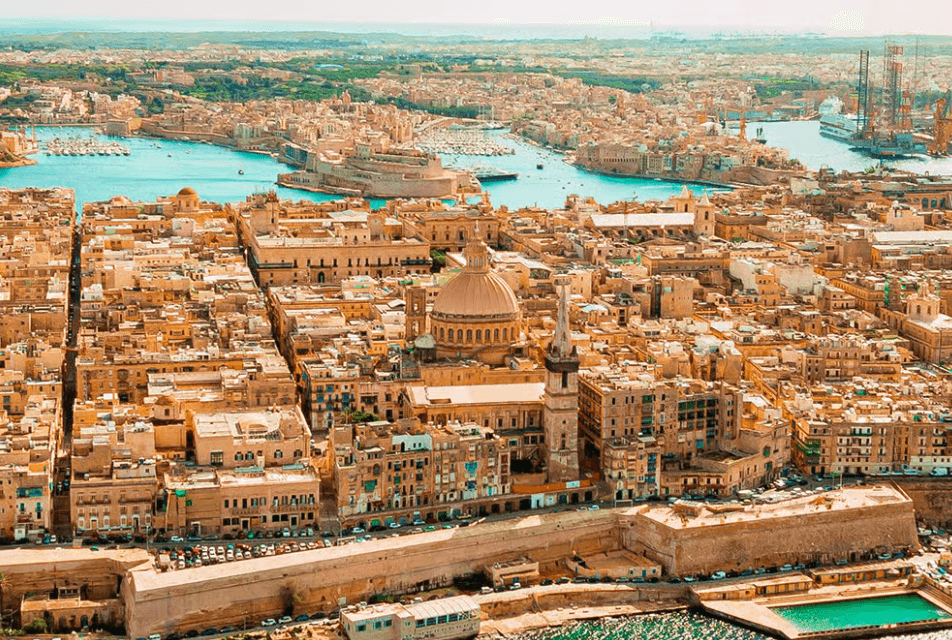
Malta has rapidly transformed into a dream European destination for Nepali students. Whether you are drawn to its rich Mediterranean history, globally recognized English-medium universities, or the stunning coastal beauty of Valletta and Sliema, studying in Malta offers an unparalleled international European experience. However, beneath the excitement of acceptance letters and visa approvals lies the most critical question every student and parent asks: “How much is this actually going to cost?”
Studying abroad is a massive financial commitment that requires careful planning. Between paying for documentation in Kathmandu, demonstrating sufficient bank balances, and managing daily public transport commutes in Malta, budgeting is essential.
To help you plan your academic journey, this comprehensive guide breaks down the total Malta study visa cost including the major expenses you will encounter. We have completely updated these figures to provide you with the most realistic, up-to-date look at pre-departure costs from Nepal and the monthly living expenses once you arrive in Malta.
1. Understanding Your Study Pathway: Vocational/Diploma vs. Degree Programs
Before calculating your specific tuition, it is vital to understand how you will enter Malta, as your costs vary based on your program level and institution:
- Diploma & Vocational Courses: Many Nepali students take this route for practical, skill-based training in hospitality, IT, or business, offering highly affordable tuition fees.
- Undergraduate & Postgraduate Degree Programs: If you hold strong academic records and English proficiency (IELTS/TOEFL or MOI letter), you can apply directly for Bachelor’s, Master’s, or Ph.D. programs.
2. Estimated Cost Before Reaching Malta (Pre-Departure)
Your spending starts long before you board a flight at Tribhuvan International Airport. Maltese institutions and visa authorities require strict documentation. Below is the detailed breakdown of the exact estimated costs you will incur in Nepal before flying to Malta.
| Expense Headings | Diploma / Vocational Course | Undergraduate / Postgraduate Program | NPR (Reference Range) |
| Documents Verification | Academic transcript verification & notary (NEB, MOFA) | Academic transcript verification & notary (NEB, MOFA) | 3,500 |
| English Prep & Testing | Language / MOI | IELTS / TOEFL / MOI | 41,000 (5,000 + 36,000) Not Mandatory |
| Tuition Fees (Upfront) | 1 Semester / 1 Year upfront | 1 Semester / 1 Year upfront | 10,72,000 – 17,56,000 |
| NOC (No Objection Certificate) | Ministry of Education approval | Ministry of Education approval | 2,000 |
| Courier & Document Delivery | Sending documents to Maltese colleges | Sending documents to Maltese universities | 25,000 |
| Visa Fee | Type D Visa & e-Residence permit processing | Type D Visa & e-Residence permit processing | 26,350 (EUR 150) |
| Medical / Health Insurance | Mandatory Schengen-compliant health insurance | Mandatory Schengen-compliant health insurance | 35,000 |
| Application Fee | Non-refundable institution application | Non-refundable university application | 26,350 (EUR 150) |
| Police Clearance Certificate | Criminal record check & MOFA attestation | Criminal record check & MOFA attestation | – |
| Pocket Money (Settlement) | Living Expenses & Emergency fund upon arrival | Living Expenses & Emergency fund upon arrival | 3,50,000 |
| Air Ticket | One-way / return flight from Kathmandu to Malta | One-way / return flight from Kathmandu to Malta | 100,000 – 160,000 |
| Total Estimated Expenses | NPR 1,200,000 – 1,600,000 | NPR 1,500,000 – 2,200,000+ | NPR 16,81,000 – 24,25,000 |
A Closer Look at Pre-Departure Expenses
A. Tuition Fees: How Much is the Actual Education?
Maltese tuition fees are highly competitive compared to major English-speaking Western countries, but they represent your largest upfront investment.
- Diploma & Vocational Programs: Approx. € 5,000 per year (approx. NPR 2.2 Lakh to NPR 7.5 Lakh).
- Undergraduate Degrees (Bachelor’s): € 6,000 to € 12,000 per year depending on arts, business, IT, or engineering.
- Postgraduate Degrees (Master’s): €8,000 to €15,000 per year (Specialized fields like health sciences or business MBAs can range higher).
Pro Tip for Nepali Students: Most Maltese institutions require you to pay at least the first semester or full first year’s tuition fee upfront before your visa application is approved.
B. Accommodation Proof Before Departure
Maltese immigration requires verified accommodation proof for a minimum period (often 6 months or initial stay) before issuing a visa. Securing student housing or a shared apartment is required, your college or university may assist you in securing accommodation and proof of accommodation. Most private colleges and universities typically do not require you to pay the hostel fees in advance, you can pay the accommodation/ hostel fees upon reaching Malta.
C. Language Proficiency & Documentation
While many Maltese institutions accept Medium of Instruction (MOI) letters or internal assessments, taking IELTS/PTE preparation classes costs NPR 5,000 to NPR 10,000, with exam fees around NPR 36,000. Notarization and verification from NEB, Ministry of Education, and MOFA cost around NPR 3,500
D. Visa & Schengen Insurance Fees
Type D National Visa application and e-Residence permit processing cost around €70 to €100 (approx. NPR 10,000 to NPR 15,000). Mandatory Schengen-compliant health insurance for the first year costs around €360 to €600 (approx. NPR 50,000 to NPR 80,000).
E. Flight Ticket & Miscellaneous
A flight from Kathmandu to Malta costs roughly €700 to €1,100 (approx. NPR 1,00,000 to NPR 1,60,000).
3. The “Proof of Funds” (Bank Balance Requirement)
One of the crucial visa requirements for Nepali students is demonstrating financial capability.
- Financial Proof: You must show a sponsor bank statement showing sufficient funds to cover tuition and annual living expenses (typically recommended balance over NPR 18 Lakh to NPR 25 Lakh or more, backed by 3 to 6 months of consistent transaction history).
- Sponsor Income Verification: Providing legitimate sponsor income documents (salary certificates, business tax returns, land/property valuations) proving annual family income to support studying in Europe.
4. Monthly Living Expenses in Malta
Once you arrive in Malta, living costs depend on your lifestyle, housing choice, and location (e.g., living in central areas like Valletta/Sliema vs. student-dense hubs like Paola or Hamrun).
- A. Accommodation: €350 per month (approx. NPR 50,000). Shared apartments or student residences are the most popular options among international students to split rent and utility costs.
- B. Food and Groceries: €150 per month (approx. NPR 22,000). Cooking at home by purchasing groceries from local supermarkets and markets keeps food expenses highly manageable.
- C. Transportation & Utilities: €50 per month (approx. NPR 7,000). Public transport in Malta is extremely student-friendly, and students can access discounted public bus passes. Utilities (electricity, water, internet/mobile) are typically shared among apartment flatmates.
- D. Personal & Miscellaneous Expenses: €80 per month (approx. NPR 12,000).
| Expense Item | Estimated Monthly (EUR) | Equivalent Monthly (NPR) |
| Accommodation (Shared / Residence) | €350 | NPR 50,000 |
| Food & Groceries | €150 | NPR 22,000 |
| Public Transportation | €30 | NPR 4,500 |
| Utilities & Internet/Mobile | €20 | NPR 3,000 |
| Personal & Miscellaneous Expenses | €80 | NPR 12,000 |
| TOTAL ESTIMATED MONTHLY | €630 | NPR 92,500 |
5. Managing Your Finances: Scholarships and Part-Time Work
Securing Scholarships
Maltese institutions offer merit-based scholarships, partial fee waivers, and government-backed grants (such as Malta Government Scholarships or university-specific excellence awards) for students with strong academic backgrounds.
Part-Time Work
- Legal Work Rights: International students in Malta can work up to 20 hours per week during semesters (note: subject to regulatory waiting periods like completing the initial 90 days / e-Residence permit issuance) and full-time during holidays.
- Earning Potential: Part-time jobs in hospitality, retail, customer service, or IT help students comfortably offset daily living expenses.
| Visa / Student Type | Eligibility Requirement | Allowed Hours (Term Time) |
| Vocational / Diploma Students | Permitted after completing required registration / 90 days | Up to 20 hours/week & Full Time During Vacation |
| Undergraduate (Bachelor’s) | Permitted upon obtaining e-Residence permit | Up to 20 hours/week & Full Time During Vacation |
| Postgraduate (Master’s) | Permitted upon obtaining e-Residence permit | Up to 20 hours/week & Full Time During Vacation |
Practical Money-Saving Tips for Nepali Students
- Choose Shared Accommodations: Renting a flat with fellow students drastically slashes rent and utility bills.
- Utilize Student Bus Passes: Apply for discounted tallinja student cards for affordable public transport across the island.
- Shop Smart for Groceries: Buy local seasonal produce and staple items from budget supermarkets.
- Plan Ahead for Documentation: Avoid rush courier and urgent translation fees by organizing academic transcripts, police clearance, and notarizations early in Kathmandu.
Total Malta Study Visa Cost for Nepali Students
Studying in Malta offers an incredible gateway to European education, cultural exposure, and global career opportunities. By carefully budgeting pre-departure investments and managing living expenses efficiently, Nepali students can enjoy a smooth, successful study abroad journey.
| Category | Total Cost Range (NPR) |
| Pre-Departure, Tuition & Travel Costs (Nepal Side) | NPR 16,81,000 – NPR 24,25,000 |
| 1-Year Living Expenses (Accommodation, Food, Utilities) | NPR 11,10,000 |
| ESTIMATED TOTAL FIRST-YEAR BUDGET | NPR 27,91,000 – NPR 35,35,000 |
Focus heavily on getting your documentation and academic files verified early in Kathmandu—it is the ultimate key to a smooth visa approval and a stress-free transition to Europe.